







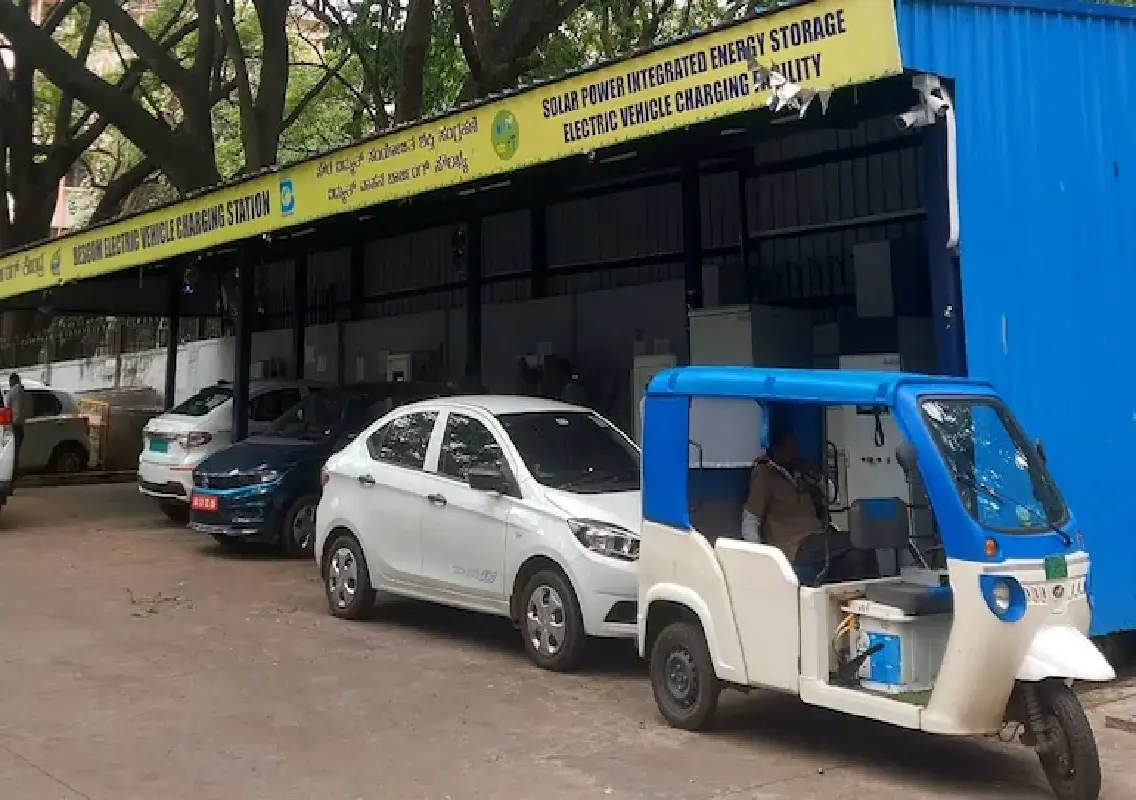


Bengaluru: Electric vehicles (EVs) in Karnataka are set to become more expensive, with the state government planning to withdraw the 100 per cent road tax exemption currently available for battery-operated vehicles (BOVs).
The move comes under the Karnataka Motor Vehicles Taxation (Amendment) Bill, 2026, which has been passed by the legislature and is awaiting the Governor’s assent before implementation.
Revised tax structure for EVs
Under the new policy, lifetime road tax at the time of registration will be linked to the cost of the vehicle. The revised tax rates are:
- 5 per cent for EVs priced up to Rs 10 lakh
- 8 per cent for EVs priced between Rs 10 lakh and Rs 25 lakh
- 10 per cent for EVs priced above Rs 25 lakh
Currently, Karnataka levies lifetime tax only on EVs priced above Rs 25 lakh, a rule introduced in 2024. Earlier, since March 2016, all EVs were exempt from road tax to encourage adoption.
The proposed rollback marks a significant shift in the state’s EV policy.
Policy shift amid growing EV adoption
According to NV Prasad, the bill will come into force after receiving the Governor’s approval and subsequent notification.
Officials indicated that EV adoption in the state has reached a level where continued tax exemptions may no longer be necessary. The move reflects the government’s attempt to balance promotion of clean mobility with revenue generation.
Despite the new tax structure, EVs will still attract lower taxes compared to internal combustion engine (ICE) vehicles.
Comparison with ICE vehicle taxation
Karnataka currently imposes one of the highest road taxes in the country for conventional fuel vehicles. ICE cars attract:
- 13 per cent tax for vehicles up to Rs 5 lakh
- 14 per cent for Rs 5–10 lakh
- 17 per cent for Rs 10–20 lakh
- 18 per cent for vehicles above Rs 20 lakh
Two-wheelers are taxed between 10 per cent and 14 per cent of the vehicle cost.
Even with the revised EV tax, electric vehicles will continue to enjoy a relative cost advantage in terms of taxation, though their upfront cost remains higher.
Industry concerns over impact
The decision has raised concerns among EV manufacturers and potential buyers. Industry stakeholders warn that higher upfront costs could slow down EV adoption, especially at a time when consumers are increasingly considering a shift to electric mobility due to rising fuel prices and global uncertainties.
Karnataka is the fourth-largest vehicle market in India, after Uttar Pradesh, Maharashtra, and Tamil Nadu, making the policy change significant for the overall EV ecosystem.
Relief for bus operators
In a parallel move, the amendment proposes a reduction in road tax for contract carriage buses and sleeper coaches.
Under the revised structure:
- Contract carriage buses (over 12 seats) will be taxed at Rs 2,500 per seat, reduced from Rs 3,500
- Sleeper coaches will attract Rs 3,000 per berth, down from Rs 4,000
This step is aimed at encouraging operators to register vehicles within Karnataka, as many had shifted registrations to lower-tax regions such as Puducherry and northeastern states.
Industry response
K Radhakrishna Holla welcomed the reduction in bus taxes, stating that it would ease financial pressure on operators and improve business conditions.
He added that high taxes had earlier led to revenue losses for the state as operators opted to register vehicles elsewhere.
Conclusion
The Karnataka government’s decision to end full tax exemption for EVs marks a turning point in its clean mobility strategy. While it may boost state revenues, the move could influence consumer sentiment and slow EV adoption in the short term. At the same time, tax relief for bus operators reflects a balanced approach aimed at supporting the transport sector.