







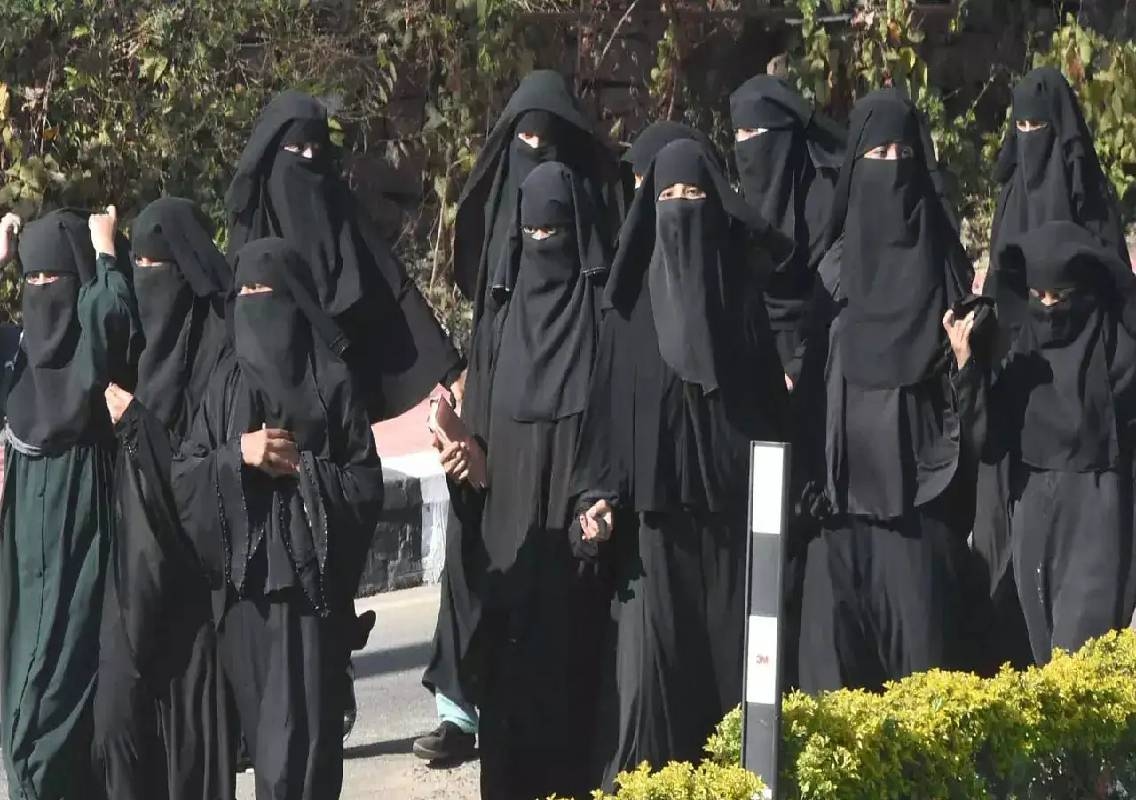


Bengaluru: The Karnataka government has officially withdrawn the controversial 2022 uniform order introduced during the previous BJP administration, allowing students to wear religious symbols such as hijabs, turbans and sacred threads along with prescribed school and college uniforms.
The new directive, issued by the Congress-led Karnataka government under the Karnataka Education Act, 1983, reverses the February 5, 2022 order that had triggered nationwide political debate and prolonged legal battles over the wearing of hijabs in educational institutions.
Under the revised guidelines, students in government, aided and private educational institutions, including pre-university colleges, will now be permitted to wear limited traditional and customary religious identifiers alongside the prescribed uniform.
Hijab, sacred threads and turbans permitted
The notification specifically permits attire and symbols including the hijab, peta turban, Janivara (sacred thread), Shivadhara, Rudraksha and Sharavastra.
However, the government clarified that students’ faces must remain clearly visible for identification purposes.
“No student shall be denied entry to an educational institution, classroom, examination hall or academic activities merely because they are wearing such limited traditional and customary symbols along with the prescribed uniform,” the order stated.
The government also emphasised that the primary uniform policy of educational institutions would continue to remain in force and that religious identifiers should not override the objective of maintaining a common dress code.
Students cannot be forced either way
The Karnataka government clarified that no student can be compelled either to wear or avoid wearing the permitted religious or customary symbols.
The order explicitly stated that students should not face pressure to adopt religious attire, nor should they be prevented from wearing it voluntarily.
Officials added that separate dress code rules applicable during national and state-level examinations would continue wherever mandated by examination authorities.
The directive instructed educational institutions to implement the revised policy in a secular, inclusive and non-discriminatory manner.
Schools and colleges have been told to ensure that students are not subjected to humiliation, exclusion or discrimination based on their attire choices.
Institutions directed to uphold constitutional values
The order directed School Development and Monitoring Committees, College Development Committees and heads of institutions to uphold constitutional principles such as equality, dignity, fraternity and the right to education while implementing the revised norms.
Invoking the teachings of 12th-century social reformer Basavanna, the government urged educational institutions to embrace the inclusive philosophy of “Iva Namava,” meaning “These are our people.”
The order further stated that any institutional rules, circulars or customary practices inconsistent with the revised directive would no longer remain valid.
2022 hijab order sparked nationwide controversy
The withdrawn February 2022 order was introduced by the BJP government led by Basavaraj Bommai. It made prescribed uniforms compulsory in government and aided educational institutions and prohibited attire deemed inconsistent with uniform regulations.
The order effectively resulted in restrictions on wearing hijabs in several schools and colleges across Karnataka after protests erupted in Udupi and other districts.
The issue soon escalated into a major national controversy and reached the Karnataka High Court. In March 2022, the High Court upheld the restrictions, ruling that wearing the hijab was not an essential religious practice under Islam.
The matter later moved to the Supreme Court, where a split verdict left the issue unresolved at the national level.
Policy reversal likely to trigger political reactions
The Karnataka government’s decision to revoke the 2022 order is expected to trigger fresh political debate in the state, especially between the ruling Congress and opposition BJP leaders.
Supporters of the move argue that it protects individual freedom and ensures equal access to education without discrimination. Critics, however, are likely to question whether the revised policy could affect uniformity in educational institutions.
For now, the new order officially restores the right of students in Karnataka educational institutions to wear religious identifiers alongside prescribed uniforms, subject to identification and institutional guidelines.