







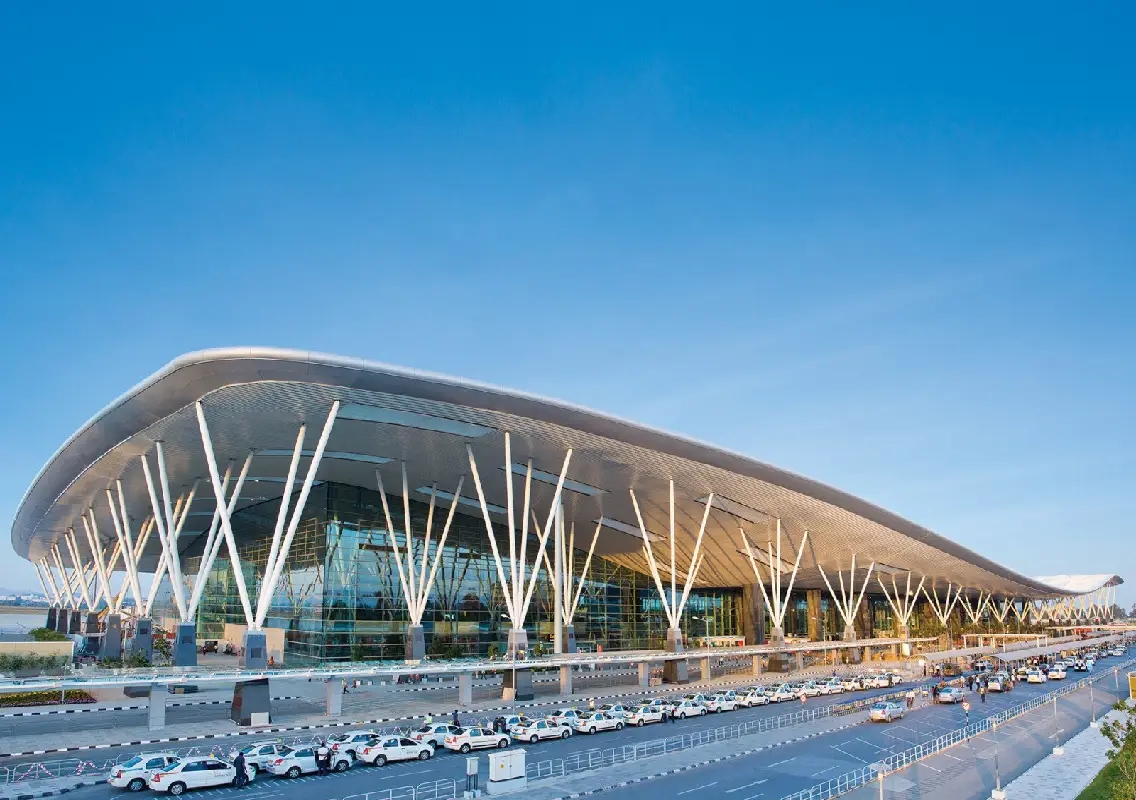


Bengaluru: The Kempegowda International Airport (KIA) is gearing up for a major infrastructure upgrade as a new air traffic control (ATC) tower is expected to come up by 2027. The move aims to support the rapidly rising air traffic at the country’s third-busiest airport and ensure more efficient, safer operations in the years ahead.
BIAL issues tender for design and development
Bangalore International Airport Limited (BIAL), which operates KIA, has floated a tender inviting expressions of interest for the design and development of the new ATC tower. The announcement was made earlier this week, signalling the beginning of a long-planned modernisation project.
The new tower will be constructed for the Airports Authority of India (AAI), which manages air traffic control at Indian airports. Once completed, the ATC tower is expected to provide enhanced visibility, updated technology and future-ready systems aligned with growing aviation demands.
Existing ATC tower requires major maintenance
KIA’s current ATC tower has been operational since the airport opened in 2008. According to reliable sources, the existing structure has aged and now requires significant maintenance. However, carrying out the repairs would require temporarily shutting down the tower — an impractical move for an airport that handles lakhs of passengers each day.
“The existing tower has got old. It requires maintenance, and to do so, it will need to be shut down. So, the new structure is necessary. We’re expecting it to be completed in the next two years,” a source familiar with the development said.
The new tower is expected to seamlessly take over operations, allowing the existing tower to undergo repairs without disrupting flight movements.
Enhancing safety and weather adaptability
The upcoming ATC tower will incorporate advanced navigation and surveillance technology, offering improved situational awareness for air traffic controllers. The design will also cater to better weather adaptability, a crucial factor given Bengaluru’s foggy mornings during winter and unpredictable monsoon patterns.
More robust equipment and higher structural design standards are likely to ensure safer handling of aircraft movements on runways, taxiways and aprons — especially as the volume of flights continues to climb.
Built to meet future expansion needs
KIA is currently the busiest airport in South India, handling more than 3.7 crore passengers annually. With ongoing projects such as the second phase of Terminal 2 and plans for a third terminal (T3), air traffic is projected to grow substantially over the next decade.
The new ATC tower has therefore been envisioned with long-term scalability in mind. It will accommodate additional operational and technological facilities required for future expansion, including increased flights, new taxiways and additional terminal capacities.
Conclusion
With Bengaluru’s aviation sector witnessing steady growth, the decision to construct a modern ATC tower marks an important step towards strengthening KIA’s operational backbone. The project, expected to be ready by 2027, underlines the airport’s commitment to safety, efficiency and future-readiness as it continues to evolve into a major aviation hub in India.