









Bengaluru: After nearly two decades of delay, the long-pending Bengaluru Business Corridor (BBC) project has received a significant push, with some landowners beginning to part with their land following the state government’s introduction of multiple compensation models. The development marks a breakthrough for the 73-km corridor project, earlier known as the Peripheral Ring Road (PRR), which is aimed at easing traffic congestion and improving connectivity around the city’s outskirts.
Symbolic exchange marks progress
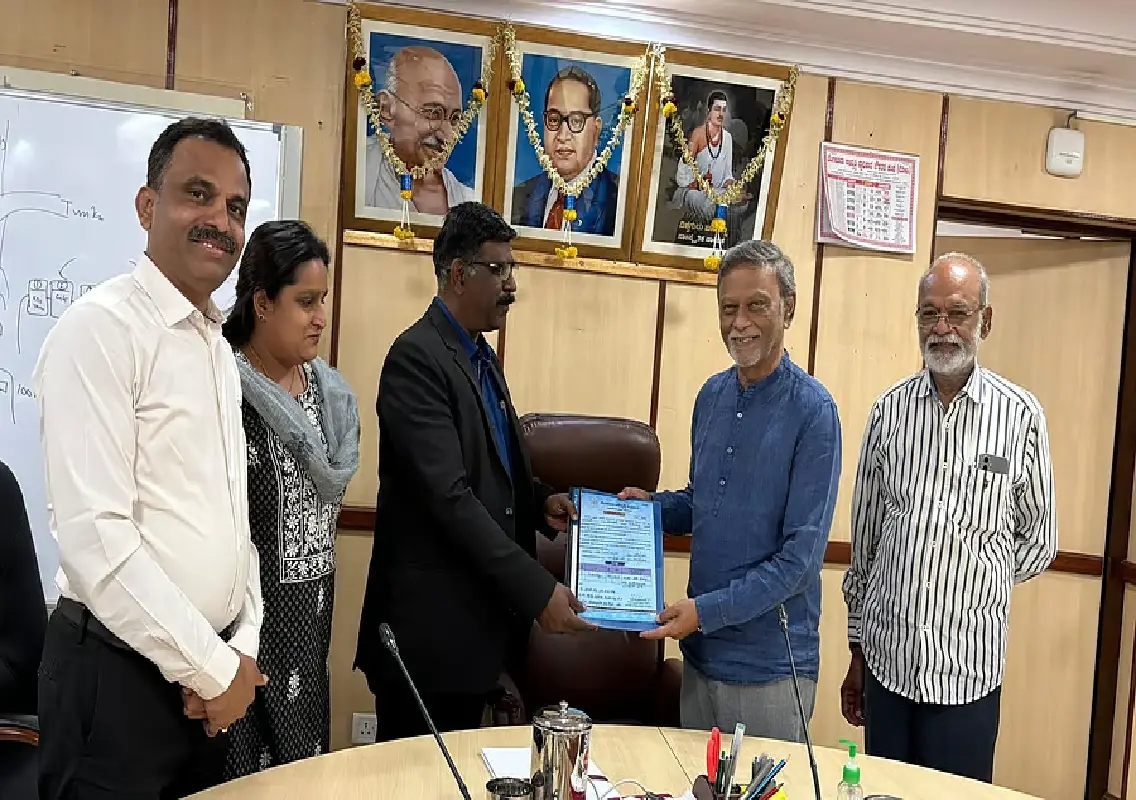
On Wednesday, Bangalore Development Authority (BDA) Commissioner Major Manivannan symbolically exchanged land records and compensation-related documents with a group of landowners who have agreed to surrender their properties for the project. Officials described the move as a confidence-building measure intended to demonstrate the government’s seriousness in resolving long-standing land acquisition hurdles.
The BDA requires about 1,810 acres of land to execute the ambitious infrastructure project, which has been stalled for close to 20 years largely due to resistance from landowners unhappy with compensation terms and procedural delays.
“This is an important step forward. It shows that some landowners have begun trusting the new compensation framework,” a senior BDA official said.
Five compensation models offered
To revive the project, the Karnataka government recently introduced five different compensation models, allowing landowners to choose an option that best suits their needs. These include direct cash compensation, allotment of developed residential or commercial sites, issuance of transferable development rights (TDR) certificates, grant of additional floor area ratio (FAR), or a combination of these benefits.
Officials said this flexible approach was designed to address diverse expectations among landowners, many of whom had opposed earlier acquisition plans citing inadequate compensation and lack of transparency.
Under the new framework, landowners opting for developed sites would receive plots in well-planned layouts with basic infrastructure, while those choosing TDR certificates could monetise them by selling the rights to developers elsewhere in the city.
Project stalled for two decades
The Bengaluru Business Corridor, conceived as a high-capacity ring road to divert through-traffic away from the city, has faced repeated setbacks since its proposal in the early 2000s. Initially envisioned as the Peripheral Ring Road, the project was expected to decongest major arterial roads and support the city’s expanding suburbs.
However, prolonged disputes over land acquisition, compensation rates and alignment changes led to years of delay. During this period, Bengaluru’s population and vehicle numbers grew rapidly, intensifying traffic congestion and increasing pressure on existing road infrastructure.
Urban planners have long argued that the delay in executing the PRR or BBC has cost the city dearly in terms of lost productivity, higher pollution and longer commute times.
Mixed response from landowners
Despite the recent progress, not all landowners are satisfied with the compensation packages on offer. Several farmers and property owners have reportedly refused to part with their land, demanding compensation strictly under the provisions of the Right to Fair Compensation and Transparency in Land Acquisition, Rehabilitation and Resettlement Act, 2013.
The central law generally offers higher compensation, along with rehabilitation and resettlement benefits, compared to state-level acquisition frameworks.
Representatives of some landowners said they were not opposed to the project itself but wanted assurance that compensation would reflect current market values and adequately support their livelihoods.
“We are not against development, but we want fair compensation as per the 2013 Act,” said a farmer whose land falls along the proposed alignment.
Deputy CM to hold meeting
In an effort to resolve the remaining disagreements, Deputy Chief Minister D.K. Shivakumar, who also holds the Bengaluru Development portfolio, has called a meeting of landowners on Monday. The meeting is expected to focus on addressing compensation-related concerns and persuading more stakeholders to come on board.
Officials indicated that the government is keen to avoid prolonged legal battles and instead reach a negotiated settlement wherever possible.
“The aim is to ensure that landowners feel respected and fairly compensated, while also moving the project forward without further delay,” an official familiar with the discussions said.
Importance of the corridor
The BBC is envisioned as a high-speed, signal-free corridor encircling the city’s periphery, connecting major highways and industrial hubs. Once completed, it is expected to significantly reduce traffic entering the city, improve logistics efficiency and support planned urban expansion.
The corridor is also seen as critical to integrating with other large infrastructure projects, including satellite towns, logistics parks and industrial clusters planned around Bengaluru.
Transport experts believe that timely execution of the corridor could transform mobility patterns and reduce dependence on inner-city roads for long-distance travel.
Challenges ahead
While the initial surrender of land is seen as a positive sign, officials acknowledge that significant challenges remain. Acquiring the full 1,810 acres, resolving disputes with dissenting landowners, securing environmental clearances and mobilising funds will require sustained political and administrative effort.
Experts caution that delays at this stage could once again erode public confidence. They stress the need for transparent communication, timely disbursement of compensation and strict adherence to agreed timelines.
Conclusion
The willingness of some landowners to give up land marks a crucial turning point for the Bengaluru Business Corridor project, which has remained on paper for nearly two decades. With multiple compensation options now on the table and political leadership stepping in to address concerns, the project appears closer to reality than ever before. However, its ultimate success will depend on how effectively the government balances development goals with fair treatment of landowners in the months ahead.