







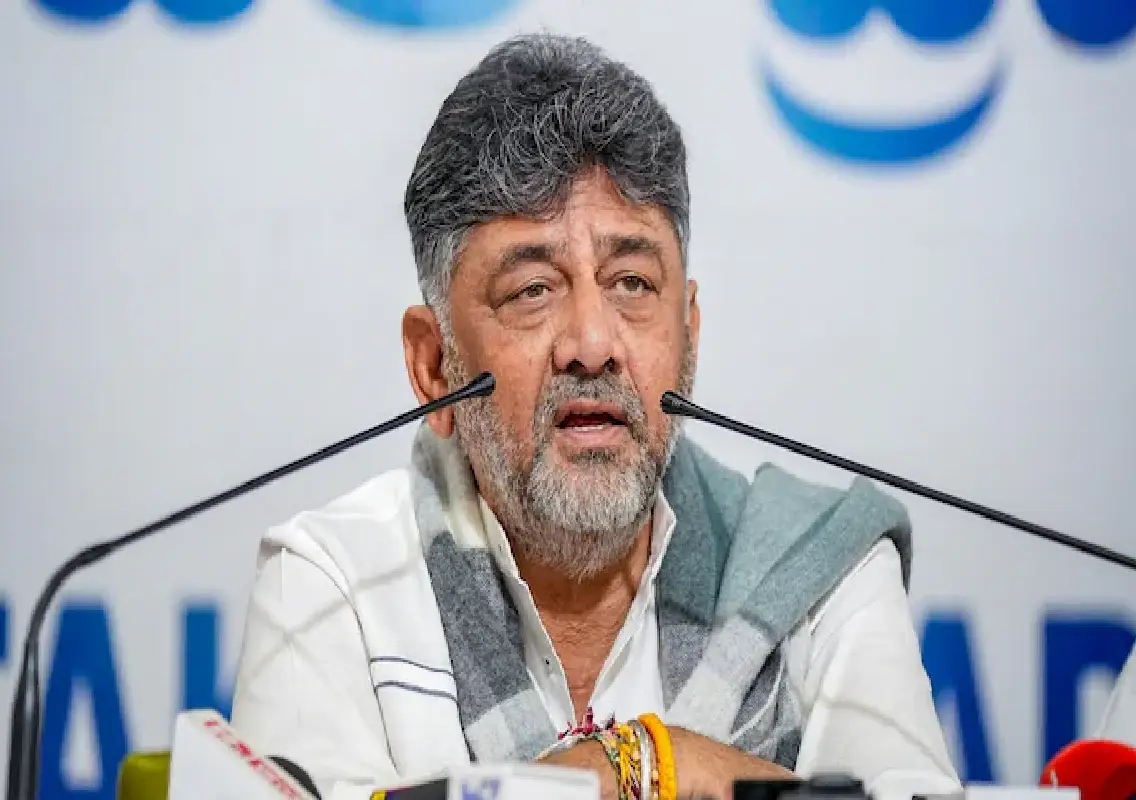


Bengaluru: Amid a major political controversy over the demolition of hundreds of houses in a Muslim-dominated area in the northern parts of Bengaluru, Karnataka Deputy Chief Minister DK Shivakumar on Monday defended the state government’s decision to provide alternative accommodation to displaced residents, asserting that the move was purely humanitarian and not an act of appeasement politics.
Responding to sharp criticism from the BJP and other opposition leaders, Shivakumar made it clear that the Congress-led government would not “gift anything to encroachers” and that relief would be extended only to “genuine individuals” after strict verification of documents.
Government announces rehabilitation for eligible residents
Earlier in the day, the Karnataka government announced that it would provide alternate housing to homeless residents whose illegally constructed houses were demolished during a recent eviction drive in areas such as Waseem Layout and Fakir Colony. The announcement followed widespread outrage over the eviction, which affected hundreds of families.
Shivakumar said the government’s decision was based on humanitarian considerations and would be implemented only for eligible local residents. “There is no appeasement politics here. On humanitarian grounds, we will provide housing under the Pradhan Mantri Awas Yojana to those found eligible,” he said.
Action against those behind encroachments
The Deputy Chief Minister stated that the government would also act against those who facilitated the encroachments. According to him, several evictees themselves had revealed that certain individuals had collected money and allowed people to put up sheds illegally on the land.
“We will take action against those who enabled these encroachments. The evictees have clearly said that money was collected from them by middlemen,” Shivakumar said, adding that such practices would not be tolerated.
Verification of claims and identity concerns
Addressing claims by some displaced residents that land rights had been issued to them earlier, Shivakumar said officials had been instructed to verify all such documents thoroughly. He also noted that while some families were original settlers, outsiders had also encroached upon the land in recent years.
“We will identify the original settlers and rehabilitate them. At the same time, we will ensure that recent encroachments are not legitimised,” he said.
On reports that some evictees were allegedly holding identity cards from two different states, Shivakumar said the matter would be investigated and appropriate action would be taken based on the findings.
Political backlash and interstate reactions
The demolition drive triggered a strong political backlash, including criticism from Kerala Chief Minister Pinarayi Vijayan, who described the eviction as a “brutal normalisation of bulldozer raj”. Congress general secretary KC Venugopal, who is from Kerala, also conveyed the All India Congress Committee’s concerns to Chief Minister Siddaramaiah and Deputy Chief Minister Shivakumar.
Venugopal reportedly said that such demolitions should have been carried out with greater caution, sensitivity and compassion, keeping the human impact in mind.
Responding to criticism from Kerala MPs over his earlier remark that the issue was an internal matter of Karnataka, Shivakumar said the state government was fully capable of governing on its own terms. “We are running our government well. They can make whatever statements they want, but we will not allow encroachments,” he said.
‘No compromise on governance’
Shivakumar also hit out at critics, saying they had no moral authority to lecture Karnataka on governance. “They did not even fulfil their promises during previous floods and have no right to lecture us. We know how to govern our state,” he remarked.
Conclusion: The Karnataka government has maintained that while illegal encroachments will not be regularised, genuine residents displaced by the eviction drive will be rehabilitated after due verification. As political reactions continue to pour in, the issue remains a flashpoint, balancing enforcement of law with humanitarian responsibility.