







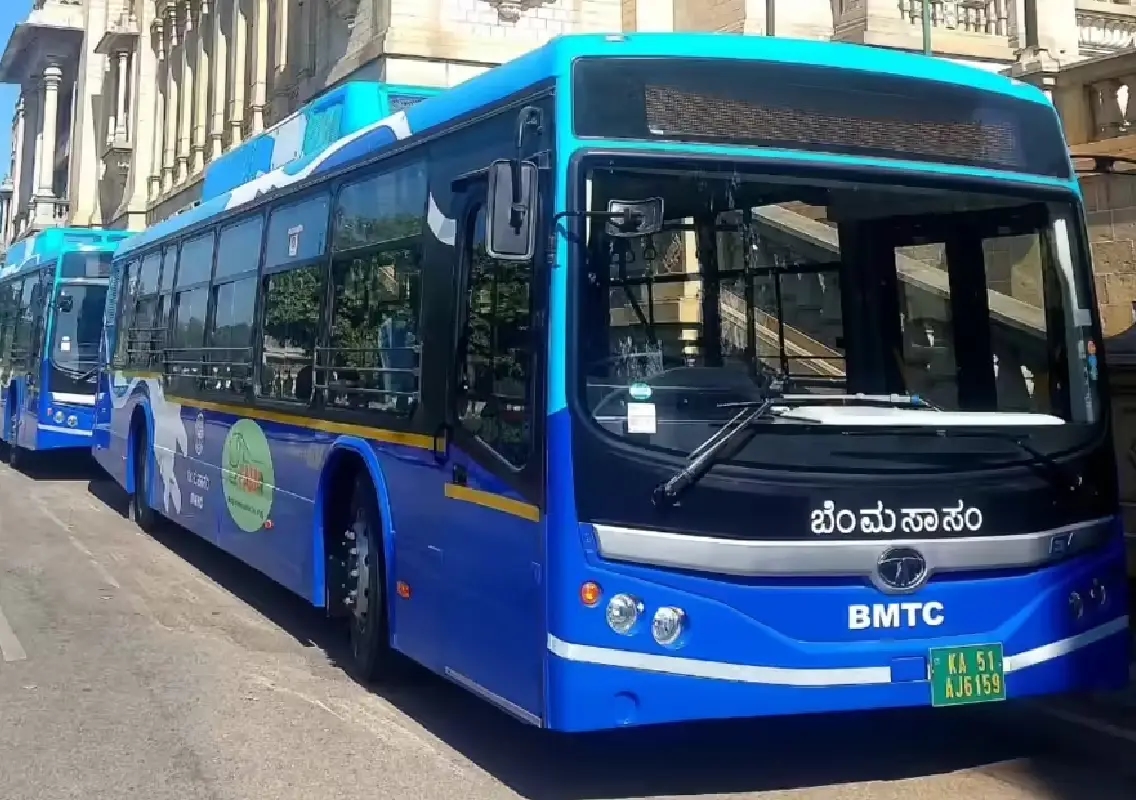


Bengaluru: The Bengaluru Metropolitan Transport Corporation (BMTC) is facing mounting challenges in its green mobility drive, with more than 13,000 breakdowns involving electric buses reported over the past two and a half years.
Since December 2021, BMTC has introduced around 1,700 electric buses through private operators — about 25% of its total fleet. However, frequent breakdowns, accidents, and complaints of rash driving have slowed its transition to sustainable public transport.
Breakdowns pose major operational challenge
Transport Minister Ramalinga Reddy said the breakdowns remain a significant concern.
“Over the past two and a half years, more than 13,000 electric bus breakdowns have been reported. Battery-related issues, in particular, take longer to resolve, disrupting traffic flow on the roads,” he said.
In September alone, 281 bus breakdowns were reported, most of them involving electric buses. A senior traffic police officer noted that handling electric bus failures poses unique logistical issues.
“When an electric bus breaks down on main roads, it cannot be easily moved aside like a diesel bus,” the officer explained.
Dedicated recovery units deployed
To mitigate disruption, BMTC has deployed four dedicated wreckers to tow disabled electric buses. These are stationed at strategic points across the city for quicker response. “A system has been put in place to alert depot managers to remove vehicles immediately when they break down,” the officer added.
Concerns over private drivers’ training
Officials have also raised concerns about the competence and accountability of drivers employed by private contractors. Unlike BMTC’s regular staff, many of these drivers reportedly lack adequate road safety training and professional discipline.
“We’ve had instances of drivers abandoning buses over minor technical issues,” the officer said. “Regular BMTC employees fear disciplinary action, but privately employed drivers can easily find another job.”
Traffic chaos after e-bus failures
A recent incident on Outer Ring Road saw a broken-down electric bus cause a traffic jam stretching for several kilometres, severely affecting commuters heading towards Marathahalli, Kadubeesanahalli, and Bellandur.
The transport minister noted that such issues are not unique to Bengaluru.
“Other cities using electric buses through private contractors are facing similar challenges,” Reddy said.
Policy and payment structure
As per central government policy, subsidies are given directly to private operators who supply, operate, and maintain the buses. BMTC pays these operators on a per-kilometre basis, while conductors for ticketing are provided by the corporation.
Reddy added that the arrangement limits BMTC’s control over drivers’ pay, service conditions, and maintenance standards. “Frequent breakdowns, rash driving, and accidents involving e-buses are concerning,” he admitted.
Driver protests intensify
Compounding BMTC’s woes, repeated protests by electric bus drivers have disrupted services in recent weeks. The drivers, employed by private contractors, have been demanding better pay, bonuses, and insurance coverage.
Drivers protest at Deepanjali Nagar depot
On Thursday morning, drivers at the Deepanjali Nagar depot staged a protest and refused to take out buses for nearly four hours, bringing services to a halt. Operations resumed in the afternoon after senior officials intervened.
Similar demonstrations have recently occurred at Katriguppe, Jayanagar, and Yelahanka depots, where drivers demanded timely salary payments, improved working conditions, and higher wages.
Reddy acknowledged the disparity in pay between regular BMTC drivers and those hired through contractors.
“Private operators hire drivers through third-party agencies, which often deduct a portion of the salary as fees. BMTC has no role in fixing their salaries, but we penalise operators if they fail to run services as per agreement,” he said.
Conclusion
Despite its ambitious push toward sustainable public transport, BMTC continues to grapple with technical and administrative hurdles. Frequent breakdowns, staffing issues, and recurring protests highlight the gaps in the current public-private operating model, underscoring the need for stronger oversight and maintenance reforms as Bengaluru strives toward a cleaner, greener mobility future.