







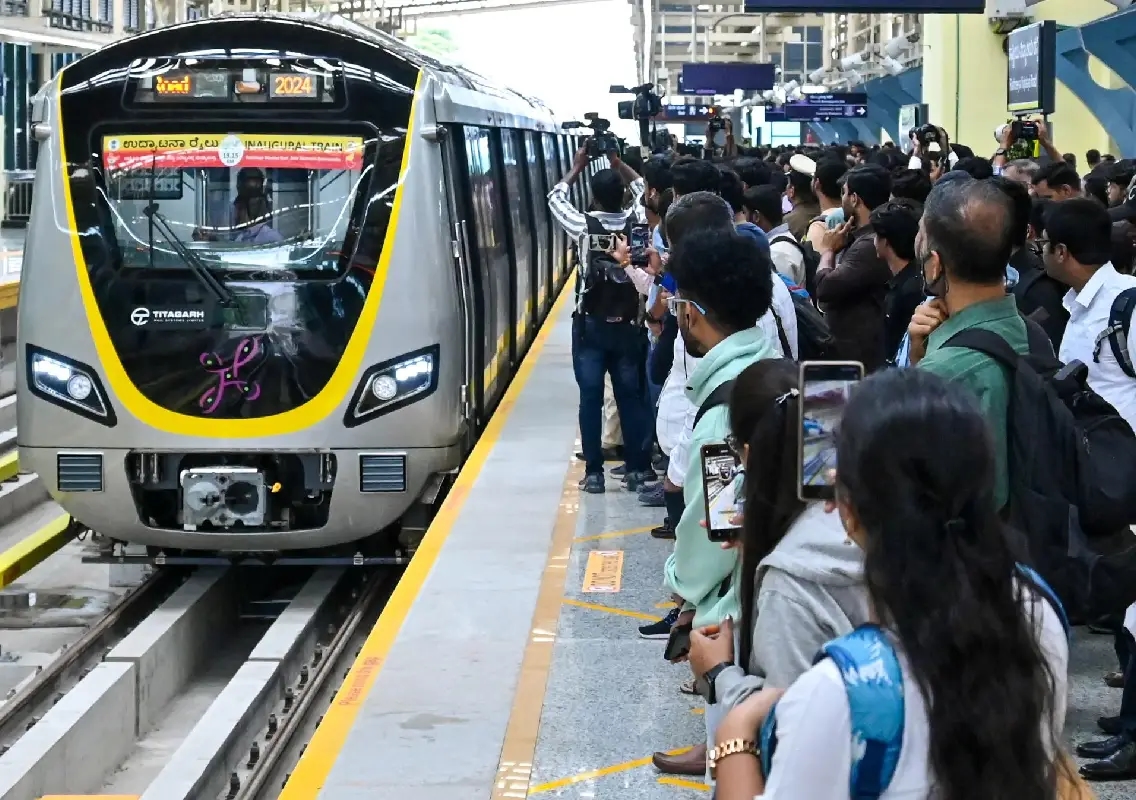


Frequent technical glitches on the Bengaluru Metro’s Yellow Line have left daily commuters exasperated, with yet another disruption on Wednesday morning due to a brake-system failure in one of the trains. Normal operations resumed around 8.45 am, but not before rush-hour passengers faced significant delays.
This marks the fourth major disruption on the Yellow Line since its launch in August, raising concerns over reliability and maintenance of the newly commissioned corridor.
Morning rush-hour chaos
According to officials from the Bangalore Metro Rail Corporation Limited (BMRCL), the snag occurred when a train developed a brake-system fault during early morning operations. “The issue was related to the brake system of one train. Ideally, it should take five minutes to fix the glitch, but it took longer this time,” said a senior BMRCL official.
Several commuters reported long halts at stations and overcrowding on platforms, with no real-time updates shared through station announcements or mobile apps.
Ravish, a regular commuter, said, “Disruptions on the Yellow Line are becoming routine. Passengers already face long waits due to limited train frequency, and these glitches make things worse.”
Maintenance and frequency concerns
The 19-km Yellow Line, which connects R.V. Road to Bommasandra, currently operates with five train sets, all of which are deployed during peak hours. During non-peak hours, only four sets are in service. Sources said that the limited number of trains and lack of sufficient maintenance time between runs have made it challenging to ensure smooth daily operations.
“The system is being stretched to meet passenger demand, leaving little downtime for preventive maintenance,” said a senior metro official familiar with operations. “Even minor faults can have a ripple effect during rush hours.”
Commuter frustration grows
Passengers have taken to social media to express frustration over frequent breakdowns, citing poor communication and lack of contingency planning. Several posts urged BMRCL to introduce additional train sets and improve real-time alerts about delays.
Public transport experts have suggested that the corporation should invest in dedicated standby coaches and enhance staff training to respond swiftly to technical faults. “A reliable metro network is crucial for reducing road congestion in Bengaluru. Technical consistency is key to building commuter confidence,” said transport analyst M. Krishnamurthy.
Looking ahead
BMRCL officials have assured that technical audits are underway to identify recurring issues in the braking and signalling systems. A review meeting has also been scheduled to assess train availability, frequency, and passenger feedback.
For now, commuters continue to rely on limited updates and hope for smoother rides in the days ahead.