







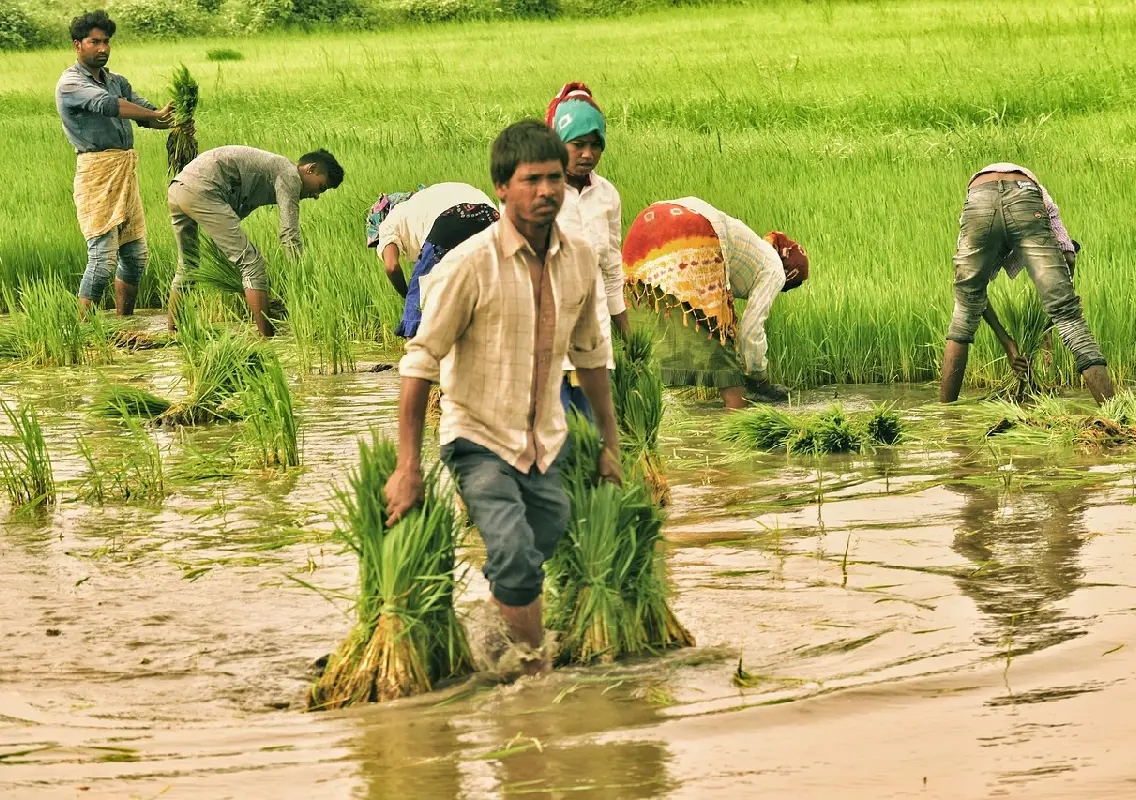


Rice prices in Karnataka have begun rising sharply less than four days after the state government announced that no water will be released for the summer crop in the Tungabhadra dam command area. The decision—taken to facilitate the replacement of all 33 ageing crest gates of the dam—has triggered widespread concern among farmers, traders, and rice mill owners across the Kalyana Karnataka region, one of the state’s largest paddy belts.
The directive, aimed at conserving water and preventing future structural failures, comes at a time when paddy production has already taken a severe hit due to excessive rainfall during the just-ended kharif season.
Paddy output may fall by 25%, warn farmers and traders
Karnataka produces about 80 lakh tonnes of paddy annually, but this year’s output is likely to drop to 60 lakh tonnes by the end of the rabi season—a significant 25% decline.
The worst-affected districts are Raichur, Koppal, Yadgir, Ballari and Vijayanagara, areas collectively known as the state’s “rice bowl”. Farmers say the halt in water release has effectively wiped out the possibility of a viable summer crop, further tightening supply in the coming months.
Doddappagouda Patil, a major rice trader from Siruguppa in Ballari, said market movement reacted almost immediately.
“The price of the popular RNR paddy variety jumped from ₹1,950 to ₹2,000 per 75 kg bag within hours of the announcement,” he said. “Sona Masuri, one of the most sought-after varieties domestically and internationally, will also become costlier.”
Savitri Purushottam, State President of the Rice Mill Owners Association, echoed the concern. “There is no doubt that rice prices will rise,” she said, adding that the region’s irrigation challenges have long been neglected compared to the Mandya–Mysuru belt.
Why the government halted water release
The Tungabhadra dam’s gate No. 19 collapsed last year, raising questions over the structural safety of the ageing dam. The government says replacing all 33 gates has now become urgent.
Shivaraj Tangadagi, minister in charge of Koppal district and chairperson of the Tungabhadra Dam Advisory Committee, said the decision was unavoidable.
“The crash of gate No. 19 last year was a warning. We have no choice but to replace all gates. Work will be completed before the next monsoon,” he said.
However, the move has put over 250 rice mills across Ballari, Raichur, Vijayanagara and Koppal at risk of severe operational disruptions. With lower inflow of paddy, millers fear reduced capacity utilisation and rising procurement costs.
BJP MLA Basanagouda Patil Yatnal criticised the decision on X, saying it could cause a 20-lakh-tonne drop in rice production.
Retail rice prices expected to rise by ₹8 per kg
Traders are already sourcing rice from outside the state to meet market demand.
S. Ramesh, secretary of the Karnataka State Rice Millers Association, warned that retail prices may rise by at least ₹8 per kg in the coming weeks.
“Raichur APMC is receiving only 30,000 bags per day against the usual 50,000 bags,” he said. “The situation is manageable for now, but it will become critical by the end of winter.”
Experts also fear that brokers may hoard stocks, releasing them later to create an artificial shortage—pushing prices even higher.
Farmers demand compensation, plan protests
Farmers are demanding compensation similar to the kharif loss package, which included NDRF support and an additional ₹8,500 per hectare from the state.
HR Basavarajappa, state president of Karnataka Raitha Sangha–Hasiru Sene, announced that farmers will protest in Bengaluru on November 26.
“If the government does not respond, we will shift the protest to Belagavi during the winter session starting December 8,” he said.
The farming community says the decision may be necessary, but compensation for the upcoming crop loss must be addressed immediately.
Conclusion
With paddy output set to fall sharply and prices already climbing, Karnataka’s rice ecosystem faces a turbulent period. While the government maintains that replacing the Tungabhadra dam’s crest gates is essential for long-term safety, the immediate fallout—shrinking supply, rising prices, and farmer distress—demands swift policy responses and financial support. How the state handles the next few months will determine the impact on consumers and the agricultural economy alike