







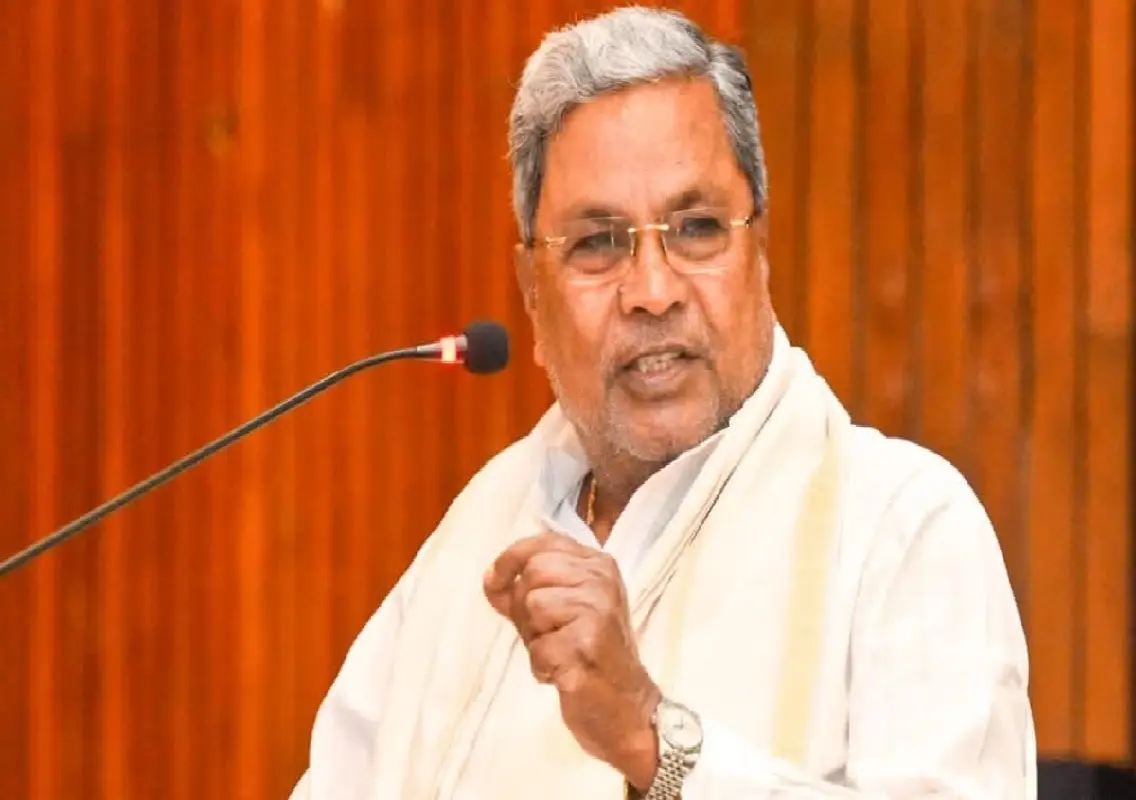


Bengaluru: Karnataka Chief Minister Siddaramaiah on Friday announced a series of major infrastructure and development projects for Bengaluru while presenting his 17th State Budget. The announcements include expansion of metro rail services, new road projects, improved water supply, and urban infrastructure upgrades aimed at improving the quality of life in the city.
Presenting the State Budget for 2026–27, the Chief Minister said the government’s primary objective is to transform Bengaluru into the world’s most livable city. He highlighted several initiatives planned over the next few years to strengthen the city’s infrastructure and address long-standing challenges such as traffic congestion, water supply, and urban mobility.
Siddaramaiah also stated that the government has significantly increased financial support for the city’s development in recent years.
“The grant for development of Bengaluru was increased from Rs 3,000 crore to Rs 7,000 crore in 2025–26, and this allocation will continue in the current financial year as well,” he said.
Major road infrastructure projects
As part of efforts to improve road infrastructure, the government has already undertaken white-topping work covering 158 km of roads in Bengaluru at a cost of Rs 1,700 crore.
White-topping is considered a durable road construction technique that involves laying a concrete layer over existing asphalt roads to improve longevity and reduce maintenance.
The Chief Minister further announced that an additional 450 km of roads will undergo white-topping over the next three years. This project is estimated to cost around Rs 3,000 crore.
Along with road strengthening works, the government plans to focus on pedestrian infrastructure and urban beautification.
A total of 175 major junctions across the city will be beautified as part of the urban development programme. Additionally, around 500 km of footpaths will be upgraded to improve pedestrian safety and accessibility.
To help pedestrians safely cross busy roads, the government has also proposed construction of 100 skywalks across the city within the next three years. These projects will be undertaken using internal resources of the Bengaluru City Corporations.
Metro network expansion
Public transportation remains a key focus of the government’s plan for Bengaluru’s growth. Siddaramaiah announced that 41 km of additional metro rail lines will become operational during the financial year 2026–27.
Once completed, the new metro stretches are expected to benefit nearly 15 lakh commuters every day.
Currently, Bengaluru’s metro network covers about 95 km across three operational lines. The city’s metro system is the second largest in India after Delhi.
The expansion of metro services is expected to significantly improve connectivity and reduce traffic congestion in several parts of the city.
Cauvery Phase VI water supply project
Addressing the growing water demand of the rapidly expanding city, the Chief Minister announced the implementation of the Cauvery Phase VI project.
Under this project, the government will allocate Rs 6,939 crore to supply an additional six TMC of water to Bengaluru. The initiative will be implemented with financial assistance from the Japan International Cooperation Agency (JICA).
The additional water supply is expected to help meet the needs of approximately 1.4 crore residents in the city.
The project is aimed at strengthening the city’s water supply system, especially during summer months when demand typically increases.
Traffic management initiatives
To address severe traffic congestion in key parts of the city, the government also announced plans to construct a tunnel road and an elevated corridor between Hebbal Junction and Mekhri Circle.
The project will be implemented by the Bangalore Development Authority at an estimated cost of Rs 2,250 crore.
Officials believe the new corridor will help ease traffic flow in the northern parts of the city, particularly near the airport route where congestion is frequently reported.
Another major road project announced in the budget is the construction of the Nelamangala–Tavarekere–Bidadi Intermediate Ring Road. This project will be implemented using financial resources from the Bangalore Metropolitan Region Development Authority (BMRDA) along with local planning authorities.
The new ring road is expected to improve connectivity around Bengaluru’s outskirts and help divert heavy traffic away from the city centre.
Urban sanitation and drainage projects
Apart from Bengaluru-focused initiatives, the State Budget also includes urban sanitation projects in several cities across Karnataka.
Underground drainage (UGD) works will be undertaken in towns such as Annigeri, Gundlupet, Nelamangala, Doddaballapura, Bhadravathi and Devanahalli, as well as in certain parts of Mysuru.
These projects aim to strengthen urban sanitation infrastructure and prevent pollution of water bodies.
In addition, the government is implementing development and upgradation works for storm water drains under the World Bank-assisted Water Security and Disaster Resilience Programme.
These works are estimated to cost around Rs 2,000 crore and are expected to improve flood management and drainage systems in urban areas.
Conclusion
The announcements made in the State Budget reflect the government’s focus on strengthening Bengaluru’s infrastructure while addressing challenges related to urban growth. Projects involving roads, metro expansion, water supply and traffic management are expected to play a crucial role in improving mobility and quality of life in the city.
If implemented effectively, these initiatives could significantly enhance Bengaluru’s urban infrastructure and support its continued growth as a major economic and technology hub in the country.