







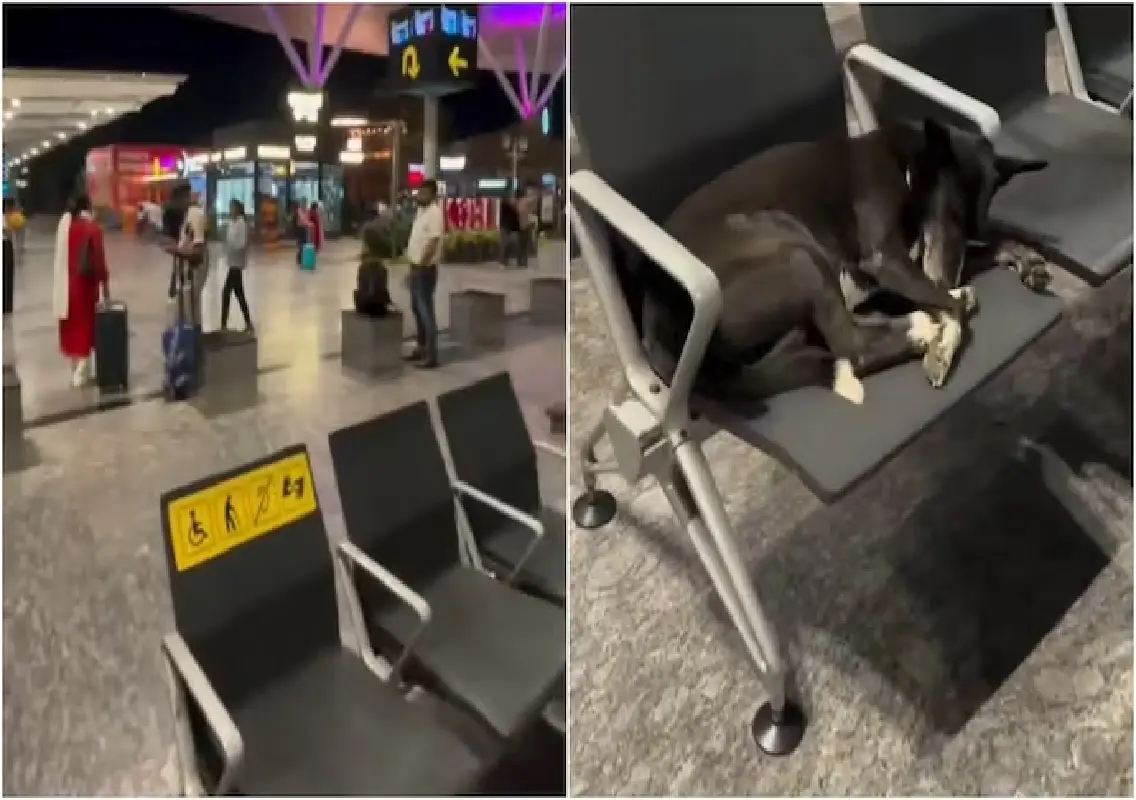


Bengaluru: A viral video showing a stray dog asleep on a passenger chair at Kempegowda International Airport has triggered a sharp online debate, dividing social media users over airport hygiene standards and the place of animals in shared urban spaces.
The clip, widely circulated on X, shows a dog curled up on a seating chair in the landside area of the airport terminal. While some viewers described the moment as harmless and even endearing, others expressed concern over cleanliness, passenger safety, and the image of an international airport handling heavy global footfall.
Airport authorities have since responded, stating that steps are being taken in coordination with civic agencies to address the presence of stray dogs in and around the airport zone.
Video goes viral, reactions pour in
Bengaluru users said the video was originally shared by an X user who criticised the situation and raised concerns about hygiene and international perception. The post suggested that stray animal presence at a major airport could lead to health risks and embarrassment before foreign travellers.
The short clip shows the dog resting quietly on a chair typically used by passengers waiting outside the main terminal flow. There is no visible sign of disturbance or aggression in the footage, but the visual alone was enough to set off strong reactions.
Within hours, the post drew thousands of views and comments, with sharply differing opinions emerging in the replies and quote posts.
Hygiene and safety concerns raised
One section of users argued that airports must maintain stricter sanitation and access control standards due to their high passenger volume and international status. They expressed worry about possible contamination of public seating and the broader issue of animal movement in sensitive transport hubs.
Some commenters pointed out that passengers may unknowingly sit on chairs previously used by animals, raising concerns about allergens, parasites, or surface contamination. Others argued that even isolated incidents can damage public confidence in hygiene standards.
Frequent flyers and aviation observers noted that airports typically maintain controlled perimeters and questioned how a stray animal was able to access seating areas, even if located on the landside portion of the facility.
Others defend compassion toward animals
At the same time, many social media users pushed back against the outrage, calling it exaggerated and lacking empathy. They argued that the dog appeared calm and non-threatening and that the reaction reflected intolerance rather than genuine risk assessment.
Several users highlighted that stray animal populations are a byproduct of urbanisation and human neglect, including abandonment and lack of sterilisation efforts. They said blaming animals without addressing root causes is misplaced.
Some comments stressed that coexistence with animals is part of Indian urban reality and that humane management — not hostility — should guide responses. A few users also noted that the dog choosing a chair suggests it was seeking comfort and safety rather than causing trouble.
Airport authority issues clarification
Following the online debate, Bengaluru International Airport authorities issued a clarification responding to user queries. In its response, the airport operator said its landside operations team is coordinating with the Bruhat Bengaluru Mahanagara Palike (BBMP) and other local agencies regarding the stray dog issue.
The statement indicated that mitigation steps are being worked on but did not detail specific measures such as relocation, sterilisation drives, or perimeter tightening.
The clarification acknowledged the concern but did not fully settle the online argument, with users continuing to debate whether the response was sufficient.
Landside vs airside distinction noted
Aviation observers pointed out that the video appears to be from the landside area — zones outside the core security hold and boarding sections — which are generally more open and connected to public access roads and transport areas.
They noted that while airside areas are tightly controlled, landside zones can sometimes see entry of animals if perimeter gaps or open access points exist. Still, they agreed that regular patrol and animal control coordination are necessary at major airports.
Larger urban issue highlighted
The incident has once again drawn attention to the broader challenge of stray animal management in large Indian cities. Experts say sustainable solutions include sterilisation programmes, vaccination drives, waste control, and coordinated civic response rather than ad-hoc removal alone.
Urban planners and animal welfare groups often emphasise that unmanaged garbage and food waste near transport hubs can attract stray animals.
Conclusion
The Bengaluru airport dog video has evolved from a brief viral moment into a wider conversation on hygiene, compassion, and urban responsibility. While authorities have acknowledged the issue and promised coordination with civic bodies, the episode highlights the need for both better facility management and long-term stray animal control strategies.