







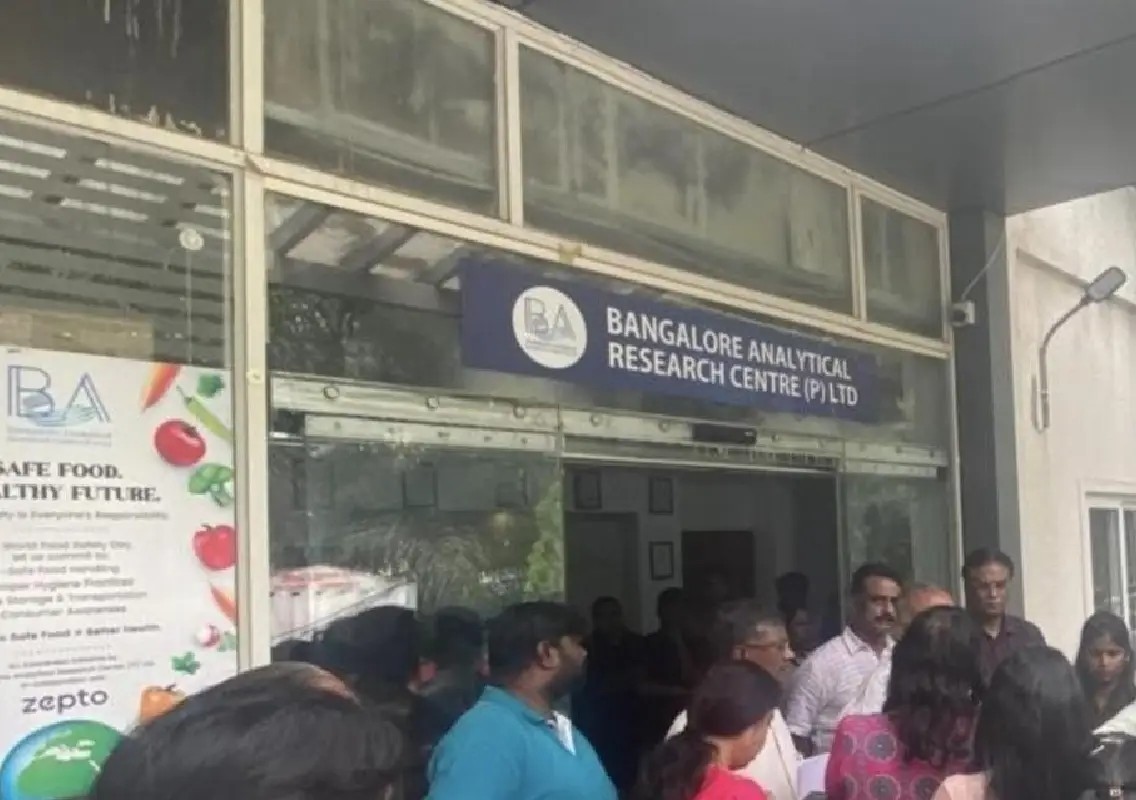


Bengaluru : A surprise inspection by Karnataka Forest Minister Ramalinga Reddy at a pollution testing laboratory in Bengaluru has brought alleged irregularities in the functioning of the facility under scrutiny.
The inspection was conducted at the Bengaluru Air Quality Research Laboratory (BARL), where the Minister reportedly found issues that raised concerns about the manner in which pollution-related testing and monitoring activities were being carried out.
The inspection assumes significance amid growing concerns over Bengaluru’s air quality and the need for reliable scientific data to assess pollution levels and identify sources of emissions. Any shortcomings in testing facilities can potentially affect the accuracy and credibility of environmental monitoring.
Surprise inspection reveals alleged irregularities
According to The Hindu, Ramalinga Reddy carried out the inspection without prior notice and examined the functioning of the laboratory and its facilities.
The Minister’s visit reportedly brought several irregularities to light. The findings have prompted attention towards the procedures being followed at the facility and the standards expected from an institution involved in pollution testing and environmental monitoring.
Surprise inspections are intended to provide authorities with a clearer picture of day-to-day operations without allowing institutions time to make temporary arrangements ahead of an official visit.
The reported findings could therefore lead to closer scrutiny of the laboratory’s procedures, equipment, records and overall functioning.
Importance of reliable pollution testing
Pollution testing laboratories play an important role in environmental governance. Their data can be used by government agencies to understand pollution patterns, assess compliance with environmental standards and formulate measures to improve air quality.
For a rapidly expanding city such as Bengaluru, accurate monitoring is particularly important. The city faces increasing pressure from vehicular emissions, construction activity, road dust, industrial operations and other urban sources.
Reliable data helps authorities determine where pollution levels are highest and what interventions may be required.
If testing procedures are inadequate or irregularities affect the quality of collected data, environmental decisions could be based on incomplete or unreliable information.
Bengaluru faces continuing air quality concerns
Bengaluru has experienced increasing public concern over air pollution in recent years, despite its reputation as a relatively green city.
The expansion of the city, rising vehicle numbers, large-scale infrastructure projects and construction activity have contributed to concerns over particulate pollution and deteriorating air quality in several areas.
Monitoring stations and laboratories therefore have an important responsibility in providing accurate information to authorities and the public.
Environmental monitoring is also essential for evaluating whether pollution-control measures are producing the desired results. Consistent and transparent testing can help identify emerging problems and guide policy decisions.
Minister seeks accountability
The inspection by Ramalinga Reddy signals a focus on accountability within institutions involved in environmental monitoring.
The reported irregularities could lead to further examination of the laboratory’s operations and the responsibilities of officials associated with its functioning. Depending on the nature of the findings, the authorities may consider corrective measures or additional inspections.
The immediate priority is expected to be ensuring that pollution testing is conducted according to established procedures and that environmental data generated through such facilities remains dependable.
The incident also highlights the importance of regular supervision of laboratories and monitoring centres responsible for providing information on public environmental conditions.
Need for stronger environmental monitoring
As Bengaluru continues to grow, environmental monitoring will become increasingly important. Authorities need dependable systems capable of identifying changes in air quality and providing timely information for public-health and urban-planning decisions.
Laboratories involved in such work must maintain appropriate technical standards, equipment and documentation. Their functioning also needs to be subject to periodic checks to ensure compliance with prescribed procedures.
The surprise inspection has consequently brought attention to a broader issue: environmental protection depends not only on government policies but also on the accuracy and integrity of the systems used to measure pollution.
Further action following the inspection will indicate how the State government intends to address the reported irregularities and strengthen the monitoring process.
For Bengaluru residents, the reliability of pollution data is more than an administrative concern. Accurate information is essential for understanding the city’s environmental challenges and for ensuring that measures to improve air quality are based on credible evidence.
The inspection by the Forest Minister has therefore placed the functioning of the pollution testing facility under renewed scrutiny and may prompt wider attention to the standards followed by environmental monitoring institutions across Karnataka.