







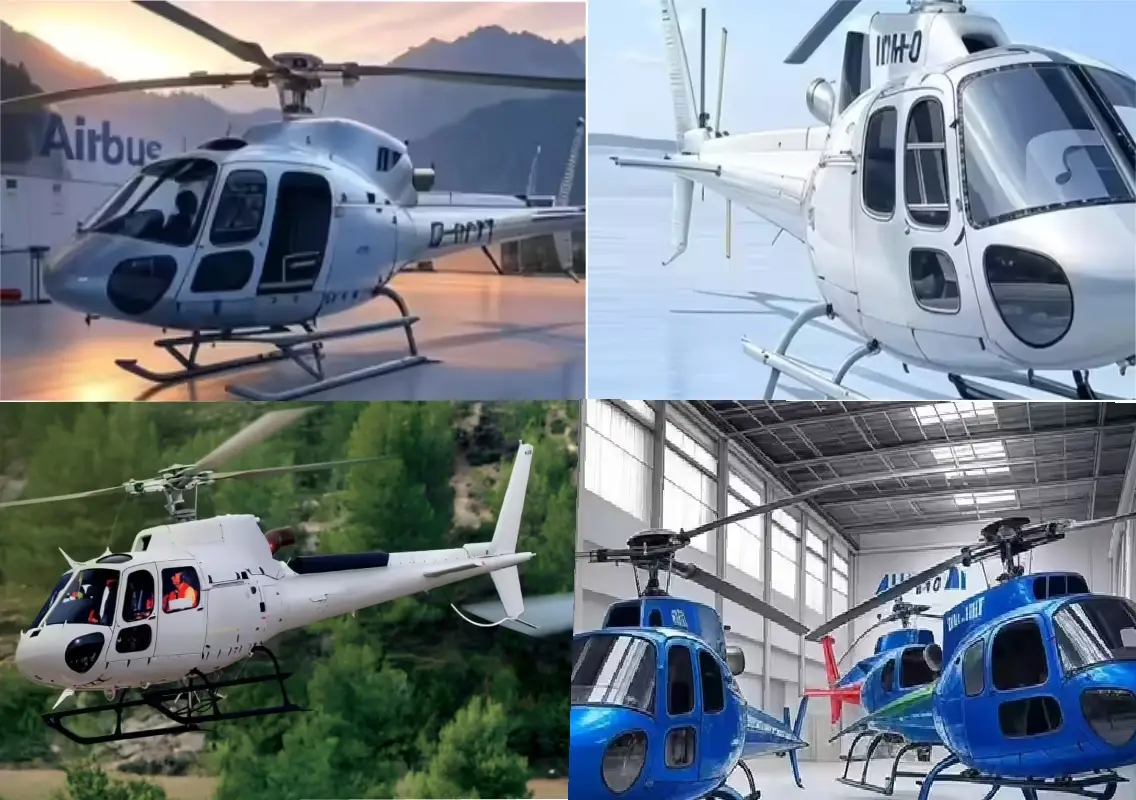


Bengaluru [India]: Tata Advanced Systems Limited (TASL) is set to establish India’s first private sector helicopter final assembly line (FAL) at Vemagal in Karnataka, in partnership with Airbus. The facility will assemble the versatile Airbus H125 helicopter, marking a milestone in the country’s aerospace and defence manufacturing landscape.
The initiative is a major step towards reducing dependence on imported helicopters, bolstering local manufacturing, and creating a skilled workforce in aerospace engineering. Designed to support both civil and defence programmes, the plant underscores India’s ambition to become a regional hub for advanced helicopter production.
First delivery in 2027
The first “Made-in-India” H125 helicopter is scheduled for delivery in early 2027. According to TASL, the assembly line will integrate modern production processes with rigorous quality checks. Initial deliveries will serve civil aviation and para-public missions within India, before scaling up for defence and export markets.
Officials said that each helicopter will undergo stringent assembly, integration, and flight-testing processes to ensure operational reliability. The early output will serve as a benchmark for India’s growing aerospace ambitions, with TASL positioning itself to compete with established global players.
Civil and defence applications
The Airbus H125 is known for its lightweight, multi-role versatility, making it suitable for both civil and defence applications. In India, the platform is expected to serve the armed forces, police, and disaster management agencies. Its ability to perform in high-altitude and Himalayan terrains makes it ideal for border patrol, medical evacuation, and surveillance missions.
In the civilian space, the H125 will be deployed for tourism, charter services, and emergency response. Its dual-use design also allows for future upgrades, ensuring adaptability to mission-specific needs.
Export potential for South Asia
While the primary focus is on meeting India’s requirements, the Vemagal facility will also cater to export markets in South Asia. Neighbouring countries seeking reliable light helicopters are seen as key buyers.
TASL and Airbus intend to use the project to enhance India’s diplomatic and economic leverage. The facility will be designed to meet international aviation standards, enabling certification for exports and strengthening India’s role in the global aerospace supply chain.
Military variant H125M
The plant will also manufacture a military variant, the H125M. This version will integrate a higher share of indigenous components and technologies, customised for reconnaissance and light multi-role operations.
The H125M will be optimised for deployment in high-altitude and frontier regions. Its modular design will allow the Indian armed forces to adapt the platform for patrol, logistics, and other mission-critical needs.
Strengthening Tata-Airbus partnership
This project deepens the Tata-Airbus collaboration, which already includes the C295 military aircraft assembly facility in Vadodara. While Airbus provides technical expertise, TASL will handle end-to-end operations including assembly, integration, and testing.
The partnership will also enable knowledge transfer to Indian engineers and technicians, further strengthening the domestic aerospace ecosystem.
Boost to jobs and local industry
The facility is expected to generate thousands of direct and indirect jobs in mechanical assembly, avionics, and flight testing. It will also stimulate the growth of ancillary industries and supply chains across Karnataka and beyond.
Training programmes are being planned to develop local talent, exposing Indian engineers to global aerospace standards. Analysts note that such initiatives will attract further private and foreign investment into the Indian aerospace sector.
Airbus’ long-term commitment to India
Airbus’ engagement with India dates back over 60 years, beginning with collaborations on Cheetah and Chetak helicopters with Hindustan Aeronautics Limited (HAL). The new H125 assembly line is part of Airbus’ larger strategy to deepen its footprint in India, spanning design, manufacturing, and maintenance.
The European aviation giant already sources billions of dollars’ worth of components annually from Indian suppliers and aims to continue expanding local industrial participation.
Focus on indigenisation
The H125 FAL will lay strong emphasis on local sourcing and indigenous component production, in line with the government’s ‘Make in India’ and ‘Atmanirbhar Bharat’ initiatives. TASL is working with Indian MSMEs to supply airframes, avionics, and mechanical parts wherever feasible, thereby reducing dependence on imports and enhancing strategic autonomy.
Strengthening security and civil aviation
The new assembly line is strategically significant, bolstering India’s civil aviation capacity while strengthening defence preparedness. Helicopters produced at the Vemagal facility will enhance national security, disaster response, and border surveillance, while also serving civilian needs such as tourism and charter flights.
Officials say the initiative will not only boost India’s aerospace economy but also position the country as a regional leader in helicopter production.