


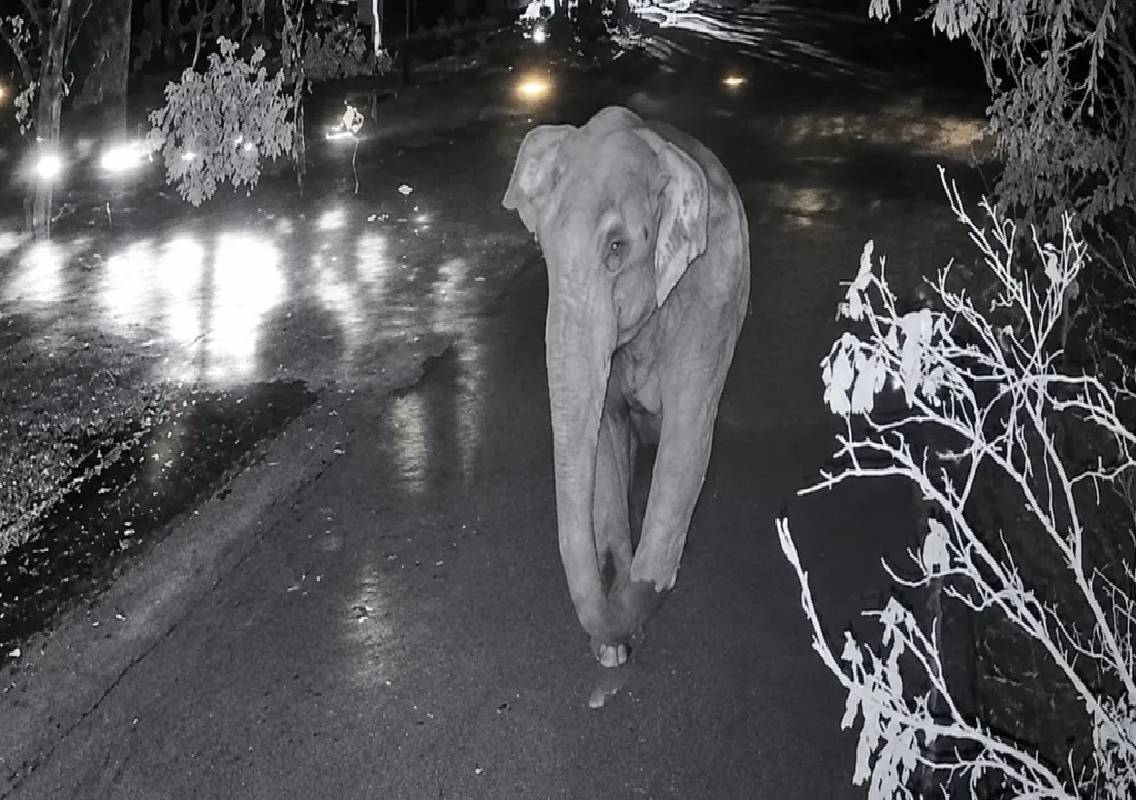


Bengaluru: A 60-year-old man was allegedly trampled to death by a wild elephant while he was out on his morning walk on Mysuru Road in Bengaluru in the early hours of September 28. The deceased, identified as Nagaraj, was attacked near Kengeri after a wild elephant reportedly strayed into the area.
According to the Star of Mysore report, Nagaraj was a resident of Anchepalya on Mysuru Road. He had left his house at around 5 am for his regular morning walk and was walking behind RR Medical College when the elephant reportedly attacked him from behind.
The incident has raised fresh concerns over human-wildlife conflict on the outskirts of Bengaluru, particularly in areas located relatively close to forested habitats.
Elephant attacks Nagaraj during morning walk
Nagaraj was reportedly walking behind RR Medical College near Kengeri when the elephant suddenly appeared and attacked him. The 60-year-old is said to have attempted to escape from the animal but was unable to get away.
He suffered serious injuries in the attack. Passersby who noticed him in an injured condition immediately rushed him to Rajarajeshwari Hospital for treatment.
However, Nagaraj reportedly succumbed to his injuries at the hospital. The Star of Mysore report said he had sustained serious injuries, including injuries to his ribs.
The incident occurred around the early-morning hours when the area would have had relatively limited pedestrian movement, making the sudden presence of the wild elephant particularly dangerous for people using the road and nearby walking routes.
CCTV captures elephant on nearby road
Following the incident, Forest Department and police personnel reached the location and began investigating the circumstances surrounding the attack.
CCTV footage from nearby Vaarahi Apartments reportedly captured the wild elephant moving along Malhar Avenue Road at around 5.11 am. The footage is expected to help officials establish the animal’s movements before and after the attack.
The elephant also reportedly damaged two compounds in the area, indicating that it had moved through residential surroundings before or after the fatal encounter.
The presence of the elephant so close to built-up areas has prompted attention from forest officials, who are examining where the animal came from and how it reached the locality.
Elephant may have strayed from Bannerghatta
Kaggalipura Range Forest Officer N.R. Kamble said the wild elephant may have strayed from the Bannerghatta Wildlife Sanctuary. However, the exact origin and movement of the animal had not been conclusively established in the report.
The officer also said the exact cause of Nagaraj’s death would be known after the post-mortem report. While the incident is suspected to have been caused by the elephant attack, the medical examination will establish the precise cause of death.
The incident occurred in an area adjoining Bengaluru’s urban landscape, highlighting the challenges faced when wild animals move beyond forest boundaries and into settlements.
Human-wildlife conflict remains a concern
The death has once again brought the issue of human-wildlife conflict into focus in areas surrounding Bengaluru. Elephants can travel considerable distances in search of food, water and suitable habitat, and encounters can become dangerous when they enter populated areas.
The incident near Kengeri also demonstrates the risks faced by residents who use roads and open areas during the early morning hours. A person encountering an elephant unexpectedly at close range may have little time to respond safely.
Forest officials are responsible for tracking such animal movements and taking measures to prevent further encounters where possible. The CCTV footage from the area could assist authorities in understanding the elephant’s route and determining whether it remained in the vicinity after the attack.
Bengaluru has witnessed elephant incidents before
The latest incident also brings back memories of a major elephant-related incident in Mysuru in 2011.
According to the Star of Mysore report, two elephants entered Mysuru city on June 8, 2011, after becoming separated from a herd that had strayed from the T. Narasipur forests. The elephants moved through city streets, damaging vehicles and causing panic.
Several people were injured during that incident, while an ATM security guard was killed by an elephant. The animal also attacked and killed a cow before one of the elephants was eventually tranquilised after a prolonged operation.
The 2011 incident demonstrated how quickly elephant movement can create a serious safety situation in an urban environment.
Officials investigate circumstances of latest attack
Following Nagaraj’s death, police and Forest Department officials inspected the area and began collecting information about the incident. The damaged compounds and CCTV footage are among the reported evidence that could help reconstruct the elephant’s movements.
The post-mortem examination will also provide further clarity on the injuries sustained by Nagaraj and the exact cause of his death.
Meanwhile, officials will have to determine whether the elephant has moved away from the area or remains in the vicinity. Any further movement towards residential areas could pose an additional risk to local residents.
The incident also underlines the importance of residents exercising caution when wild animals are reported in areas close to human settlements. People encountering an elephant should maintain a safe distance and avoid approaching, chasing or provoking the animal.
Conclusion
The death of 60-year-old Nagaraj after a suspected wild elephant attack near Kengeri has highlighted the continuing challenge of human-wildlife conflict on Bengaluru’s outskirts. The elephant was reportedly captured on CCTV around 5.11 am, while Forest Department officials are investigating its movements and possible origin. Officials said the animal may have strayed from Bannerghatta Wildlife Sanctuary, while the exact cause of Nagaraj’s death will be confirmed through the post-mortem examination.