







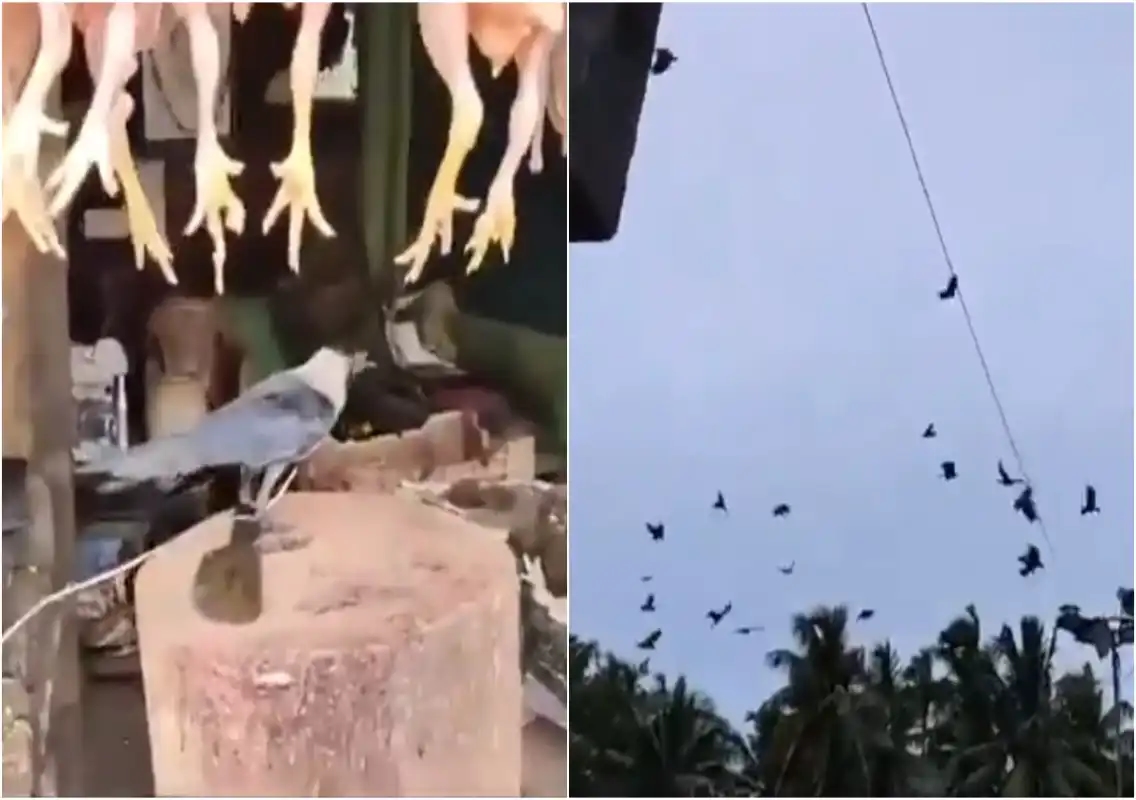


In a bizarre incident in Tatipaka, Ambedkar Konaseema district, Andhra Pradesh, a chicken shop owner tied a crow with a rope to silence its incessant cawing. A video of the incident went viral on social media, showing the crow’s distress calls attracting hundreds of crows, causing a significant disturbance in the market. The overwhelming noise led other shopkeepers to urge the owner to release the bird. Realising his mistake, the owner untied the crow, and the market returned to normal. This incident has sparked discussions about human-wildlife interactions and the need for humane conflict resolution.
కాకి అరిచి విసిగిస్తుందని తాడుతో కట్టేసిన ఓ చికెన్ షాప్ యజమాని
అంబేద్కర్ కోనసీమ జిల్లా తాటిపాక డైలీ మార్కెట్లో ఒక కాకి అరిచి విసిగిస్తుందని దాన్ని ఓ చికెన్ షాప్ యజమాని తాడుతో కట్టేశాడు.. అయితే కాకిని బంధించడంతో అక్కడకు వందలాది కాకులు చేరుకుని అరవడం మొదలెట్టాయి.
కాకుల గోలను… pic.twitter.com/08GzAC94px
— Telugu Scribe (@TeluguScribe) July 17, 2024
The Incident
The incident began when the shop owner, frustrated by the crow’s constant cawing, decided to tie the bird with a rope. This action was intended to silence the crow, but it had the opposite effect. The crow’s distress calls attracted hundreds of other crows, creating a deafening noise that disrupted the entire market.
Public Reaction
A video of the incident quickly went viral, drawing widespread condemnation. Social media users criticized the shop owner for his cruelty and called for better treatment of animals. The incident highlighted the sometimes unforeseen consequences of human actions on wildlife and sparked discussions about the need for humane and non-disruptive ways to handle wildlife conflicts.
Resolution
The continuous cawing of the gathered crows caused significant inconvenience to other shopkeepers and market-goers. Unable to bear the noise, they pleaded with the chicken shop owner to release the crow. Realising the unintended consequences of his actions, the shop owner untied the crow and set it free.
Aftermath
Following the release of the crow, the Tatipaka market returned to its usual hustle and bustle. However, the memory of the crow commotion remains fresh in the minds of those who witnessed it. This unusual incident has brought attention to the relationship between humans and urban wildlife and the importance of coexistence and understanding.
Expert Opinions
Local authorities and wildlife experts have urged residents to find humane and non-disruptive ways to handle wildlife conflicts. They emphasize the importance of understanding and respecting wildlife, especially in urban settings where human and animal interactions are common.