







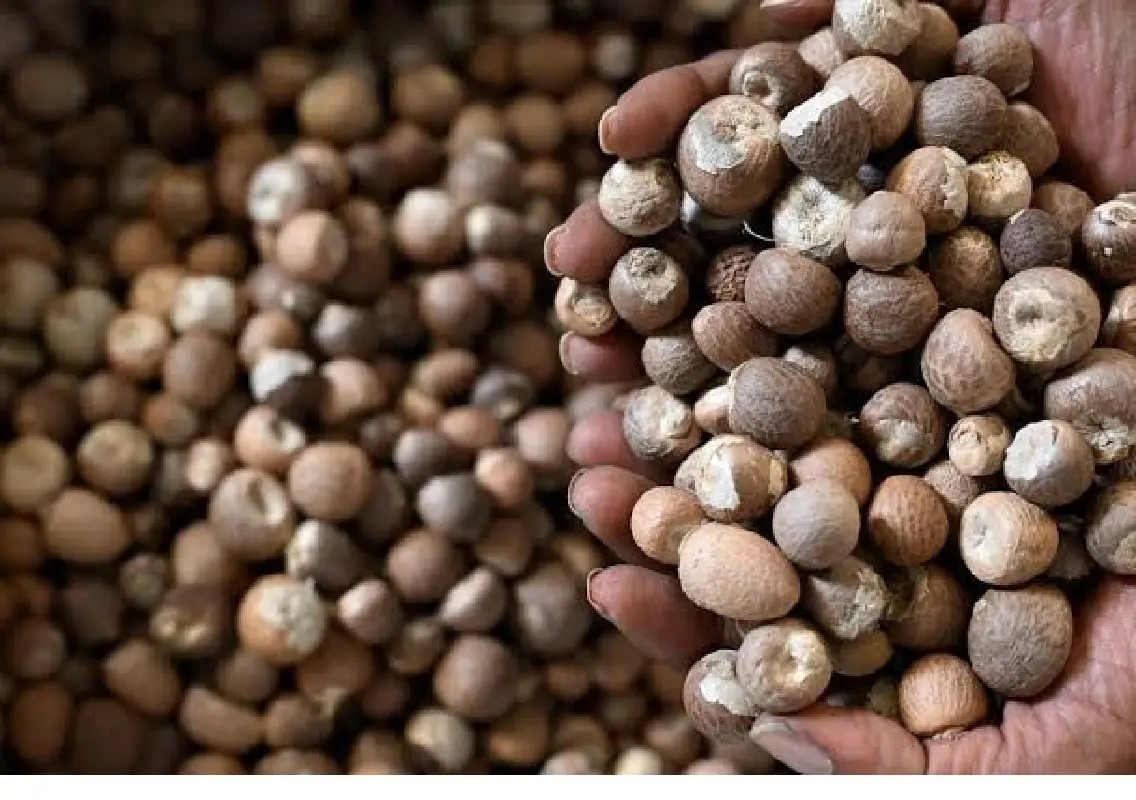


Chikkamagaluru: Arecanut cultivation has been expanding across several parts of Chikkamagaluru district, but a recent decline in prices amid concerns over a possible gutkha ban has left growers and traders worried.
Price fall triggers concern
The price of red areca has fallen by around Rs. 3,000 per quintal following developments related to restrictions on gutkha, triggering anxiety among farmers and traders.
While there are arguments that a gutkha ban may not have a major impact on arecanut cultivation, growers remain concerned about the possible effect on market demand.
Diseases add to growers’ problems
Areca plantations in the Malnad region are already facing serious challenges from yellow leaf disease and fruit rot or leaf spot disease. Climate variations have also affected traditionally cultivated plantations.
In several plantations, trees remain standing but yield little or no produce, adding to the difficulties faced by growers.
At the same time, cultivation is expanding in the plateau areas of the district. Farmers who have struggled to earn adequate returns from ragi and maize are increasingly turning to arecanut.
The area under cultivation has been growing in Tarikere, Ajjampura and Kadur taluks, where farmers have reported fewer disease-related problems and improved economic returns.
Farmers seek clarity on gutkha restrictions
Sringeri Kshetra Raitha Sangha president Naveen Karuvane said a gutkha ban could affect arecanut prices and urged the government to focus on banning nicotine instead.
He said nicotine-containing products should be prohibited because of their harmful effects, while arguing that consuming arecanut by itself does not result in fatalities.
Farmers said recent government orders concerning tobacco and gutkha restrictions, along with changes in packaging regulations introduced by the Food Safety and Standards Authority of India (FSSAI), have added to their concerns.
Former APMC member T R Sridhar, however, said the government’s gutkha-related orders were aimed at regulating and improving the industry and should not be viewed as an attempt to destroy arecanut cultivation.