







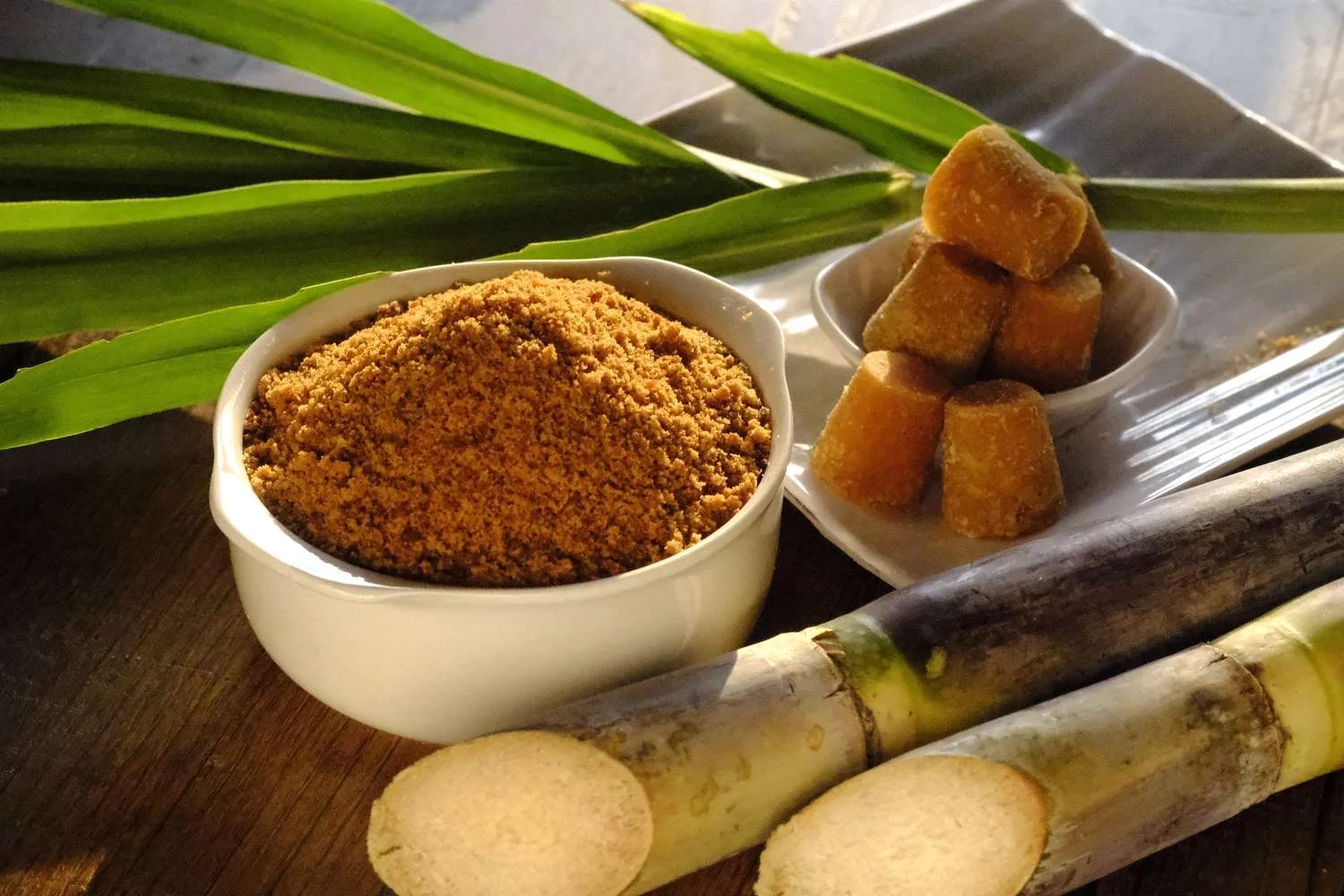


For generations, jaggery has occupied a place of trust in Indian kitchens—valued as a natural sweetener rooted in tradition, health, and cultural memory. Yet behind this familiar product lies a reality of inconsistency, declining consumer confidence, and struggling farmers. Seeking to address this gap, Dr Vishal Sardeshpande of IIT Bombay and his wife, Dr Madhavi Sardeshpande, a senior scientist at the National Chemical Laboratory (NCL), have developed a patented, science-driven solution that promises to redefine jaggery production in India.
Their innovation, known as Resource Efficient Jaggery Processing (REJP) technology, aims to bring consistency, hygiene, and chemical-free purity to jaggery manufacturing—while remaining simple enough to be adopted by farmers and rural women entrepreneurs.
A traditional product facing modern challenges
Madhavi Sardeshpande explains that the concern began with the way jaggery is produced today.
“Jaggery is something our grandparents trusted,” she says. “But modern production depends on traditional furnaces that are unpredictable. Farmers struggle with inconsistent heat, excess fuel usage, lack of skilled labour, and unhygienic conditions. The result is jaggery that varies widely in colour, texture, and sweetness from batch to batch.”
More troubling was the widespread use of chemical clarifying agents, smoke-contaminated fuels, and outdated processing methods—ironically compromising a product long associated with purity.
“Consumers were losing trust, and farmers were losing income,” Madhavi adds. “The real issue was not jaggery quality alone, but the absence of a scientific, scalable system that could preserve authenticity while ensuring reliability.”
Applying science to a rustic process
Rather than viewing jaggery as an unchangeable traditional product, the couple approached it through engineering, physics, and food chemistry. Dr Vishal Sardeshpande had already spent years studying furnace design, heat transfer, combustion efficiency, and sugarcane juice behaviour—knowledge that became the foundation of their work.
Their objective was ambitious but clear: to design a system that was chemical-free, reproducible, energy-efficient, and easy to operate, particularly by rural women.
“We broke the challenge into smaller questions,” Madhavi recalls. “How do we control heat precisely without expensive equipment? How do we remove impurities naturally? How do we avoid caramelisation and browning? And most importantly, how do we ensure batch-to-batch consistency?”
Over a thousand trials to perfection
The solutions emerged gradually through more than 1,000 trials, extensive fieldwork, and continuous feedback from consumers and experts. The couple experimented with natural clarifying agents such as okra sap and lime, redesigned furnace geometry for optimal combustion, and developed a controller capable of monitoring multiple parameters in real time.
“This was not a one-time innovation,” Madhavi says. “Every failure taught us something new—about moisture behaviour, sugar chemistry, furnace shapes, or process timing.”
Their research began in 2010, leading to pilot plants by 2016. Trials were conducted across seasons and sugarcane varieties. By 2020, Dr Vishal successfully patented the REJP technology, which enables the production of micro-crystalline, free-flowing, chemically pure jaggery.
From research to real-world validation
A full-scale plant established in Pune under the brand ‘Sarvaay’ has been operational since 2021. According to Madhavi, the results have validated the science behind the system.
“Over 50 per cent of our customers are repeat buyers,” she notes. “That loyalty tells us we are delivering consistency, quality, and trust.”
The technology has also been positively reviewed by experts from academia, industry, and farming communities, strengthening confidence in its scalability.
A self-funded journey of conviction
Developing the REJP system required not only scientific rigour but also personal sacrifice. The couple invested nearly ₹3 crore of their own savings, without external funding.
“The financial risk was significant,” Madhavi admits. “We had to rebuild furnaces, discard failed components, and run thousands of litres of sugarcane juice through trials. The emotional cost was probably even higher—but it was worth it.”
Meeting rising demand for natural sweeteners
With Indian consumers increasingly moving away from refined sugar and artificial sweeteners, demand for natural alternatives is growing rapidly. The Sardeshpandes see strong potential not only for pure jaggery but also for value-added FMCG products.
Their market strategy includes general trade, modern retail, speciality health stores, and e-commerce platforms. Planned product extensions include jaggery chocolates, tea and coffee premixes, turmeric blends, and cold-coffee sweeteners—targeting different age groups and consumption habits.
Technology as the true differentiator
While the market includes traditional jaggery makers, premium Indian FMCG brands, and global sweeteners such as honey and coconut sugar, Madhavi believes REJP stands apart.
“Our strength lies in technology, not packaging,” she says. “Our patented process ensures controlled moisture, long shelf life, and reproducibility across seasons—something most competitors cannot achieve.”
Scaling impact beyond business
Looking ahead, the couple plans to raise ₹5 crore to expand production, establish additional REJP plants, and ensure year-round supply. Equally important is their social vision.
“We want small farmers and rural women entrepreneurs to benefit from this technology,” Madhavi explains. “Our goal is to transform jaggery from a seasonal, inconsistent commodity into a modern FMCG product that is trusted, accessible, and proudly Indian.”
If successful, their work could mark a quiet but meaningful revolution—where science restores trust in one of India’s oldest and sweetest traditions.