







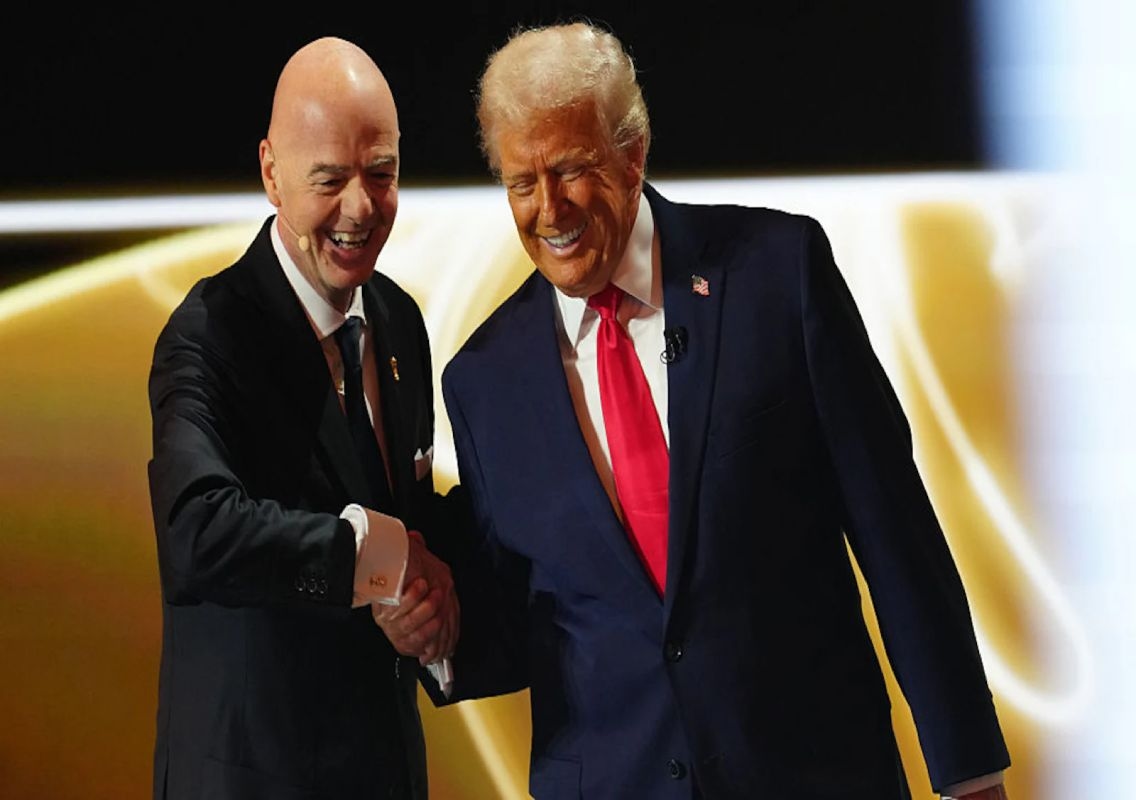


Zurich: FIFA president Gianni Infantino is facing mounting scrutiny after allegations of breaching political neutrality surfaced following reported intervention by United States President Donald Trump in a disciplinary decision during the FIFA World Cup 2026.
The controversy centres around the rescinding of a red card shown to United States striker Folarin Balogun during his side’s Round of 32 victory over Bosnia and Herzegovina. FIFA had initially handed Balogun a one-match suspension, ruling him out of the Round of 16 clash against Belgium. However, the decision was later overturned, allowing the striker to feature in the knockout fixture.
Alleged political influence sparks controversy
Reports indicate that intervention from President Trump, along with legal efforts from US Soccer, played a role in the reversal of the disciplinary action. FIFA cited Article 27 of its disciplinary code while rescinding the ban, a move that has since drawn criticism from rights organisations.
Human rights group FairSquare has announced plans to file a formal complaint with the International Olympic Committee (IOC), accusing Infantino of a “repeated breach of political neutrality rules”.
Infantino, who has been a member of the IOC since 2020, is now at the centre of a growing debate over the separation of sport and politics at the highest level of global football administration.
FairSquare raises ethics concerns
FairSquare stated that it had previously filed a complaint with FIFA’s Ethics Committee in December 2025, citing multiple instances where Infantino allegedly expressed public support for Trump’s policies and actions.
The organisation has now escalated the matter, urging further investigation into Infantino’s conduct. It has also questioned the introduction of a FIFA Peace Prize and the decision to award it to Trump ahead of the World Cup draw.
According to the complaint, it remains unclear whether the decision to introduce the award was approved by FIFA’s governing council or taken unilaterally by Infantino.
“If Mr Infantino acted without statutory authority, it should be considered an egregious abuse of power,” FairSquare said in its statement.
FIFA code of ethics under spotlight
The allegations reference Article 15 of FIFA’s Code of Ethics, which requires officials to maintain strict political neutrality in their professional roles.
Under these rules, any breach could result in a minimum fine of 10,000 Swiss francs and a ban of up to two years from football-related activities.
FairSquare has argued that the circumstances surrounding Balogun’s overturned suspension, combined with Infantino’s alleged political associations, raise serious concerns about the integrity of decision-making within FIFA.
The organisation also noted that FIFA’s investigatory chamber acknowledged receiving a complaint in December but has yet to indicate whether a formal investigation has been initiated.
IOC response and ongoing developments
IOC president Kirsty Coventry confirmed that no official complaint had yet been received by the Olympic body’s ethics commission but stated that any such submission would be reviewed.
“Obviously, if they do, they would look into it,” Coventry said.
The situation has added another layer of controversy to the ongoing World Cup, which has already seen several high-profile incidents both on and off the pitch.
Conclusion
As scrutiny intensifies, the focus now shifts to whether FIFA’s Ethics Committee or the IOC will formally investigate the allegations against Infantino. The outcome could have significant implications for governance standards in international sport and the long-standing principle of political neutrality in football administration.
For now, the governing body faces increasing pressure to clarify its decisions and ensure transparency in its processes amid one of the biggest tournaments in the world.