







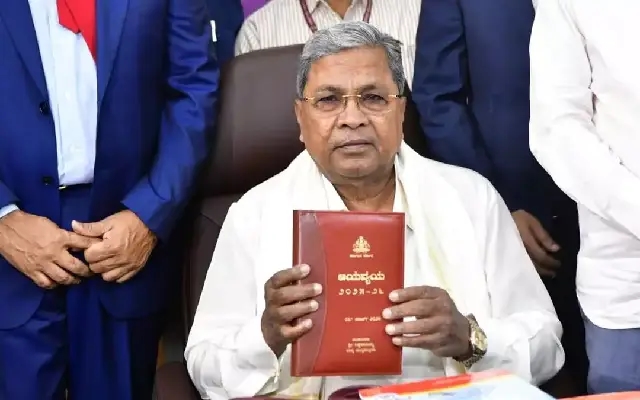


In the 2025-26 budget, nearly 80% of the allocated funds will be consumed by committed expenditure, such as salaries, subsidies, and debt repayment, leaving the state government with limited flexibility for productive spending. Chief Minister Siddaramaiah’s budget pegged the total expenditure at Rs 4.09 lakh crore, with Rs 3.21 lakh crore—about 78%—dedicated to fulfilling these recurring financial obligations.
This surge in committed expenditure has placed significant strain on the state’s finances. The costs associated with salaries, which were revised in accordance with the 7th Pay Commission’s recommendations, have added a substantial burden. Last year’s salary hike alone resulted in an extra Rs 19,401 crore in expenditure, and further increases in administrative costs seem inevitable, as these components are largely non-negotiable. The rise in committed expenses now accounts for 103% of the state’s revenue expenditure—funds earmarked for day-to-day government functions.
While the budget also proposes a 27% rise in capital expenditure, set at Rs 71,336 crore, critics argue that it may not be enough to alleviate the growing financial pressure. Economic Advisor Basavaraj Rayareddi acknowledged that “nothing can be done in the present situation to bring down committed expenditure” and emphasized the difficulty in making cuts without hampering essential services and development.
A major concern raised by Karnataka Administrative Reforms Commission chairperson R.V. Deshpande is the growing number of vacancies in the state’s administration. He warned that filling these posts would add to the financial burden, while leaving them vacant poses operational challenges. The need for hard decisions—such as cutting subsidies or rationalizing government expenses—is also highlighted, especially with the projected Rs 79,925 crore allocated for subsidies in 2025-26, a 27% rise from the previous year.
The largest chunk of subsidy expenditure goes towards free power for irrigation pumpsets. The state’s finance department has been exploring measures to limit subsidies for wealthier farmers, but these efforts require political will and careful consideration.
As the government strives to balance growing expenditure with revenue generation, the pressure to rationalize administrative expenses and streamline costs remains a critical challenge.
Read also: