







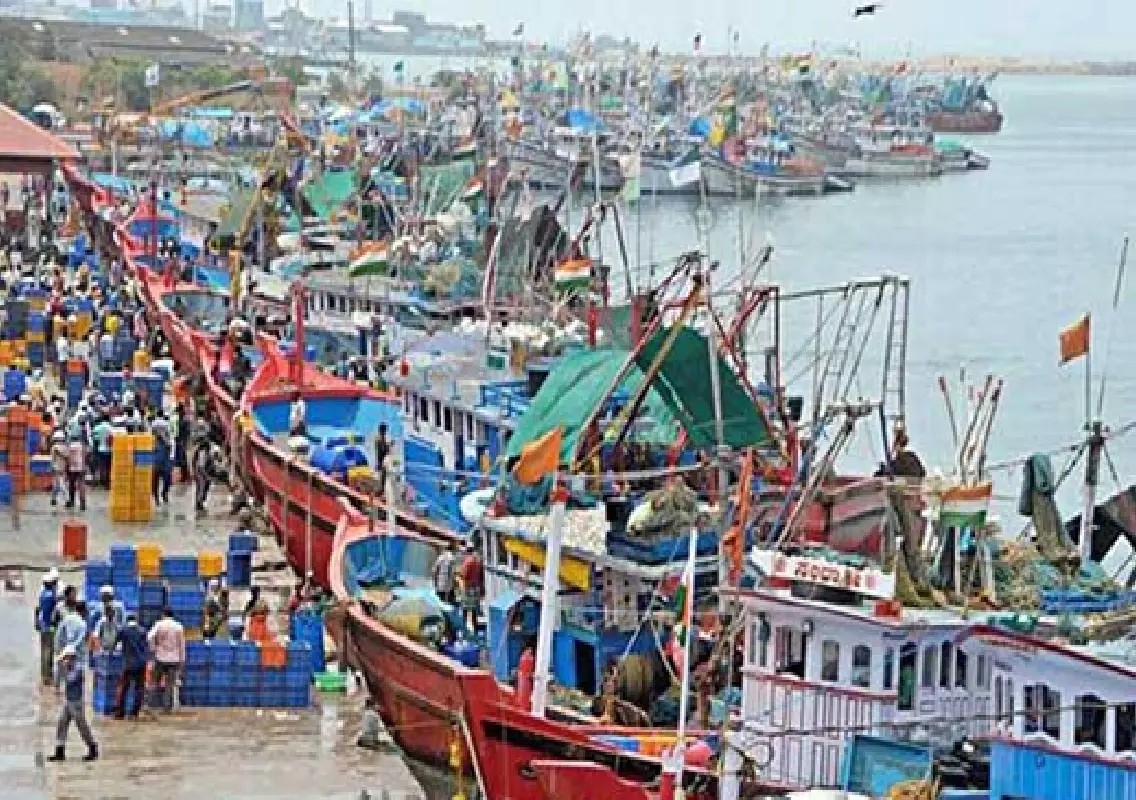


Mangaluru: Traditional fishermen in Dakshina Kannada are facing one of their most difficult monsoon seasons in recent years, with repeated weather disruptions, poor catches and rising operational costs severely affecting their livelihoods.
Fishermen said they have been able to venture into the sea for only around 14 days so far this season, compared with nearly 25 fishing days that would normally be available during July. The reduced fishing window has compounded the impact of poor catches, leaving many traditional fishing families struggling to recover even their basic operating expenses.
Weather warnings keep fishermen ashore
Frequent weather alerts and advisories issued by the district administration have significantly restricted fishing activity along the coast.
Ashwath, president of the Karavali Mula Meenugarara Sanghatane and a traditional nadadoni operator, said fishermen were forced to remain ashore for much of the season because of unfavourable sea conditions and official warnings.
According to him, boats were able to venture into the sea only on Thursday after remaining largely inactive during the preceding period.
“Even when we go out, the catch is too poor to recover fuel and other operational costs,” he said.
The limited number of fishing days has created a difficult situation for traditional fishermen, who depend heavily on the monsoon fishing season for their income.
Fishing activity is particularly important during the monsoon months, when certain varieties of fish and prawns are generally expected to provide substantial catches. However, fishermen said the combination of restricted access to the sea and weak availability of important varieties has affected their earnings considerably.
Poor catches add to financial pressure
Even on days when fishermen manage to venture into the sea, poor catches have made it difficult to generate adequate returns.
Ashwath said a few fishermen managed to earn between Rs 60,000 and Rs 70,000 on Thursday. However, such earnings were exceptional rather than representative of the season.
For most fishermen, the income generated from a trip is increasingly being consumed by fuel and other operational expenses.
The situation is particularly challenging for small-scale traditional fishermen, who generally operate with limited financial reserves. When fishing trips fail to produce sufficient catches, they can face losses after accounting for fuel, labour, maintenance and other expenses.
The combination of fewer fishing days and lower catches has therefore created a double burden for the community.
Fuel costs make fishing trips expensive
Rising operational costs have further worsened the situation.
According to Ashwath, fishermen are spending around Rs 10,000 a day on kerosene alone. This represents a significant expense for traditional fishing operations, particularly when a fishing trip does not result in a sufficient catch.
Poor fish availability has also forced some fishermen to travel farther into the sea in search of better fishing grounds.
Fishermen are reportedly travelling towards areas near Manjeshwar and Padubidri, increasing the distance covered during fishing trips. Longer journeys inevitably result in higher fuel consumption, adding to the financial burden.
For fishermen already struggling with poor catches, the additional fuel expenditure makes each trip increasingly risky.
A trip that produces only a modest catch may leave little or no income after fuel and other expenses are deducted.
Sardines remain relatively abundant
Despite the overall difficulties, sardines have remained comparatively available during the current season.
However, fishermen said catches of several important monsoon varieties have been significantly lower than last year.
Prawns and croakers, which are among the varieties traditionally expected during the monsoon season, have reportedly recorded poor catches.
The lower availability of these varieties has affected both the quantity of fish landed and the overall value of catches.
Sardines, meanwhile, have witnessed fluctuations in prices. The fish reportedly fetched around Rs 100 to Rs 150 per kg on Thursday before reaching a seasonal high of Rs 260 per kg on Friday.
While higher prices can provide some relief to fishermen, the benefit is limited when catches are low and fishing opportunities are restricted.
The earnings from a fishing trip depend not only on the market price but also on the quantity landed and the cost incurred in bringing the catch ashore.
Fishermen raise concerns over fishing practices
Some fishermen have also raised concerns about fishing practices that they believe are contributing to declining fish stocks.
They pointed to activities such as light fishing, deep-sea fishing and bull trawling, alleging that such practices could be affecting the availability of fish in traditional fishing grounds.
Traditional fishermen have long depended on nearshore waters and seasonal fish movements. Any reduction in fish stocks in these areas can have a direct impact on their ability to earn a livelihood.
The fishermen’s concerns come at a time when they are already facing restrictions caused by adverse weather conditions and rising operational expenses.
They believe that ensuring sustainable fishing practices is important for protecting fish stocks and securing the future of traditional fishing communities along the Dakshina Kannada coast.
Tough season for traditional fishing community
The current monsoon season has thus emerged as a particularly challenging period for Dakshina Kannada’s traditional fishermen.
With only around 14 fishing days recorded so far, compared with the approximately 25 days normally available during July, the loss of fishing time has significantly reduced opportunities to earn.
The problem has been compounded by poor catches of important varieties, higher fuel costs and the need to travel farther in search of fish.
Although sardines have provided some support and a few fishermen recorded substantial earnings on Thursday, the overall situation remains difficult.
For traditional fishing families, the coming weeks will be crucial. Improved weather conditions, better fish availability and sustainable fishing practices could provide some relief. However, continued weather disruptions and poor catches could further deepen the financial strain on the community.
The fishermen’s experience this season highlights how closely their livelihoods remain tied to both monsoon conditions and the health of coastal fish stocks. A combination of timely weather advisories, sustainable fishing practices and measures to support traditional fishermen during prolonged periods of low activity could be important in helping the community withstand difficult seasons.