







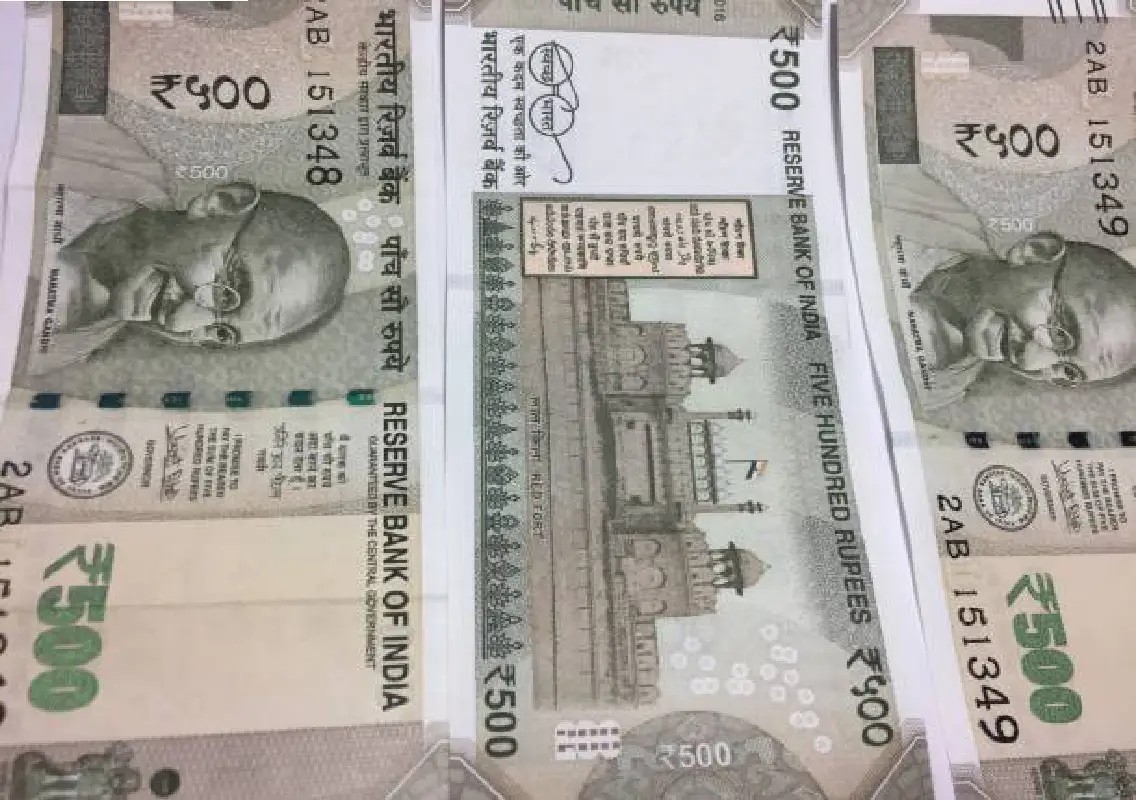


Puttur: Fresh details have emerged in the fake currency racket recently unearthed at Adenja in Kaniyoor village of Beltangady taluk, revealing that the accused had procured sophisticated machinery capable of producing counterfeit currency notes that closely resembled genuine Indian notes. Investigators believe the operation was still in its experimental stage when police raided the premises, preventing the fake notes from entering circulation.
Police officials say the timely action by the Uppinangady Police has averted what could have become a major economic crime. All seven accused arrested in the case remain in custody, while efforts are continuing to trace the remaining absconding suspects.
Advanced machinery sourced from multiple states
According to sources, the gang had purchased state-of-the-art printing and currency manufacturing equipment from Bengaluru, Mumbai and Kerala.
Investigators suspect that the accused invested substantial amounts of money to procure the specialised machinery required for producing high-quality counterfeit currency. The fake notes allegedly produced using the equipment closely resembled genuine currency, raising concerns that they could have easily entered circulation if the operation had continued.
Police believe the sophistication of the equipment indicates careful planning and a well-organised network behind the racket.
Ibrahim suspected to be mastermind
Sources identified Ibrahim, a resident of Puttur, as the alleged mastermind behind the counterfeit currency operation.
Investigators suspect that Ibrahim, who is believed to have expertise in counterfeit currency manufacturing, planned the entire operation in collaboration with the other accused. Police are examining his exact role, including the procurement of machinery and coordination among gang members.
Officials are also investigating whether the group had links with any larger counterfeit currency network operating outside Karnataka.
House rented for illegal activity
According to the investigation, one of the local accused, Sirajuddin of Uruvalu village, allegedly rented a house at Adenja in Kaniyoor village to facilitate the counterfeit currency operation.
Police suspect the rented house served as the manufacturing unit where the gang installed the machinery and conducted trial production of fake currency notes.
Investigators said each member of the gang reportedly specialised in a particular aspect of the manufacturing process, suggesting a structured division of responsibilities within the group.
Operation exposed during trial stage
Police believe the counterfeit currency racket had not yet reached full-scale production.
Sources said that although the accused possessed sophisticated machinery, they lacked complete technical knowledge to operate the newly acquired equipment efficiently.
To overcome this difficulty, the gang allegedly relied on YouTube tutorials to understand the functioning of the machines and improve their counterfeit currency production process.
Investigators believe this lack of expertise significantly slowed down the manufacturing process and ultimately contributed to the gang being caught before large quantities of fake currency could be produced.
Counterfeit notes could have caused major damage
Officials believe that had the counterfeit notes entered circulation, they could have posed a serious threat to the economy because of their close resemblance to genuine currency.
The seizure has drawn appreciation for the Uppinangady Police and the investigation team, who acted before the operation became fully functional.
Police say preventing high-quality counterfeit currency from reaching the market helps protect public confidence in the financial system and avoids potential losses to businesses and consumers.
Seven accused in custody
The investigation is being carried out by the Uppinangady Police under the supervision of the Beltangady Deputy Superintendent of Police.
All seven arrested accused remain in police custody, while search operations are underway to trace the absconding suspects believed to be connected to the racket.
Officials are examining the seized machinery, electronic devices and other evidence to determine the scale of the operation, its financial backing and possible interstate links.
Investigation continues
Police are continuing to question the accused to ascertain whether counterfeit notes had already been printed or distributed before the raid. They are also investigating the procurement of the machinery and the source of funding used to establish the illegal operation.
Further details regarding the network, financial transactions and involvement of additional suspects are expected to emerge as the investigation progresses.
The case has highlighted the growing sophistication of counterfeit currency operations and the importance of timely intelligence and coordinated policing in preventing such crimes before they impact the wider economy.