







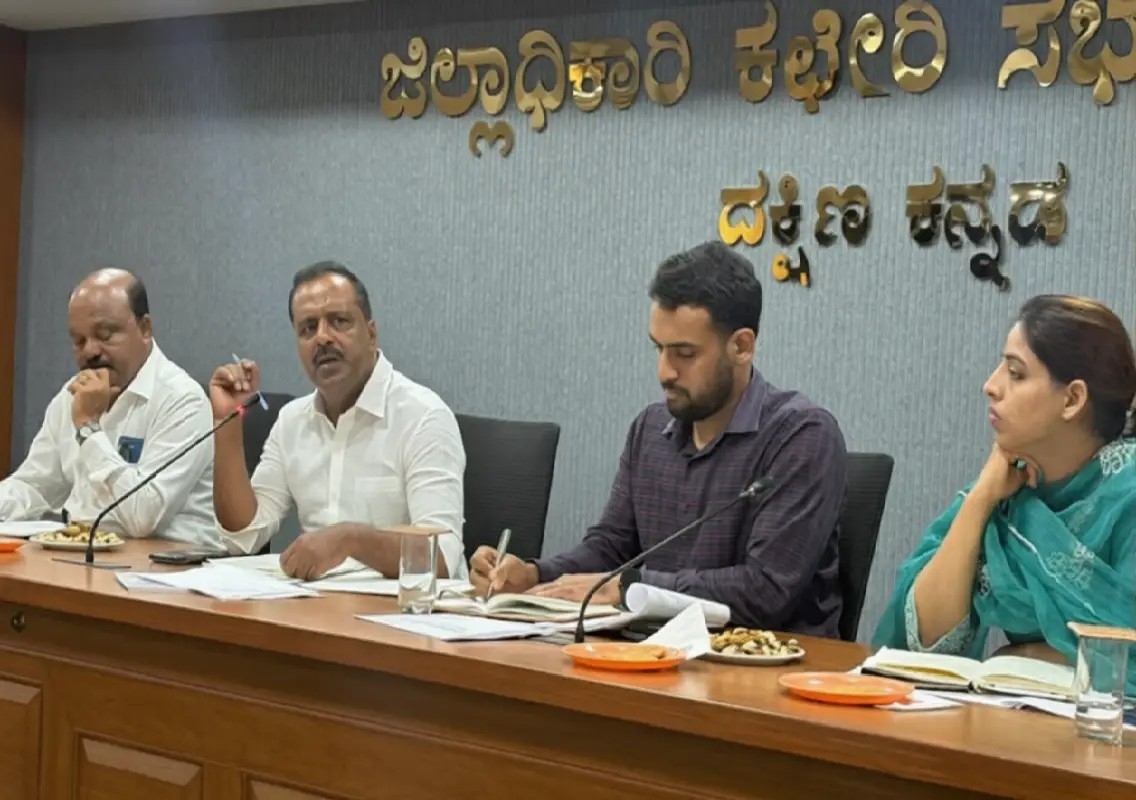


Mangaluru: Karnataka Legislative Assembly Speaker U T Khader has directed officials to ensure immediate electricity connections for drinking water projects without delays, highlighting the urgent need to improve water supply in drought-prone and water-scarce regions.
Chairing a review meeting on Thursday, Khader said several villages and localities continued to face drinking water shortages despite the construction of borewells and overhead water tanks. He observed that delays in providing electricity connections to these facilities were one of the major reasons for disruption in water supply.
Khader stated that the state government had already instructed the concerned authorities to provide electricity connections to drinking water projects without waiting for advance deposits from local bodies. According to him, the expenditure can later be adjusted after grants are released to the respective gram panchayats.
He said drinking water projects are of public importance and should not be delayed due to procedural issues. He also stressed that officials must act swiftly to ensure that residents, especially in rural areas, receive uninterrupted access to safe drinking water during the summer season.
Long-term planning for water security
During the meeting, Khader underlined the need for scientific and long-term planning while implementing drinking water projects. He instructed officials to study local challenges, groundwater conditions and future population growth before preparing project reports.
According to Khader, future drinking water schemes must be designed in a manner that can meet the requirements of the next 30 years. He said short-term planning often results in recurring problems and unnecessary expenditure for local bodies.
The Speaker assured officials and gram panchayats that special grants would be sought from the government whenever necessary for the successful implementation of major water supply projects.
He also noted that the government was already allocating sufficient funds for drinking water management and emergency arrangements. In places where pipeline-based water supply is not practical due to geographical or technical reasons, water should be supplied through tankers without delay, he said.
Khader informed the meeting that along with gram panchayat funds, financial assistance would also be made available through the district task force to tackle drinking water shortages effectively.
Directions issued for monsoon preparedness
Reviewing monsoon preparedness during the meeting, Khader instructed officials to identify flood-prone and waterlogging areas in advance to minimise inconvenience during heavy rainfall.
He directed local authorities to ensure smooth flow of rainwater by carrying out desilting operations in drains, canals and stormwater channels before the onset of the monsoon season.
Special attention should be given to areas that witnessed flooding and natural calamities last year, he said, adding that precautionary measures must be taken on priority to prevent damage to property and disruption to public life.
Khader further instructed officials from local administrations and emergency response departments to immediately visit affected areas in the event of floods, landslides or other rain-related disasters during the monsoon.
He stressed the importance of coordination between departments to ensure timely relief and response measures. According to him, preparedness and preventive action would help reduce the impact of natural calamities and ensure public safety during the rainy season.
Focus on rural development and public welfare
Khader reiterated that access to drinking water remains one of the key priorities of the government, especially in rural and semi-urban areas facing recurring shortages.
He said elected representatives and officials must work together to address public grievances quickly and ensure that essential infrastructure projects are completed without delay. He also called upon local authorities to regularly monitor the functioning of water supply systems and address technical issues immediately.
The Speaker concluded by emphasising that effective planning, timely electricity connections and coordinated administrative efforts would play a crucial role in ensuring water security and disaster preparedness across the district.