







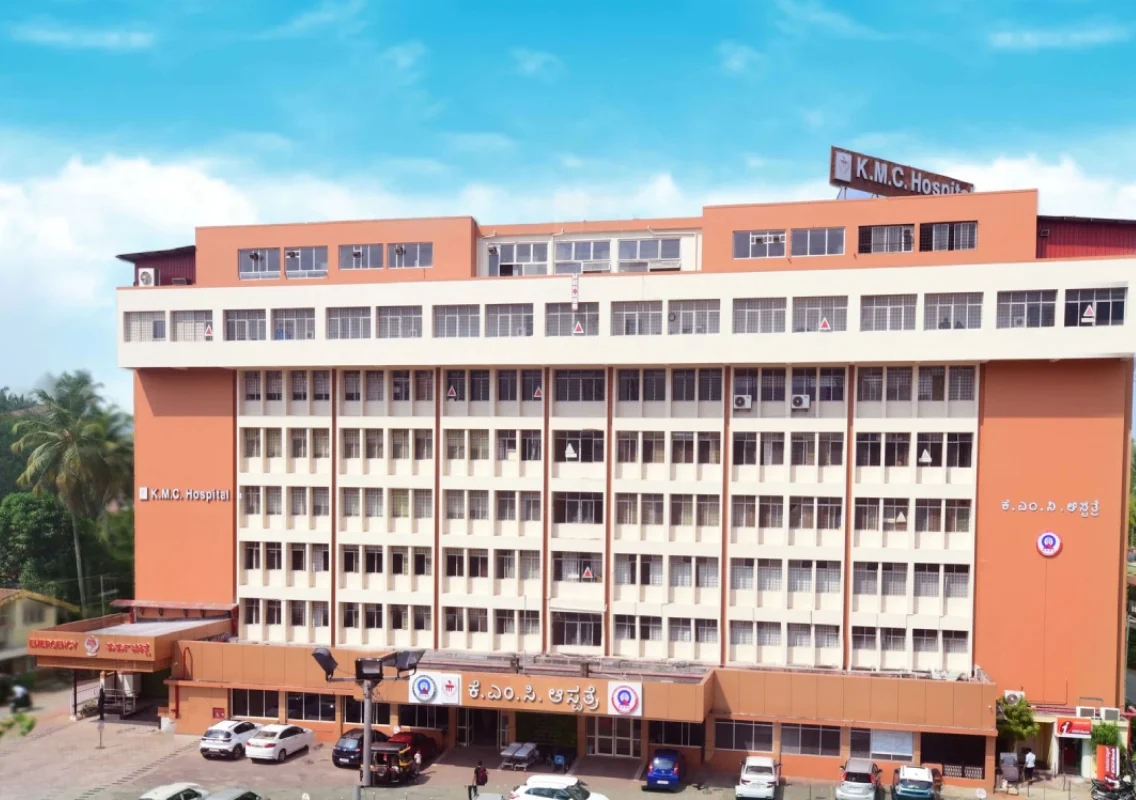


Mangaluru: Doctors at KMC Hospital Attavar successfully managed an extremely high-risk pregnancy, enabling both mother and baby to return home safely after nearly two and a half months of intensive hospital care.
A 37-year-old woman, who was 26 weeks and 5 days pregnant at the time of admission, visited the hospital for a routine antenatal check-up. She had a complex obstetric history, including one abortion 11 years ago and a previous caesarean section four years ago due to severe pregnancy-induced hypertension, during which the baby did not survive. She had no living children.
Multiple life-threatening complications
Under the care of Dr Nina Mahale, Consultant Obstetrician and Gynaecologist, the patient was found to have severely elevated blood pressure and was admitted on November 28, 2025.
Further investigations revealed two major complications:
- Complete placenta previa (Grade 4): A condition in which the placenta completely covers the cervical opening, posing a high risk of severe bleeding.
- Severe fetal growth restriction: The baby was significantly smaller than expected for the gestational age.
She was started on antihypertensive medications and administered steroid injections to accelerate fetal lung maturity. Regular ultrasound and Doppler studies were conducted to closely monitor fetal growth and blood flow.
An MRI scan later revealed placenta accreta, where the placenta was abnormally attached to the uterine wall, further increasing the risk of heavy bleeding during delivery.
Emergency delivery at 29 weeks
On December 13, 2025, Doppler scans indicated worsening fetal condition, including reversed blood flow in the umbilical cord. With persistent uncontrolled maternal blood pressure and increasing fetal risk, the medical team decided to proceed with an emergency caesarean section at 29 weeks of pregnancy on December 16, 2025.
A baby girl weighing 690 grams was delivered and immediately transferred to the neonatal intensive care unit (NICU) for specialised care.
During surgery, the team found the placenta abnormally adhered at two sites. The surgical team carefully removed it, controlled bleeding with specialised suturing techniques and transfused one unit of blood. The mother’s post-operative recovery was smooth.
Multidisciplinary team effort
The patient was closely monitored in the labour ward under Dr Nina Mahale and the Obstetrics and Gynaecology team, including Dr Aparna Rajesh Bhat (Unit Chief), Dr Sauda (Associate Professor), Dr Rakshitha (Senior Resident), postgraduate doctors and nursing staff.
A multidisciplinary approach involving the Departments of Obstetrics and Gynaecology, Medicine, Radiology, Paediatrics, Pulmonary Medicine and Anaesthesia played a crucial role in achieving a positive outcome. The hospital management also extended full institutional support throughout the course of treatment.
Despite the extremely high-risk nature of the case, the team was able to carefully prolong the pregnancy under strict supervision until 29 weeks, improving the baby’s survival prospects.
Safe discharge after prolonged care
After nearly two and a half months of hospitalisation, both mother and baby were discharged in stable condition on February 17, 2026. At discharge, the baby weighed 1.49 kg.
The case underscores the importance of early diagnosis, continuous monitoring and coordinated multidisciplinary care in successfully managing high-risk pregnancies.