







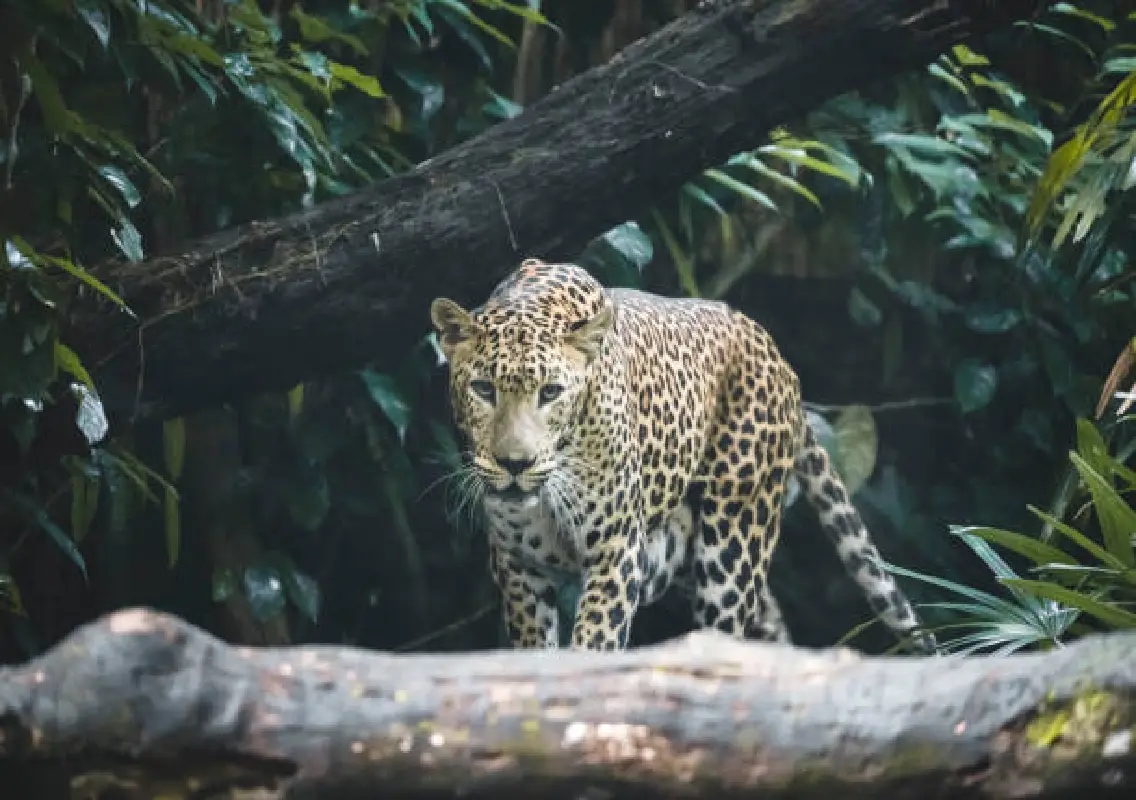


Mangaluru: A leopard that was earlier sighted on the outskirts of Mangaluru has now entered the city limits, triggering concern among residents after its movement was captured on CCTV cameras in the Kadri area.
The big cat was seen on Monday night at Doctors Lane in Kadri. Visuals from surveillance cameras showing the leopard moving through the locality have since circulated among residents, prompting heightened alert in the neighbourhood.
Interestingly, this is not the first instance of wildlife entering the area. Two years ago, a wild bison had also been spotted in the same locality, highlighting the increasing interface between urban spaces and nearby forested regions.
Cage placed at Kaibattalu
The Karnataka Forest Department has initiated efforts to capture the leopard. As part of the operation, officials have placed a cage behind the Nagabana in front of 7th Cross in the Kaibattalu area.
Two hens have been kept in a separate enclosure near the trap as bait to lure the animal. Forest department staff have been divided into three batches to monitor the situation round-the-clock and coordinate the capture operation.
Officials said leopards generally avoid movement during the daytime and are more active at night. Accordingly, surveillance and trapping measures are being focused during late evening and night hours.
Breeding season increases movement
Forest officials pointed out that the breeding season for leopards runs from November to February. During this period, they tend to roam over longer distances in search of mates and food.
If leopards enter human settlements, they typically do not remain in one location for long. However, they may linger in areas where food is easily available, such as places with poultry waste or stray dogs.
Authorities have therefore advised residents not to dump meat waste indiscriminately in open areas, as this could attract wild animals into residential neighbourhoods.
Possible route into the city
Leopard movement is frequently reported in peripheral areas such as Neermarga, Bajpe and Edapadavu, which are closer to forested and semi-rural zones. Officials suspect that the animal may have entered the city in search of food from one of these regions.
According to forest department sources, a leopard can travel approximately 15 to 20 km in a single night. This ability to cover significant distances quickly makes tracking and capturing the animal more challenging.
Teams are currently monitoring CCTV footage from various points and conducting field patrols to trace its movement pattern.
Public advised to remain cautious
While the sighting has caused anxiety among residents of Kadri and surrounding localities, officials have urged the public not to panic. Instead, they have advised people to remain vigilant, especially during early morning and late evening hours.
Residents have been asked to avoid venturing out alone at night, ensure that children are supervised, and keep pets indoors. People have also been requested to immediately inform the forest department if they spot the leopard.
Urban wildlife experts note that such incidents are becoming more frequent as expanding city boundaries overlap with natural habitats. Habitat fragmentation and easy access to food in urban areas often draw animals into human settlements.
Ongoing monitoring
Forest department officials said the situation is being closely monitored and all necessary precautions are in place to ensure public safety. The priority, they added, is to capture the leopard safely without causing harm to the animal or residents.
The operation will continue until the animal is successfully trapped and relocated to a suitable habitat.
As Mangaluru grows and urban development extends towards forest fringes, authorities emphasise the need for responsible waste management and community awareness to reduce the chances of wildlife straying into city areas.