







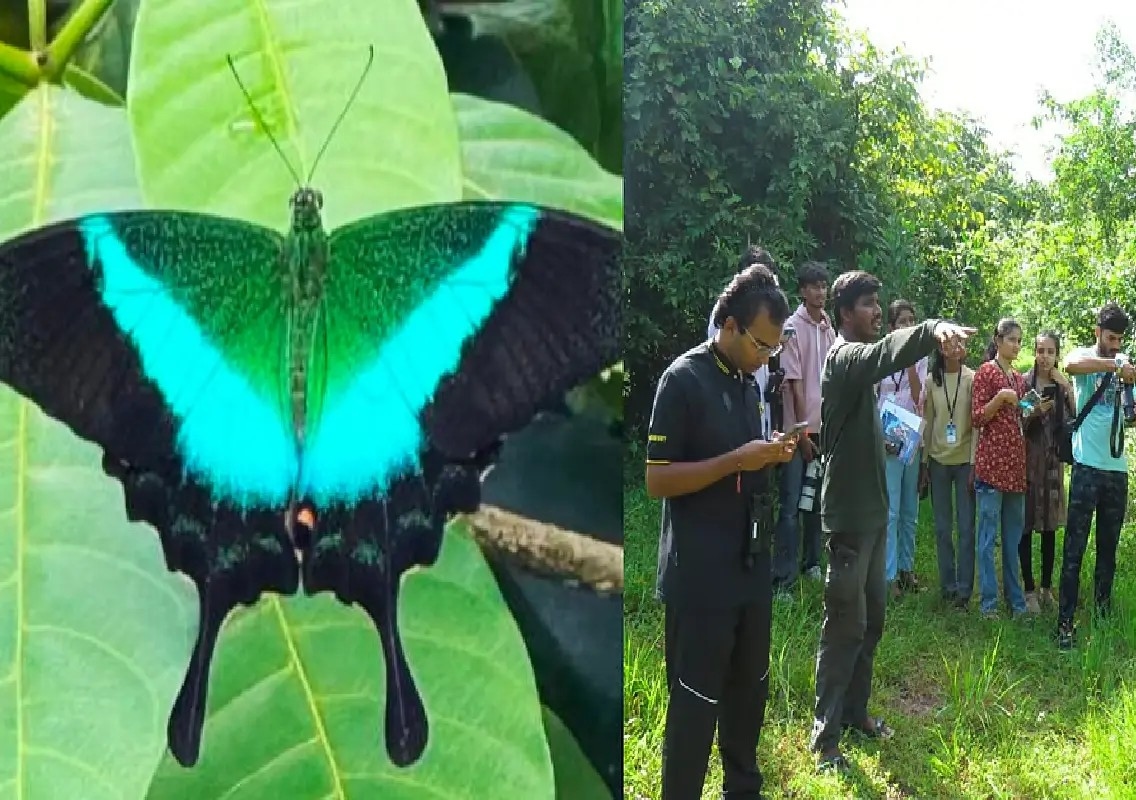


Mangaluru: The Department of Applied Zoology at Mangalore University has documented 71 butterfly species during the university’s first-ever campus-wide butterfly survey, highlighting the rich biodiversity of its extensive green campus.
The five-day survey was conducted as part of the nationwide Big Butterfly Month 2026, with the support of the Campus Biodiversity Register (CBR). The initiative brought together students, alumni and professionals to document butterfly diversity across the university campus.
More than 25 participants took part in the survey, which was led by Dr Deepak Naik, butterfly researcher and faculty member in the Department of Applied Zoology.
Survey records 71 species across five families
The survey team recorded 71 butterfly species belonging to five major families during the five-day exercise.
The findings provide an important snapshot of the butterfly diversity within the Mangalore University campus and underline the ecological value of its green spaces.
According to Dr Naik, Common Crows and Lineblues were among the species most frequently observed during the survey. Their widespread presence across the campus contributed significantly to the overall number of species documented.
The survey also helped participants identify species that are less frequently encountered, adding to the scientific value of the campus biodiversity documentation.
Rare Redspot Duke among species recorded
One of the notable species documented during the survey was the Redspot Duke (Euthalia evelina).
The presence of species such as the Redspot Duke indicates the diversity of habitats available within the university campus. Regular documentation of butterflies can help researchers track changes in species distribution and understand how vegetation and habitat conditions influence butterfly populations.
The survey was therefore not limited to a recreational butterfly walk but also contributed to biodiversity documentation and conservation awareness within the university.
Western Ghats endemics documented
A major highlight of the survey was the documentation of several Western Ghats-associated species, including butterflies protected under the Wildlife Protection Act.
These included the Malabar Banded Peacock (Papilio buddha), Sahyadri Birdwing (Troides minos) and Tamil Yeoman (Cirrochroa thais).
The recording of these species is particularly significant because of the ecological importance of the Western Ghats, one of India’s major biodiversity regions.
The presence of such butterflies on the university campus demonstrates the role that large green institutional campuses can play in providing suitable habitats and supporting biodiversity, particularly when natural vegetation is retained.
Indigo Flash recorded for first time
Another significant finding was the first-ever record of the Indigo Flash (Rapala varuna) on the Mangalore University campus.
The discovery adds a new species to the university’s documented butterfly diversity and demonstrates the importance of systematic biodiversity surveys.
Without regular surveys, less conspicuous species can easily remain undocumented. The first campus record of the Indigo Flash therefore provides useful baseline information for future studies and biodiversity monitoring.
Researchers and students can use such records to compare butterfly populations over time and identify changes in species composition.
Butterflies serve as ecological indicators
Dr Naik highlighted the broader significance of butterflies in assessing the health of an ecosystem.
“Butterflies are excellent biological indicators, and their rich presence highlights the overall health of our campus ecosystem,” he said.
Butterflies are closely linked to vegetation and habitat conditions because different species depend on particular plants during their life cycles. Changes in butterfly populations can therefore provide useful indications of changes in the wider ecosystem.
The documentation of 71 species across the university campus suggests that its green areas provide a range of resources and habitats capable of supporting substantial butterfly diversity.
Students and alumni participate in conservation initiative
The survey also served as an educational and conservation initiative, bringing together participants from different backgrounds.
More than 25 people, including students from various departments, university alumni and IT professionals, participated in the Butterfly Walk.
The involvement of participants beyond the Department of Applied Zoology helped create wider awareness about biodiversity and the importance of documenting species found within urban and institutional landscapes.
The Campus Biodiversity Register provided additional support for the initiative, helping connect the butterfly survey with broader efforts to document and conserve biodiversity on the university campus.
Applied Zoology department leads campus biodiversity efforts
The Department of Applied Zoology played a central role in organising the survey and promoting biodiversity conservation on the campus.
The organisers expressed their gratitude to Dr MS Mustak, chairman of the Department of Applied Zoology, for his guidance and encouragement in promoting biodiversity conservation initiatives.
The survey’s findings provide the university with a valuable baseline for future butterfly monitoring. Continued surveys could help establish seasonal patterns, identify changes in species abundance and track the presence of rare or ecologically significant butterflies.
The first campus-wide survey has thus highlighted that Mangalore University’s green campus is more than just an academic environment. Its vegetation and habitats support a diverse butterfly community, including species of conservation significance.
The documentation of 71 species in five days, along with the first campus record of the Indigo Flash and sightings of Western Ghats-associated butterflies, underscores the importance of protecting and monitoring the university’s natural spaces.