


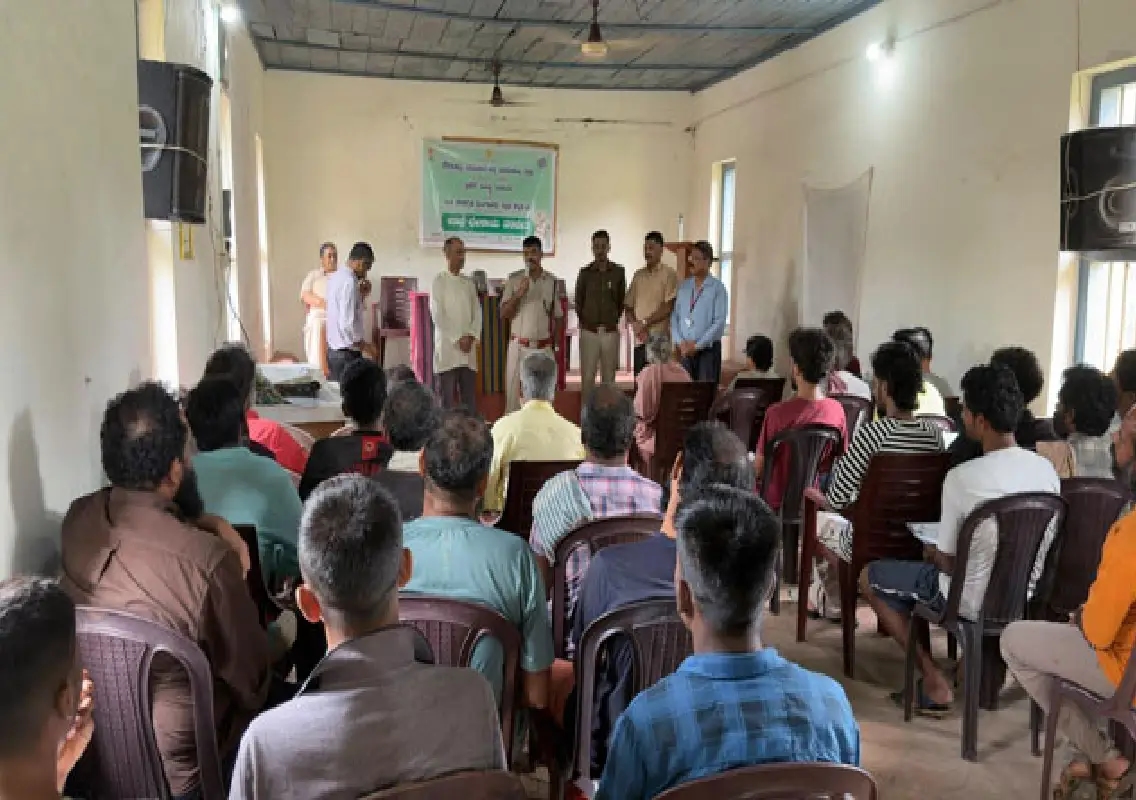


Mangaluru: Prison Ministry India (PMI), in collaboration with the Skill Development Department of the Karnataka government, organised a three-day mushroom cultivation training programme for inmates of Mangaluru District Jail from October 14 to 16. The initiative aimed to equip prisoners with practical livelihood skills to promote self-reliance, rehabilitation and successful reintegration into society after their release.
Around 23 inmates participated in the programme, gaining practical knowledge of mushroom cultivation and learning about its potential as a source of income. The training was part of efforts to provide inmates with constructive opportunities to develop useful skills while serving their sentences and prepare them for life beyond prison.
Practical training in mushroom cultivation
Panduranga and his team from Kasaragod served as resource persons for the three-day programme. They provided hands-on guidance and explained the techniques involved in mushroom cultivation, helping participants understand how the activity could be pursued as a livelihood option.
Mushroom cultivation offers opportunities for small-scale entrepreneurship and can be undertaken with appropriate training, basic infrastructure and access to necessary materials. For individuals preparing to return to society after incarceration, acquiring such practical skills can provide a foundation for economic independence and help them explore self-employment opportunities.
The training programme sought to make the participants aware of these possibilities while encouraging them to use their time productively. By introducing inmates to a potential source of livelihood, the initiative also highlighted the role of vocational education in supporting rehabilitation and reducing the difficulties associated with returning to mainstream society.
The participation of 23 inmates reflected the effort to make skill development accessible within the prison environment. The programme combined practical instruction with an emphasis on the value of learning skills that could be applied outside the institution.
Certificates distributed at valedictory programme
The valedictory programme was held on October 16, marking the conclusion of the three-day training. Certificates were distributed to the inmates who successfully attended the course in recognition of their participation.
Fr Stifan Perera, OCD, spiritual director of the Prison Ministry India Mangaluru unit, presided over the programme. Jail superintendent Sharana Basappa and assistant superintendent Siddappa Patil were present, along with representatives and office-bearers of Prison Ministry India.
Those present included PMI coordinator Donald Coutinho, secretary Sr Jyotsna AC, assistant coordinator Lawrence Crasta, joint secretary John Pais, Sr Lidwin, Gladys Coelho and prison counsellor Denis.
The gathering highlighted the importance of cooperation between prison authorities, voluntary organisations and government departments in creating opportunities for inmates to learn new skills. Such programmes can contribute to a more constructive prison environment by encouraging personal development and helping participants prepare for their eventual return to their families and communities.
PMI highlights rehabilitation and reintegration
Addressing the gathering, Fr Stifan Perera emphasised that skill development plays an important role in the reformation and rehabilitation of prisoners. He explained that Prison Ministry India is committed to the release, reformation, rehabilitation, reintegration and restoration of prisoners.
He stressed that vocational training should not be viewed merely as an activity conducted during incarceration but as an opportunity to prepare inmates for a more stable future after their release.
“Training programmes such as mushroom cultivation help inmates use their time constructively while in prison. More importantly, the skills they acquire can become a source of livelihood after their release, enabling them to earn an honest living and reintegrate into society with dignity and confidence,” he said.
His remarks underlined the importance of equipping prisoners with practical abilities that can help them pursue employment or self-employment. Access to livelihood opportunities can be an important factor in rebuilding confidence, establishing financial independence and adjusting to life outside prison.
Rehabilitation initiatives also seek to encourage inmates to recognise their potential to contribute positively to society. By providing opportunities for learning and personal growth, such programmes can help participants approach their future with greater confidence and a sense of purpose.
Jail superintendent appreciates PMI initiative
Jail superintendent Sharana Basappa appreciated Prison Ministry India for regularly organising beneficial training programmes for inmates. He encouraged the participants to apply the knowledge they had acquired and make the best use of the opportunities offered to them.
He also expressed gratitude to PMI and the resource persons for their valuable contributions towards the welfare and rehabilitation of prisoners.
The initiative demonstrated the importance of sustained efforts to connect inmates with practical learning opportunities. While training can introduce participants to possible livelihood options, continued encouragement and the ability to access resources after release are also important in helping them translate their learning into sustainable employment or enterprise.
For inmates interested in pursuing mushroom cultivation, the knowledge gained during the course could serve as an initial step towards exploring the activity as a potential occupation. The training also reinforced the broader objective of helping prisoners develop skills that can support their transition back into society.
Lawrence Crasta, assistant coordinator of Prison Ministry India, coordinated the programme.
The three-day initiative at Mangaluru District Jail highlighted the value of vocational training as part of a broader rehabilitation approach. By combining practical instruction, institutional support and encouragement, Prison Ministry India and the Karnataka government’s Skill Development Department sought to create opportunities for inmates to build a more self-reliant future and return to society with dignity.