







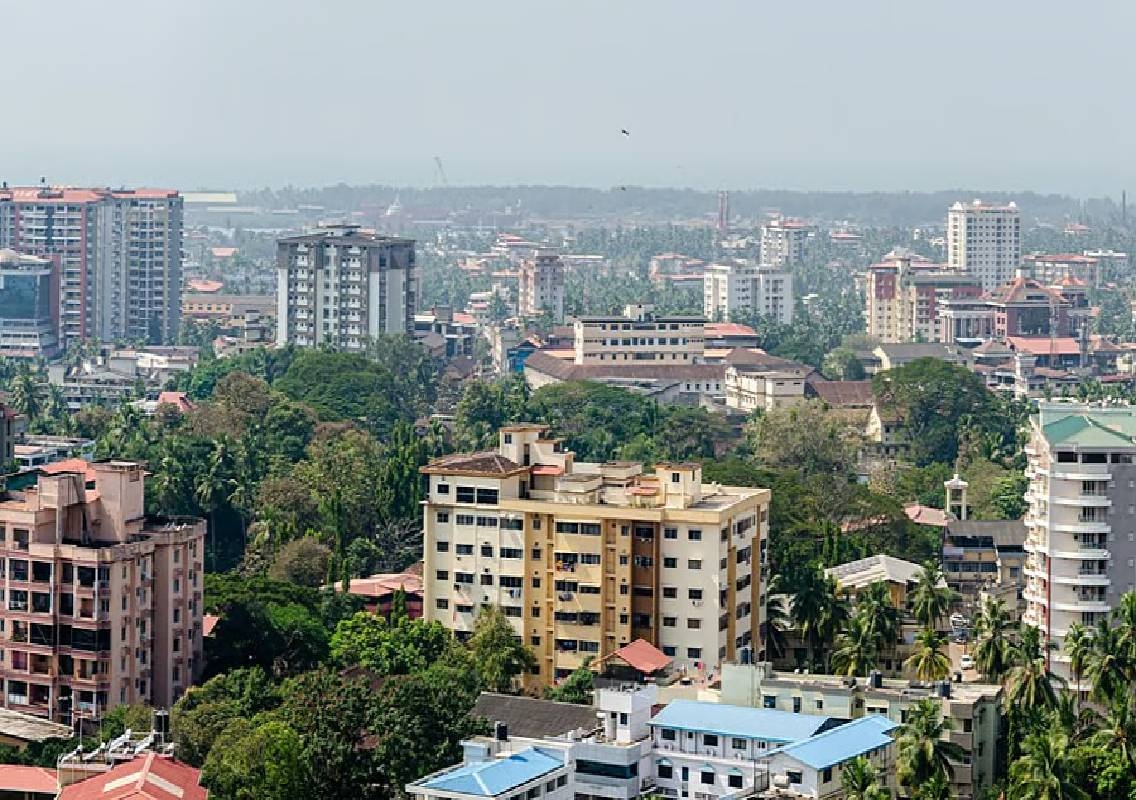


Mangaluru: Karnataka’s economic growth has long been closely associated with Bengaluru, but a new assessment of India’s smaller cities is drawing attention to the potential of Mangaluru to become a stronger regional growth centre. The coastal Karnataka city has emerged as the top-ranked city in the LEAP Cities Index 2026, offering a fresh perspective on how the state could build a more distributed economic model beyond its capital.
The index ranks 233 Tier-2 and Tier-3 cities across India using 43 variables covering eight broad areas of economic activity. These include manufacturing, trade and hospitality, transport and logistics, financial services, construction and capital formation, health, education and living conditions. Mangaluru secured the top position with a composite score of 68.4, ahead of Kolhapur and Indore.
The findings are significant for Karnataka because they suggest that economic dynamism does not necessarily have to be concentrated in the largest metropolitan centres.
Mangaluru emerges as a strong regional centre
The LEAP Cities Index has been designed to measure economic activity in cities for which conventional city-level GDP estimates are generally unavailable. Its 43 indicators are drawn from official and administrative sources, including the Census, National Family Health Survey, Reserve Bank of India and Udyam enterprise registry, along with satellite-based measures such as built-up area and night-time lights.
Mangaluru’s first-place ranking therefore provides a broader picture of the city’s economic ecosystem rather than measuring its economy through a single indicator.
The city has several characteristics that can support its role as a regional growth hub. Its coastal location, established commercial activity, transport links, educational institutions, healthcare facilities and expanding technology ecosystem give it an economic base that extends beyond one particular sector.
The index also highlights an important national trend. Half of the top 20 cities in the 2026 ranking are Tier-3 cities, indicating that economic potential is increasingly appearing outside India’s traditional metropolitan centres.
A possible model for Karnataka beyond Bengaluru
For Karnataka, the implications extend beyond Mangaluru itself. The state already has a number of cities with distinct economic strengths, including Mysuru, Hubballi-Dharwad, Belagavi and other emerging urban centres.
A more balanced growth strategy could allow these cities to develop specialised economic identities instead of attempting to replicate Bengaluru.
Mangaluru, for instance, can build around its coastal advantage, education, healthcare, logistics, services, entrepreneurship and technology ecosystem. Such a model would allow investment and employment opportunities to grow closer to regional populations while reducing excessive dependence on Bengaluru for high-value economic activity.
The idea is particularly relevant as companies increasingly examine Tier-2 and Tier-3 cities for new operations. Industry discussions indicate that emerging cities are gaining attention as potential destinations for Global Capability Centres and other technology-led businesses. However, the availability of skilled talent, digital infrastructure, commercial facilities and strong links between educational institutions and industry will remain crucial to sustaining that growth.
Infrastructure and city finances remain crucial
A high ranking alone cannot guarantee sustained economic growth. Cities need the institutional and physical capacity to convert economic potential into long-term development.
The wider discussion around the LEAP Cities Index points to the importance of stronger city finances, better data systems and infrastructure if smaller cities are to take on a greater role in India’s growth story.
For Mangaluru, this means continued attention to transport connectivity, urban infrastructure, reliable utilities, digital networks, public services and land-use planning.
Improving the quality of urban governance will be equally important. As economic activity expands, cities need systems capable of managing rising demand for housing, mobility, healthcare, education and other public services.
Without such planning, rapid economic expansion could create the same congestion and infrastructure pressures that larger cities are already facing.
Talent could determine the next phase
Access to skilled human resources is another major factor in determining whether Mangaluru can translate its current strengths into a broader growth story.
The city has a substantial educational and healthcare ecosystem, providing a foundation for developing skilled professionals. However, emerging technology sectors require continuous investment in new-age skills, particularly in areas such as artificial intelligence, data science, cybersecurity and advanced digital services.
Industry discussions around Mangaluru’s potential as an emerging technology and GCC destination have also highlighted the importance of strengthening the local talent pipeline and industry-academia collaboration.
This makes education and skill development central to any strategy aimed at positioning Mangaluru as a long-term economic hub.
Beyond Bengaluru should mean more than decentralisation
Karnataka’s challenge is not simply to move some businesses from Bengaluru to other cities. A successful regional growth strategy would require each major city to develop its own economic strengths.
Mangaluru can potentially serve as a coastal technology, services, education, healthcare and logistics centre. Mysuru can continue strengthening its technology, tourism and education sectors, while other Karnataka cities can develop around manufacturing, logistics, research, agriculture-linked industries or other specialised activities.
Such an approach would create a network of complementary economic centres rather than a collection of smaller cities competing to become another Bengaluru.
The LEAP Cities Index strengthens the argument that India’s economic geography is changing. Its assessment covers 233 non-metro cities across 23 states and Union Territories, and its findings show that some of the strongest-performing cities are not necessarily the largest.
Mangaluru’s opportunity comes with responsibility
Mangaluru’s top position should therefore be viewed as both recognition and an opportunity.
The ranking indicates that the city already possesses several economic and social foundations that distinguish it among India’s smaller urban centres. But maintaining that advantage will depend on how effectively policymakers, businesses and institutions respond to future requirements.
For Karnataka, the larger lesson is clear: the state’s next phase of growth need not depend entirely on Bengaluru. Building stronger regional centres could spread investment, employment and innovation more widely across the state.
Mangaluru’s performance in the LEAP Cities Index offers a compelling starting point for that conversation. Rather than trying to create another Bengaluru, Karnataka could build a network of cities where each contributes through its own strengths.
Conclusion:
Mangaluru’s emergence as the top-ranked city in the LEAP Cities Index 2026 provides Karnataka with an opportunity to rethink its growth model. With targeted infrastructure, skilled talent, stronger urban governance and sector-specific investment, the coastal city could demonstrate how regional centres can contribute to a more balanced and resilient state economy.