







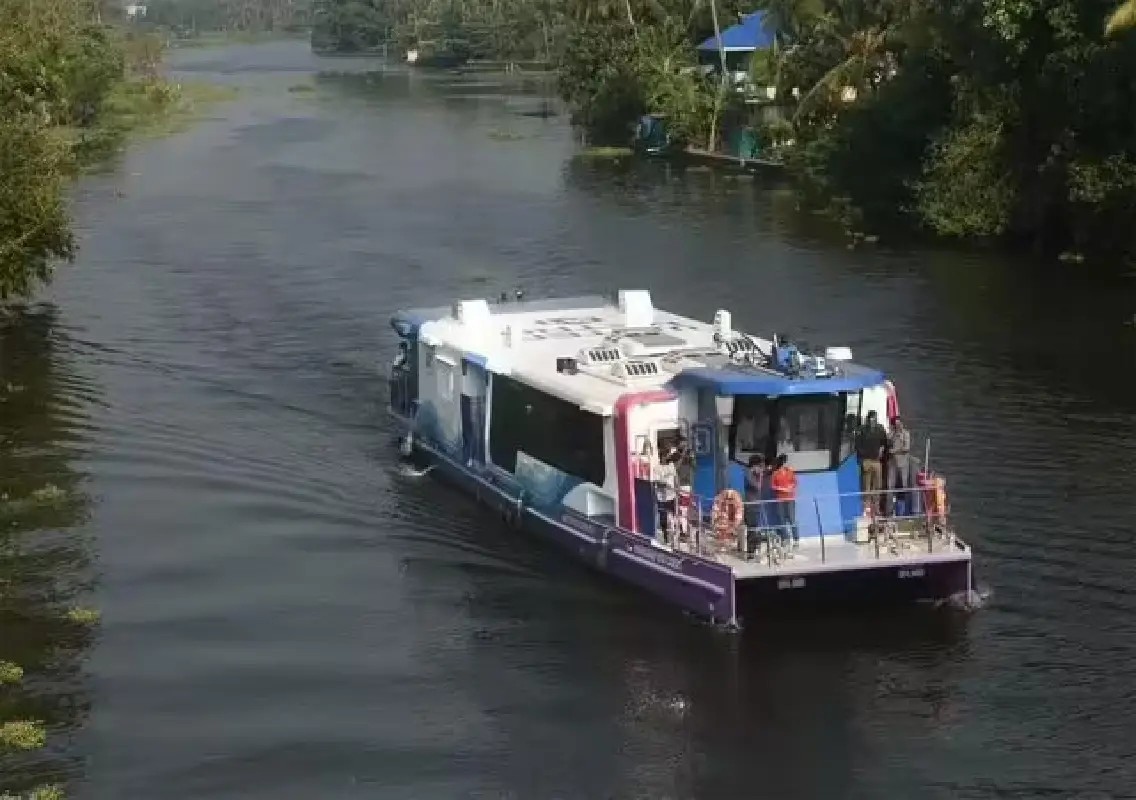


Mangaluru: The proposed Roll-on/Roll-off (Ro-Ro) water transport project connecting Hoige Bazaar at Mangaluru Old Port with Kuloor Bridge has moved a step closer to implementation after receiving approval from the State Expert Appraisal Committee (SEAC). The environmental clearance recommendation is expected to accelerate the execution of the ₹29.60-crore project, with construction likely to begin by October after the completion of remaining procedural formalities.
The Ro-Ro project, which has been in the pipeline for several years, is being implemented by the Karnataka Water Transport Board under the Department of Infrastructure Development, Ports and Inland Water Transport. Once operational, the service is expected to provide an alternative transport corridor for vehicles and passengers, reduce traffic congestion within Mangaluru city and improve connectivity between Hoige Bazaar and Kuloor.
SEAC approval boosts project implementation
The latest clearance from the State Expert Appraisal Committee marks a significant milestone for the project. Officials said the approval has expedited the implementation process and enabled authorities to move towards the construction phase.
The project had earlier secured approval under the Central government’s Sagarmala Scheme-2022 and had also received Coastal Regulation Zone (CRZ) clearance. A public hearing on environmental aspects of the project was conducted in October last year under the chairmanship of the Dakshina Kannada Deputy Commissioner, where both supporters and opponents presented their views.
The total project cost has been estimated at ₹29.60 crore, with funding to be shared equally by the Central and State governments.
According to officials, construction work is expected to commence after August once all remaining statutory procedures are completed, with the main civil works likely to gather pace by October.
Infrastructure planned under the project
The Ro-Ro water transport system has been designed to improve the movement of vehicles, cargo and passengers across the river while reducing dependence on congested city roads.
The project includes the construction of two reinforced cement concrete (RCC) jetties, two waterfront terminals, two utility buildings and two floating jetties. In addition, floating gangways will be installed to facilitate safe boarding and disembarkation.
To ensure smooth navigation, dredging of approximately 78,078 cubic metres of the riverbed will be undertaken to achieve a depth of three metres.
Authorities have also proposed operating two Ro-Ro vessels, which together will make 12 trips every day between Hoige Bazaar and Kuloor.
The service is expected to handle up to 400 metric tonnes of cargo and around 200 passengers daily.
Expected to ease Mangaluru traffic
Officials believe the project will significantly reduce traffic congestion in Mangaluru by providing an alternative route for vehicles that currently pass through busy city roads.
One of the major anticipated benefits is the diversion of fish-laden trucks operating between Mangaluru Old Port and the National Highway network. Residents have long complained about fish-transporting vehicles passing through city roads and the spillage of fish waste water, which creates unhygienic conditions and unpleasant odours.
Many residents feel that once the Ro-Ro service becomes operational, the district administration could consider routing such vehicles through the waterway. Fish trucks could board the Ro-Ro vessel at Hoige Bazaar, cross to Kuloor and directly access the National Highway without entering the city, thereby reducing congestion and improving urban sanitation.
Apart from easing road traffic, the project is also expected to shorten travel time, improve logistics efficiency and reduce fuel consumption for transport operators.
Tourism and employment opportunities
Project authorities have highlighted several long-term benefits beyond traffic management.
The Ro-Ro service is expected to promote inland water transport and strengthen water tourism in Mangaluru by providing visitors with a new mode of travel across the river.
Officials also believe the project will create employment opportunities during both the construction and operational phases. Improved connectivity is expected to support local businesses, strengthen trade and contribute to the region’s economic development.
The project aligns with the broader objective of encouraging sustainable and multimodal transport under the Sagarmala initiative, which focuses on enhancing port-led development and inland waterways.
Environmental concerns raised during public hearing
Despite receiving the latest approval, the project has faced objections from environmental groups.
During the public hearing held last October, the National Environment Conservation Federation (NECF) expressed concerns over the potential environmental impact of dredging, land filling and construction activities.
The organisation argued that such activities could affect mangroves and lead to the loss of trees in the project area. It also questioned the decision to float project tenders before obtaining final environmental clearance.
However, project officials maintained that detailed environmental safeguards have been incorporated into the project. They stated that the Ro-Ro service would not adversely affect fishing activities or cause significant environmental damage and assured that all necessary safety and environmental protection measures would be implemented during construction and operation.
Officials optimistic about early commencement
Assistant Engineer of the Ports Department, Manohar Acharya, confirmed that the State Expert Appraisal Committee has approved the construction of supporting jetties required for the Ro-Ro service between Kuloor and Hoige Bazaar.
He said the approval has accelerated the project’s implementation and that, following the completion of procedural formalities, work is expected to begin after August.
With key statutory approvals now in place, the long-pending Ro-Ro water transport project is poised to move into the execution phase. Once completed, it is expected to transform urban mobility in Mangaluru by offering a faster, cleaner and more efficient alternative for transporting vehicles, cargo and passengers while supporting the city’s long-term infrastructure development.