







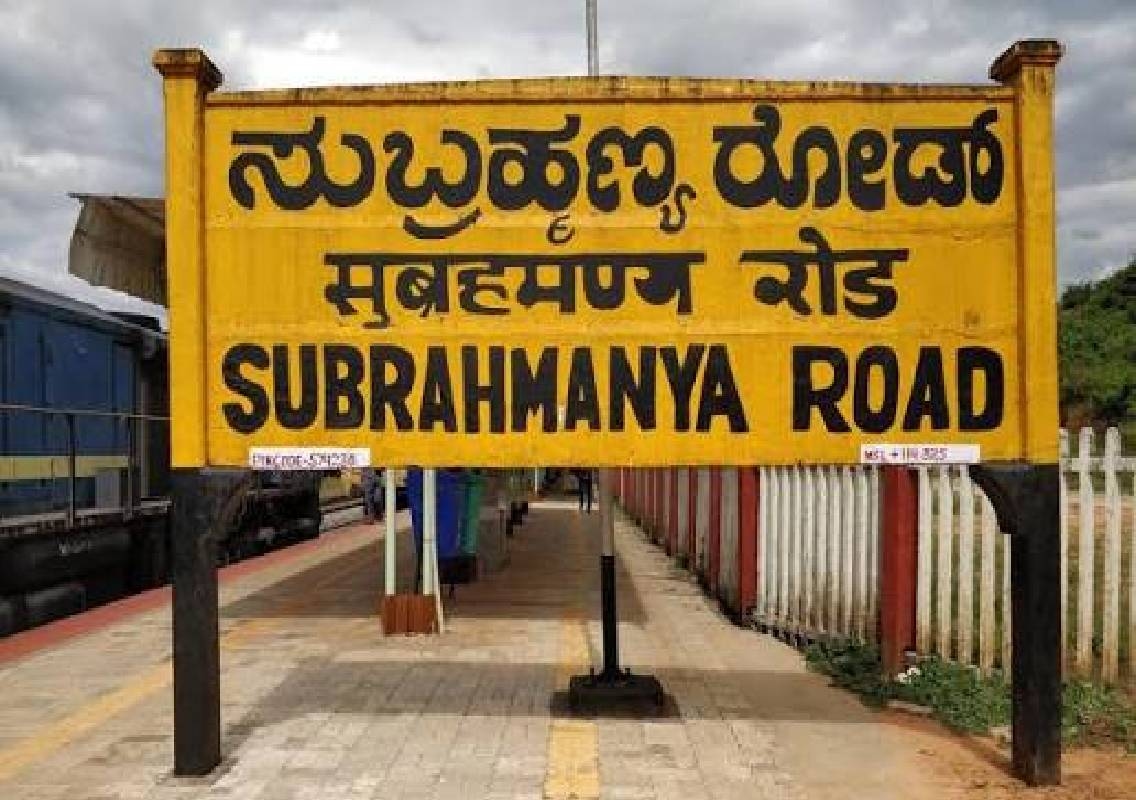


Mangaluru: The Mangaluru-Subrahmanya Road railway route has recorded strong passenger movement and revenue, highlighting the growing importance of rail connectivity between coastal Karnataka and the hinterland. The route serves passengers travelling between Mangaluru, Dakshina Kannada and destinations along the Hassan-Sakleshpur corridor, while also supporting connectivity to the important pilgrimage centre of Kukke Subrahmanya.
The performance of the route assumes greater significance following the extension of the Mangaluru Central-Kabaka Puttur passenger service to Subrahmanya Road. The extension, approved by the Railway Board after years of demand, has strengthened direct rail access to Subrahmanya from Mangaluru. The service was extended after an 18-year wait, with the train scheduled to leave Mangaluru Central early in the morning and reach Subrahmanya Road before returning to Mangaluru.
Passenger demand highlights importance of route
The Mangaluru-Subrahmanya Road section is an important part of the railway network connecting the coastal region with the interior districts of Karnataka. Passenger demand on the route is driven by daily commuters, students, workers, tourists and pilgrims travelling towards Subrahmanya.
The railway route passes through areas of Dakshina Kannada before connecting with the challenging Western Ghats section towards Sakleshpur. The wider Mangaluru-Hassan-Mysuru railway corridor provides an important link between the Karnataka coast and the state’s interior.
The recent passenger and revenue performance reported for the route indicates the continued dependence of residents on rail services for affordable and dependable transportation.
Subrahmanya connectivity gains importance
Subrahmanya is one of Karnataka’s prominent pilgrimage destinations, with thousands of devotees travelling to Kukke Subrahmanya throughout the year. Improved rail connectivity to Subrahmanya Road can therefore benefit both local passengers and pilgrims.
The extension of the Mangaluru Central-Kabaka Puttur passenger train to Subrahmanya Road was particularly significant in this regard. The Railway Board approved the extension following a joint proposal from the Southern Railway and South Western Railway. The revised service was scheduled to depart Mangaluru Central at 4am and reach Subrahmanya Road at 6.30am, with the return journey beginning at 7am.
The service provides an early-morning rail connection for passengers travelling from Mangaluru towards Subrahmanya and surrounding areas.
Electrification strengthens the corridor
The broader railway corridor has also undergone major infrastructure improvements. Railway electrification has been completed on the Mangaluru-Subrahmanya Road section, while electrification of the challenging Sakleshpur-Subrahmanya Road ghat section has also progressed.
The route through the Western Ghats is among the technically demanding railway stretches in Karnataka because of its steep gradients, tunnels, bridges and sharp curves. Railway infrastructure upgrades on this section are therefore important for improving operational efficiency and supporting future passenger services.
A parliamentary response in December 2024 stated that electrification had been completed between Padil and Subrahmanya Road and on the Bengaluru-Sakleshpur section, while work was being undertaken on the remaining Sakleshpur-Subrahmanya Road section.
The electrification programme is expected to strengthen the operational capabilities of the corridor and reduce dependence on diesel locomotives.
Route remains important for coastal connectivity
The Mangaluru-Hassan railway corridor plays a significant role in connecting coastal Karnataka with the interior parts of the state. However, capacity and operational constraints continue to influence train movement on the route.
The Sakleshpur-Subrahmanya Road ghat section has historically been a challenging part of the network. Railway authorities have been working on infrastructure improvements to increase operational efficiency and accommodate growing demand.
The importance of the corridor was also highlighted in Parliament in March 2026, when concerns were raised about railway connectivity between Bengaluru and coastal Karnataka. Issues including restrictions on the Sakleshpur-Subrahmanya Road ghat section, operational delays and capacity constraints were highlighted during the discussion.
Demand could support further services
The reported revenue and passenger traffic on the Mangaluru-Subrahmanya route could strengthen the case for continued investment in passenger services and railway infrastructure in the region.
Higher passenger usage indicates that rail remains an important transport option for people travelling between coastal Karnataka and the hinterland. Regular services can also provide an affordable alternative to road travel, particularly for students, workers and pilgrims.
With railway control of the Mangaluru area shifting to the Mysuru Division from September 30, 2026, the region is also entering a new phase of administrative management. The change places Mangaluru-area railway operations under the Mysuru Division and could influence future planning for services and infrastructure in the region.
Future connectivity remains a key focus
Growing passenger demand is likely to keep railway connectivity between Mangaluru and the interior districts in focus. Better frequency, improved infrastructure and efficient operations will be important as passenger numbers increase.
The route’s significance also extends beyond Mangaluru and Subrahmanya. Improvements along the corridor can benefit passengers travelling between coastal Karnataka and Bengaluru, Hassan, Mysuru and other parts of the state.
For the coastal region, reliable rail connectivity is particularly important because road traffic continues to increase and travel through the Western Ghats can be affected by weather and road conditions.
Conclusion:
The strong passenger movement and revenue reported on the Mangaluru-Subrahmanya route underline the importance of the railway corridor to coastal Karnataka. With improved connectivity to Subrahmanya, continuing electrification and administrative changes in the Mangaluru railway area, the route is likely to remain an important part of the region’s transport network.