







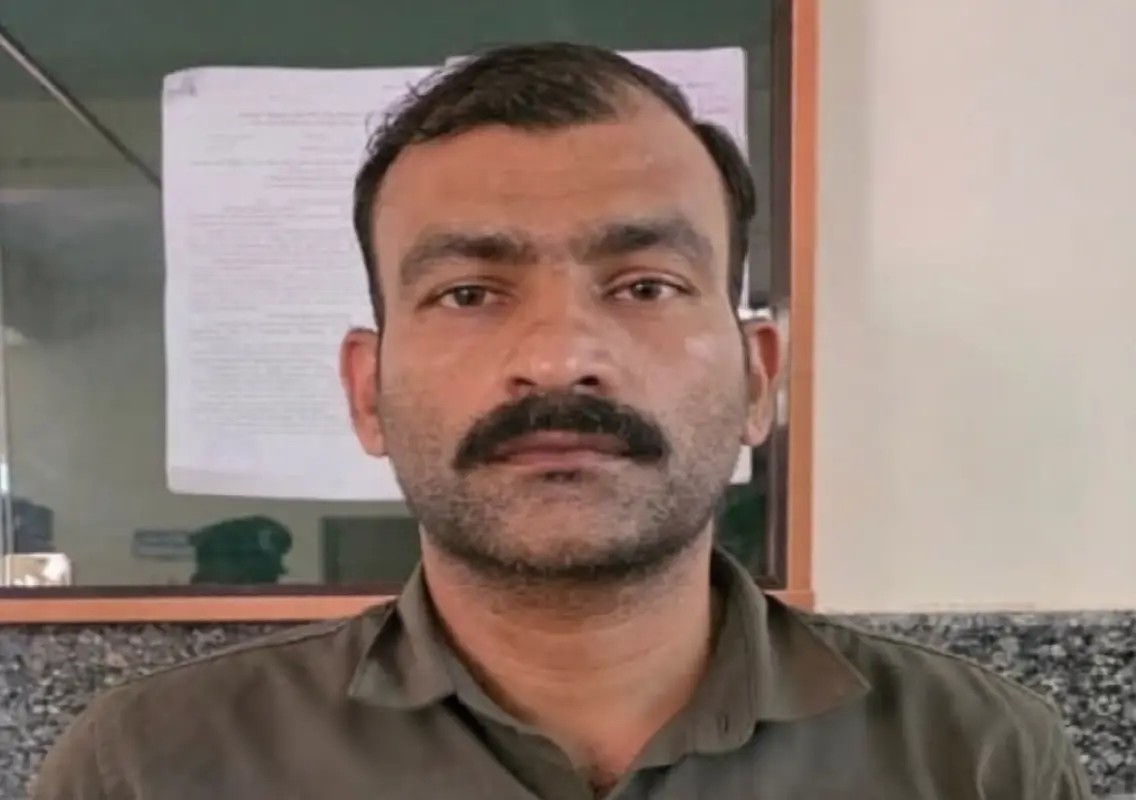


Kadaba: In a significant development, Kadaba police have arrested a murder convict who had been absconding in Andhra Pradesh after the pronouncement of his sentence. The accused, identified as N M Abdul Azeez (30), a resident of Ajjavara in Sullia, was apprehended and produced before the court on April 25.
Police officials confirmed that the accused had been evading arrest for a considerable period following his conviction, prompting a sustained effort by the Kadaba police team to track him down.
Case dates back to 2012
The case pertains to a shocking incident reported on January 31, 2012, when the decomposed body of a woman was discovered beneath a culvert near a public road at Amaithadka in Kombaru village of Puttur, within Kadaba police station limits.
Following the discovery, Kadaba police registered a case under Crime No. 15/2012, invoking Sections 302 (murder), 201 (causing disappearance of evidence), and 34 (common intention) of the Indian Penal Code (IPC). The brutal nature of the crime had drawn significant attention at the time, leading to a detailed investigation.
Investigation and charge sheet
The investigation was led by M N Anucheth, who meticulously gathered evidence and built a strong case against the accused. Based on the findings, a charge sheet was filed before the court, initiating the trial process.
Officials stated that the evidence collected during the investigation played a crucial role in securing the conviction, highlighting the thoroughness of the probe.
High Court conviction and sentence
During the trial, a division bench of the Karnataka High Court, comprising judges Srinivas Harish Kumar and Vijay Kumar A Patil, found the accused guilty of the charges.
The court sentenced Abdul Azeez to 10 years of rigorous imprisonment and imposed a fine of ₹2,00,000. The prosecution was led by government prosecutor K P Yashodha, who effectively argued the case, contributing to the conviction.
Absconding after sentencing
Despite the court’s verdict, the accused absconded soon after the sentence was pronounced, fleeing to Andhra Pradesh. His disappearance posed challenges for law enforcement agencies, delaying the execution of the sentence.
Kadaba police continued efforts to trace his whereabouts, gathering intelligence and coordinating across state lines to locate him.
Arrest and court production
The breakthrough came when a team led by sub-inspector Jamburaj Mahajan, along with station staff, successfully traced the accused in Andhra Pradesh. He was taken into custody and brought back to Karnataka.
On April 25, the accused was produced before the court, marking the end of his period of absconding and enabling the legal process to proceed further.
Conclusion
The arrest of N M Abdul Azeez underscores the persistence of law enforcement agencies in ensuring that convicted individuals are held accountable, regardless of how long they evade arrest. The development brings closure to a prolonged manhunt and reinforces confidence in the justice system’s ability to track down offenders and enforce court verdicts.