







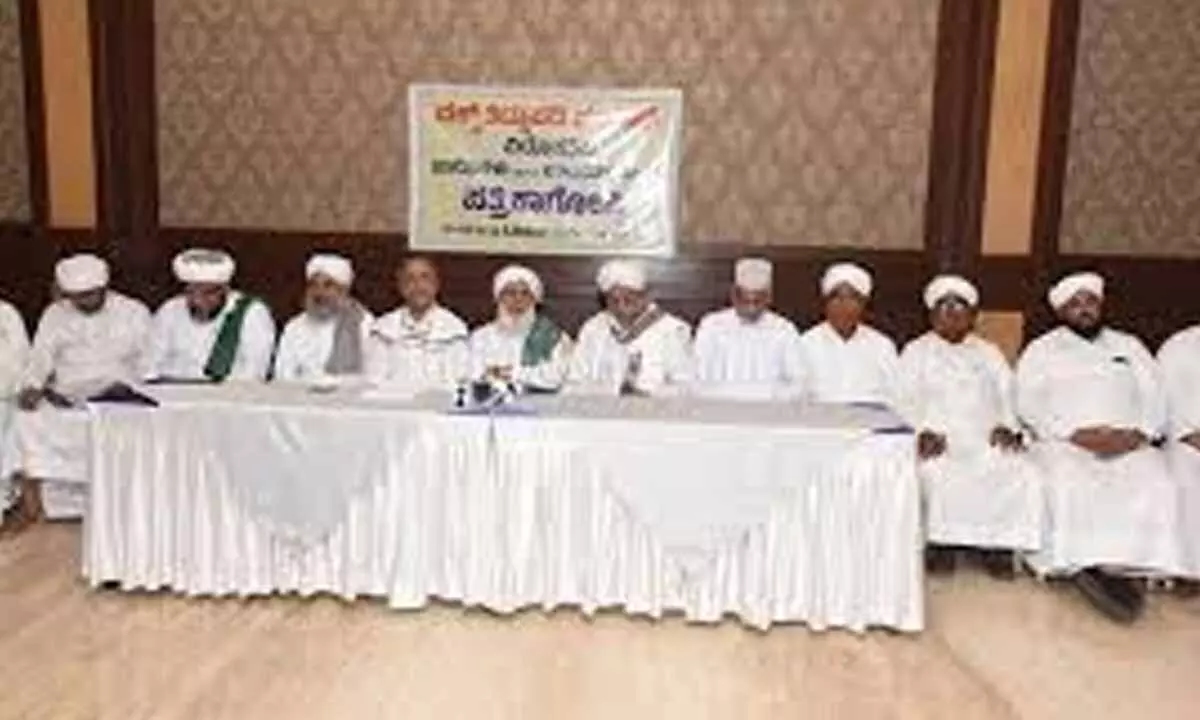


On Saturday, March 1, Muslim religious and community leaders came together to urge the government to respect constitutional values and withdraw the Wakf Amendment Bill 2024. The bill, first introduced in Parliament last August, has sparked widespread opposition for being perceived as an infringement on the religious freedoms of Muslims in India.
The bill was referred to a Joint Parliamentary Committee after strong resistance from various groups, but it has continued to face criticism for introducing more controversial provisions. The committee reportedly dismissed the amendments suggested by opposition parties, further deepening concerns over the bill’s impact.
Community Leaders’ Strong Opposition
Muslim leaders and scholars have expressed strong disapproval of the bill, arguing that it poses a direct threat to the fundamental rights guaranteed by the Indian Constitution, especially religious freedom. They have called for its immediate withdrawal, emphasizing that the Wakf properties, which are intended for religious and social welfare, must remain protected from governmental interference.
The Wakf Act, originally established in 1913, regulates the management of these properties, which are donations made in the name of God. Successive amendments in 1955, 1995, and 2013 have aimed to safeguard these assets. Under Articles 25 to 28 of the Indian Constitution, religious freedom is a fundamental right, and Article 26 specifically grants religious groups the authority to manage their institutions and properties.
Controversial Amendments and Their Impact
The BJP-led government has proposed significant amendments through the UMEED (United Wakf Management, Empowerment, Efficiency, Development) Act, which leaders claim will undermine the community’s control over Wakf assets. The proposed changes include a provision that would disqualify Wakf properties that lack documented proof within six months, despite many of these properties having existed for centuries based on verbal agreements.
Additionally, the bill transfers the responsibility of surveying Wakf properties from an independent expert in Islamic law to district collectors, raising concerns about potential bias. The amendment also eliminates the requirement for Muslim officials to be appointed to the Wakf Tribunal, while introducing at least two non-Muslim members in the Wakf Board. This move has raised questions about why Wakf institutions are being treated differently from religious institutions of other communities, which remain under their own management.
Public Objections and Government Response
The Joint Parliamentary Committee received nearly 9.8 million written objections from the public, most of which were opposed to the amendments. Despite this overwhelming opposition, the government has moved forward with the bill in both Houses of Parliament, disregarding public sentiment.
Opponents of the bill argue that these amendments represent an attempt by the government to take control of Wakf assets and weaken the religious and cultural identity of the Muslim community. They view the bill as a manifestation of communal politics, threatening the existence and rights of the minority community.
Call to Action
Religious leaders and scholars have urged all citizens who believe in India’s Constitutional values, secularism, and pluralism to raise their voices against the Wakf Amendment Bill 2024. Among those leading the opposition are prominent religious figures such as Khazi Ahmad Musliyar Takha Ustad, Khazi Zainul Ulama Mani Ustad, and Sayyid Ismail Thangal Ujire, alongside other notable leaders from across the state.
The meeting was led by B A Abdul Nasir Lakki Star, president of the Dakshina Kannada Wakf Advisory Committee, and Ashraf Kinar, vice president of the same committee, who emphasized the need to protect the rights of the Muslim community and ensure the preservation of religious freedoms.