







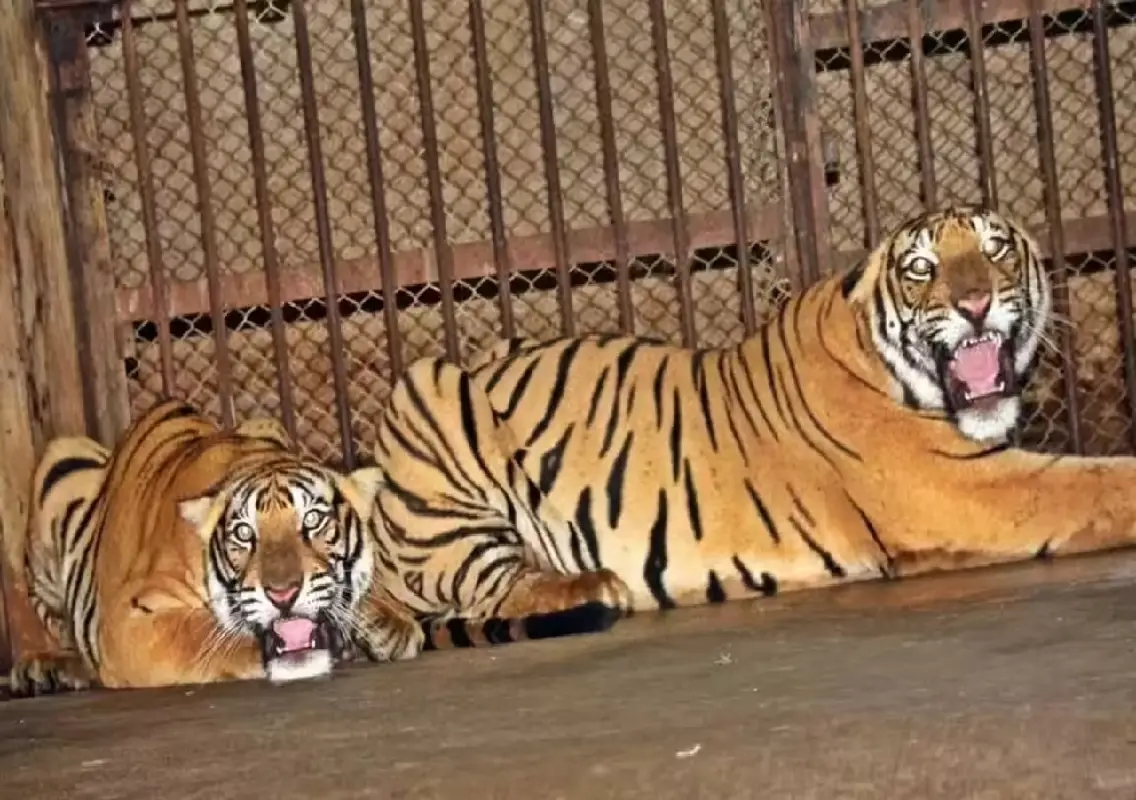


Mangaluru: As part of the Karavali Utsava celebrations, two tiger cubs born on December 20, 2024, were released from their cages into a specially prepared enclosure for public viewing at Pilikula Biological Park on Sunday. The release was carried out by Deputy Commissioner Darshan H V, marking a key attraction of the festival and drawing the attention of wildlife enthusiasts and visitors.
Tiger cubs introduced to public enclosure
The two cubs, one male and one female, were shifted from their protected cages to a spacious enclosure designed for safe public viewing. Officials said the move was taken after ensuring the cubs were healthy and fit for display. Visitors at the park witnessed the cubs exploring their new surroundings, adding excitement to the Karavali Utsava celebrations.
The event aimed to create awareness about wildlife conservation and to familiarise the public with the functioning of zoological and biological parks in a responsible manner.
Naming ceremony organised
On the occasion, the Pilikula Development Authority organised a formal naming ceremony for the tiger cubs. The cubs were adopted by donor Diwakar Kadri, who also had the honour of naming them. The female cub was named Tennyson, while the male cub was named Oliver.
Diwakar Kadri, who is the general manager of Cardolite Specialty Chemicals, formally adopted the cubs as part of Pilikula’s animal adoption programme. The adoption will help support the upkeep, nutrition, and medical care of the cubs as they grow.
Donor highlights conservation responsibility
Speaking at the event, Diwakar Kadri stressed the importance of understanding tiger behaviour and ecology to address the growing challenge of human–wildlife conflict. He said tiger conservation cannot be viewed as the responsibility of forest departments alone, but must involve citizens, institutions, and industries.
He added that awareness and scientific management are key to ensuring the long-term survival of tigers, particularly in regions where forest areas and human habitation overlap. By adopting animals, he said, individuals and organisations can directly contribute to conservation efforts.
Deputy commissioner shares personal connection
Deputy Commissioner Darshan H V shared his childhood memories and personal fondness for forests and wildlife during the programme. He said the tiger had always been his favourite wild animal and described the experience of releasing the cubs into the enclosure as a special moment.
The Deputy Commissioner also expressed his desire to adopt a tiger cub in the future if given the opportunity. He emphasised the role of biological parks like Pilikula in educating the public, especially children, about wildlife and conservation.
Call for public participation in adoption
Pilikula Development Authority Commissioner Dr Arun Kumar Shetty urged members of the public, corporate houses, and philanthropists to come forward and adopt animals at the park. He said sustained financial and moral support from donors is crucial for the efficient management and development of the biological park.
Dr Shetty noted that adoption programmes help reduce the financial burden on the authority while also fostering a sense of ownership and responsibility among citizens towards wildlife conservation.
Pilikula’s role in conservation and education
Pilikula Biological Park has emerged as a major centre for wildlife conservation, education, and recreation in the region. The park houses a wide range of animal species and plays an important role in spreading awareness about biodiversity and environmental protection.
Officials said events such as the release and naming of tiger cubs help attract public interest and create meaningful engagement with conservation efforts. The inclusion of such programmes as part of Karavali Utsava also highlights the region’s commitment to balancing cultural celebrations with environmental awareness.
Conclusion
The release and naming of the tiger cubs at Pilikula Biological Park added a significant highlight to the Karavali Utsava celebrations. With the adoption by Diwakar Kadri and renewed calls for public participation, the event reinforced the message that wildlife conservation is a shared responsibility. Authorities expressed hope that such initiatives would inspire more people to support conservation programmes and strengthen Pilikula’s role as a centre for wildlife care and education.