







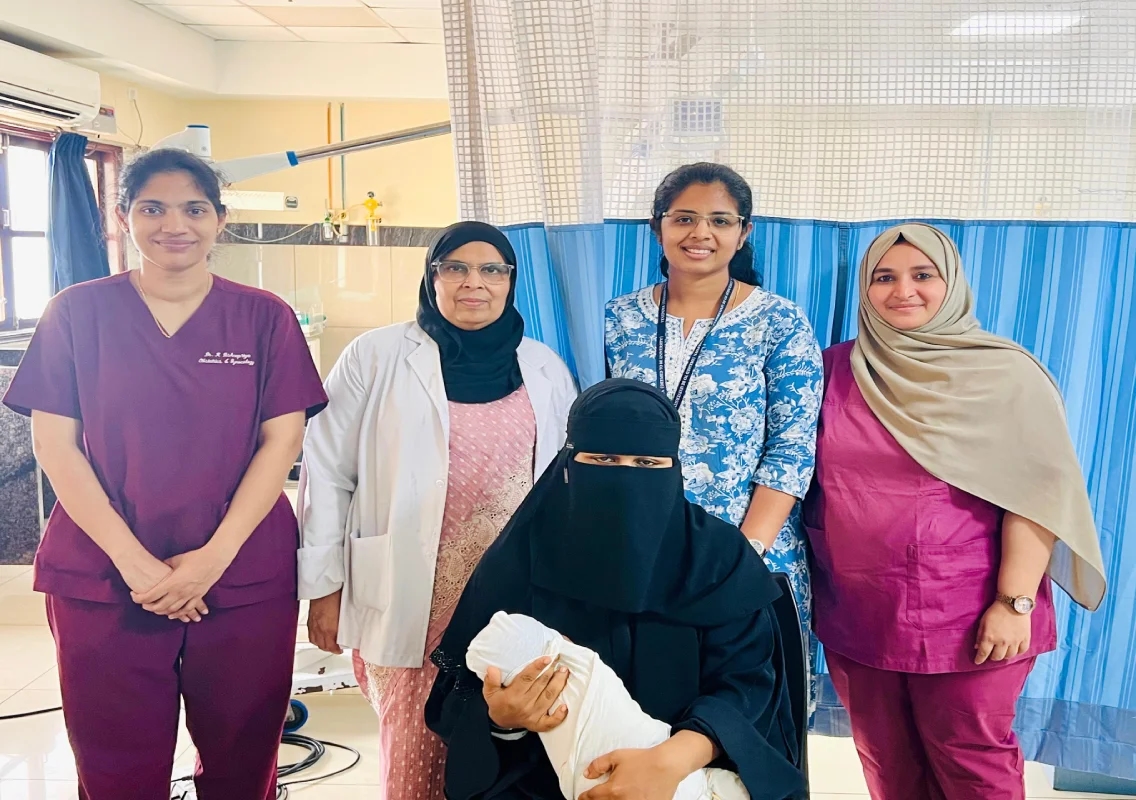


Mangaluru: Doctors at Yenepoya Medical College Hospital successfully managed a rare obstetric case involving extreme fetal macrosomia, demonstrating the institution’s clinical expertise and multidisciplinary medical care.
The case involved a 25-year-old woman, gravida two para one living one (G2P1L1), who was admitted at 38 weeks and three days of gestation with a history of a previous Lower Segment Caesarean Section (LSCS). Considering the patient’s obstetric history and clinical condition, doctors planned an elective caesarean delivery.
The patient underwent the elective Lower Segment Caesarean Section on February 27, 2026, resulting in the safe delivery of a healthy female baby weighing 5.1 kilograms.
Rare occurrence of extreme fetal macrosomia
The newborn’s weight falls under the category of extreme Fetal Macrosomia, a rare condition in which a baby is born significantly larger than the average birth weight.
Cases of extreme fetal macrosomia are relatively uncommon, particularly in non-diabetic mothers, as the condition is often associated with maternal diabetes or other metabolic factors.
Medical experts note that such deliveries require careful monitoring and specialised obstetric planning to minimise risks for both mother and child.
Multidisciplinary team effort
The surgery was successfully performed by the obstetrics team of OBG Unit III, led by Dr Sadiq Unnisa A, Unit Chief. The team also included Dr Reshma Ann Mathew, Dr Akhila L. P., and Dr Denia Mary Eldho, with support from postgraduate residents Dr Jasina and Dr Vishnupriya.
The anaesthesia team comprising Dr Alif Shah P and Dr Aejaz Ahamed Z ensured safe administration of anaesthesia during the procedure, while the paediatrics team played a crucial role in providing immediate neonatal care after delivery.
Doctors stated that close coordination between the obstetrics, anaesthesia, and paediatric departments was vital in ensuring the successful outcome of the surgery.
Commitment to advanced maternal care
Medical professionals emphasised that managing rare and complex obstetric cases requires clinical preparedness, skilled medical teams, and advanced hospital facilities.
The successful handling of this case reflects the hospital’s capability in managing high-risk pregnancies and rare obstetric conditions through coordinated multidisciplinary care.
Healthcare providers at Yenepoya Medical College Hospital reiterated their commitment to providing advanced maternal and neonatal care, ensuring the safety of both mothers and newborns while addressing challenging medical situations with expertise and precision.