







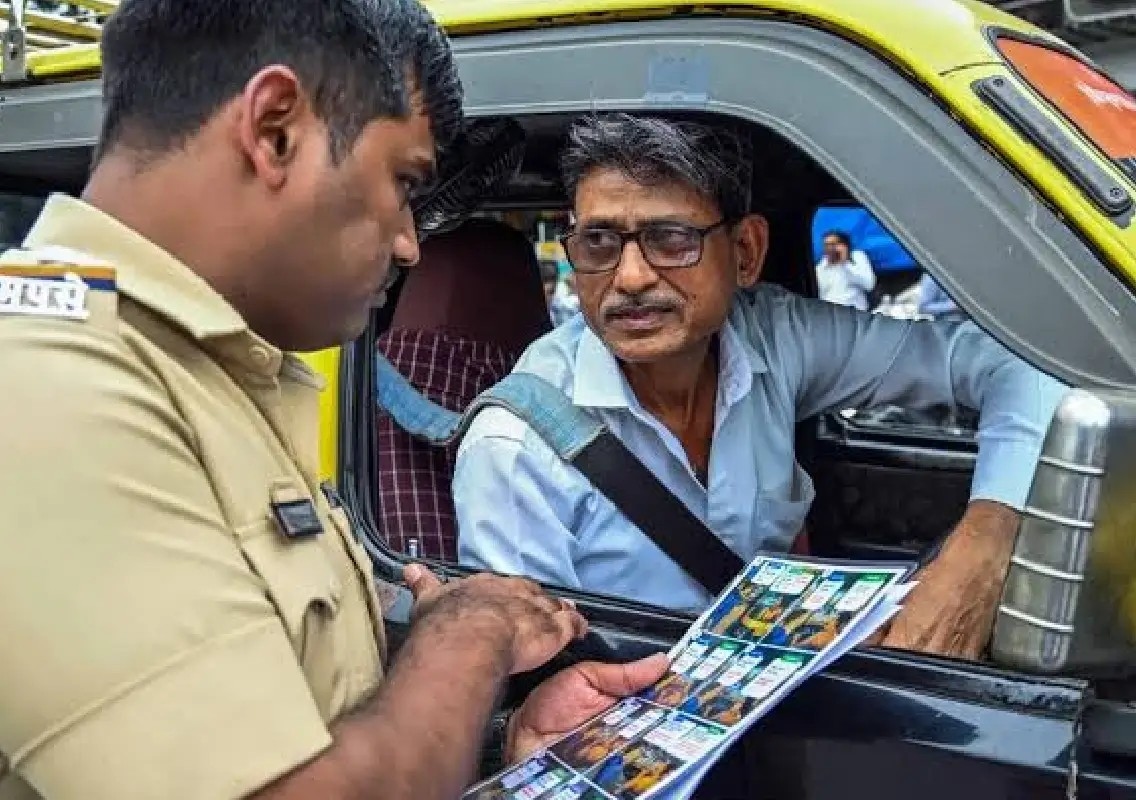


Mumbai, August 24, 2026: The Maharashtra government’s move to enforce Marathi proficiency among auto-rickshaw and taxi drivers is beginning to affect daily commuting in Mumbai, with some drivers reportedly avoiding RTO checks and changing their usual routes.
More than 2,500 show-cause notices have been issued across Maharashtra in the past four days as authorities step up enforcement of the requirement.
Drivers avoid inspection points
RTO checks are often conducted near railway stations, malls, major auto-taxi stands and commercial areas. To avoid inspections and on-road Marathi tests, some drivers are reportedly choosing internal roads and residential areas instead.
Informal WhatsApp groups have also become a way for drivers to share information about checking drives and locations where enforcement is taking place.
Some drivers have reportedly begun refusing passengers travelling towards areas where inspections are expected.
Mumbai Rickshawmen’s Union leader Thampy Kurien told The Times of India that some drivers had temporarily stopped operating, while others had moved their vehicles outside the Mumbai Metropolitan Region.
He said the situation had resulted in a slight shortage of autos and taxis in some parts of Mumbai.
Drivers plan legal challenge
Kurien said a group of drivers is consulting a senior counsel and plans to approach the Bombay High Court against the one-month show-cause notices.
The drivers argue that they were asked to demonstrate working knowledge of Marathi without adequate training infrastructure being available beforehand.
Transport officials, however, said functional Marathi training had been provided for 105 days by literary groups across the state.
A senior transport official said government training facilities had now stopped and drivers would have to arrange Marathi tutorials themselves, either online or offline.
Questions over training
Union representatives have also questioned the effectiveness of the training programmes, claiming that some drivers who completed the courses continue to struggle with conversational Marathi.
With enforcement continuing and a possible court challenge ahead, the new requirement is already influencing how some taxi and auto drivers operate across Mumbai, while commuters in affected areas face reduced availability and longer waits.