







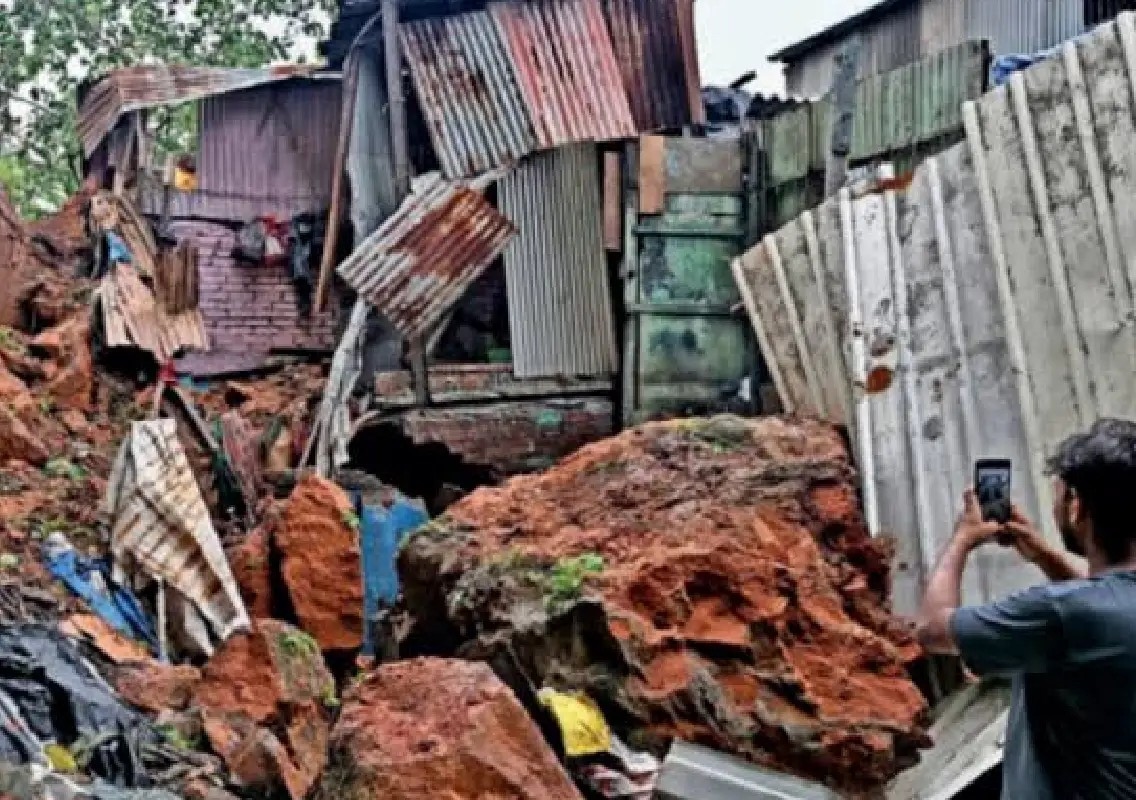


Mumbai: Most of Mumbai’s highly vulnerable landslide hotspots continue to pose a significant risk despite a recent reassessment, highlighting concerns over the city’s preparedness to deal with slope failures during the monsoon.
A Geological Survey of India (GSI) reassessment of 32 highly vulnerable locations among Mumbai’s 249 identified landslide-prone sites found that most remain vulnerable. Several locations require stronger or additional mitigation measures, according to a report published by The Times of India.
The findings have assumed greater significance following the deadly landslide in Ashok Nagar on August 13, which claimed eight lives and left seven others injured.
Most vulnerable sites continue to face danger
The latest assessment indicates that identifying landslide-prone locations alone has not been sufficient to eliminate the danger faced by residents living on or near unstable slopes.
Mumbai has hundreds of locations considered vulnerable to landslides. The GSI’s reassessment has focused specifically on 32 of the city’s most vulnerable sites, with the findings suggesting that several areas require enhanced preventive measures.
The city’s geographical conditions make some locations particularly susceptible to slope failure. Steep slopes, loose soil, intense rainfall and water saturation can increase instability, particularly during periods of heavy monsoon rain.
The BMC’s climate vulnerability assessment has also identified landslide-prone areas around the city’s hills and foothills, where informal settlements can face heightened exposure during intense rainfall.
Deadly Ashok Nagar landslide raises fresh concerns
The latest reassessment comes soon after the August 13 landslide at Ashok Nagar, where eight people were killed and seven injured.
The tragedy has renewed questions about whether existing warnings and mitigation measures are sufficient to protect communities living in landslide-prone locations.
Mumbai has experienced several deadly landslide incidents in the past. In 2021, landslides in Chembur and Vikhroli during heavy rainfall killed 32 people, underlining the recurring threat faced by vulnerable communities.
Hundreds of vulnerable locations across Mumbai
The 32 sites covered by the latest GSI reassessment form only part of the wider landslide risk across Mumbai.
Earlier assessments and civic records have identified hundreds of vulnerable locations. The BMC’s Mumbai Climate Action Plan has mapped landslide-prone areas and noted the particular vulnerability of informal settlements located along hillsides and foothills.
Areas in and around Kurla, Vikhroli, Bhandup, Chembur and Ghatkopar have been identified among locations with significant landslide vulnerability.
The concentration of settlements near unstable slopes adds another dimension to the challenge, as relocation can be difficult in a city where affordable housing is limited.
Warnings need to be backed by action
One of the major challenges confronting authorities is the gap between identifying dangerous locations and actually relocating residents or completing preventive works.
Previous reports have highlighted instances where residents were warned about landslide risks but remained in vulnerable settlements. Questions have also emerged over the respective responsibilities of the Brihanmumbai Municipal Corporation and the district administration in carrying out enforcement and relocation measures.
The BMC has previously advised residents living in landslide-prone areas to move to safer locations, particularly ahead of the monsoon.
However, issuing warnings alone cannot eliminate the underlying danger when residents have limited alternatives for housing.
Mitigation remains crucial during monsoon
Experts and civic authorities have repeatedly stressed the importance of slope protection, retaining structures, drainage improvements and timely relocation from locations where the risk cannot be adequately controlled.
Mumbai’s climate vulnerability assessment notes that heavy rainfall can saturate soil around unstable slopes and increase the likelihood of landslides, particularly around informal settlements situated near hills and foothills.
The latest GSI findings therefore reinforce the need for authorities to review mitigation measures at vulnerable sites and ensure that safety interventions are completed before further heavy rainfall events.
Need for coordinated response
The reassessment has once again highlighted the importance of coordination between civic authorities, the district administration, disaster-management agencies and communities living in vulnerable areas.
With most of the 32 highly vulnerable sites still considered at risk, preventive action could be critical in avoiding further loss of life.
The latest findings serve as a reminder that mapping and surveying landslide hotspots must be accompanied by effective mitigation, timely evacuation where necessary and safe rehabilitation options for affected families.
For Mumbai’s vulnerable communities, the priority is clear: warnings must translate into concrete safety measures before the next major rainfall event puts already fragile slopes under further pressure.