




Mysuru: A trek through the high-altitude Kalindi Khal Pass in Uttarakhand turned into a dangerous ordeal for a group of trekkers, including Dr Shivanand, an Associate Professor at the Sri Jayadeva Institute of Cardiovascular Sciences and Research in Mysuru. The group was stranded in heavy snowfall for nearly three days before being rescued in a joint operation involving the Indian Army and disaster-response authorities.
Dr Shivanand and four other doctors from Bengaluru were part of a larger trekking group that had set out from Gangotri towards Badrinath through the Kalindi Khal route. The trek was disrupted after heavy snowfall hit the region, leaving the trekkers unable to continue their journey.
Heavy snowfall brings trek to a halt
The trekking group began its journey from Gangotri on September 18 with the intention of reaching Badrinath. According to Dr Shivanand, snowfall began in the Kalindi Khal area of Uttarkashi district on the morning of September 25.
The snowfall continued for around 60 to 70 hours, forcing the trekkers to stop at a high-altitude location. The group was stranded at an elevation of approximately 18,500 feet above sea level, where the weather conditions made further movement extremely difficult.
The team had originally planned to complete the trek to Badrinath by September 28. However, the sudden deterioration in weather conditions meant that the planned schedule could not be followed.
The Star of Mysore report said the team had undertaken an 11-day trek and that Dr Shivanand had left Mysuru on September 15. The trekkers were travelling through the Kalindi Khal Pass, a high-altitude route connecting the Gangotri and Badrinath regions.
Trekkers survive on limited supplies
The prolonged snowfall left the trekkers dependent on the supplies they had carried with them.
Dr Shivanand said the group survived on limited food during the period they remained stranded. They also melted snow to obtain drinking water.
However, the prolonged wait created another concern as the group began running short of LPG, which was being used to melt the snow for water.
The extreme altitude and continuing snowfall made the situation increasingly difficult. The group also had limited options for moving to safer locations because of the weather conditions and the snow-covered terrain.
Satellite phone helped establish contact
The group had access to a satellite phone provided by the authorities, which enabled them to communicate with officials despite being stranded in a remote high-altitude area.
Dr Shivanand told Star of Mysore that the group was able to contact the authorities through the satellite phone. However, the poor weather initially prevented the rescue operation from being launched immediately.
The trekkers had to wait for around three days before conditions allowed authorities to begin the evacuation.
The group later thanked the Uttarakhand Government, State Disaster Management team and the Indian Army for their efforts in bringing them to safety.
Joint rescue operation launched
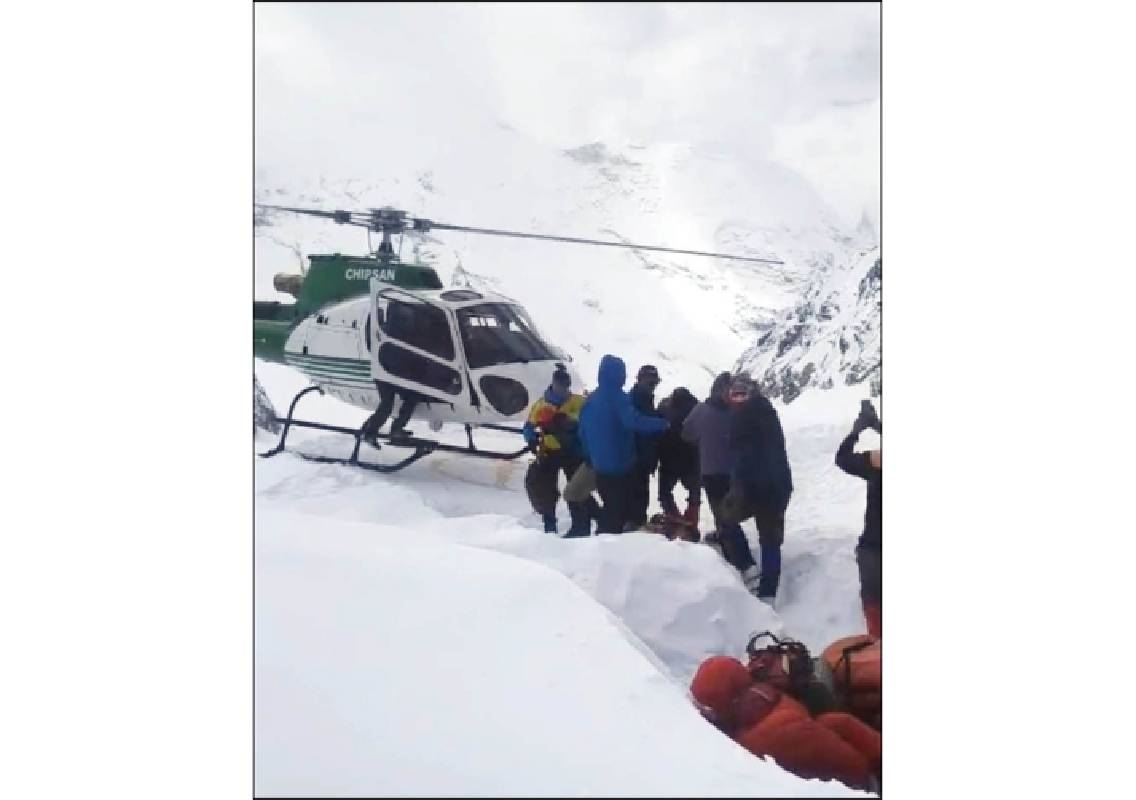
The stranded trekkers and their support staff, including porters, were eventually evacuated by air.
The rescue operation involved multiple agencies, including the Indian Army, Ministry of Civil Aviation, Uttarakhand Police and Uttarakhand State Disaster Response Force (SDRF).
Authorities waited for a brief improvement in weather conditions before carrying out multiple sorties to evacuate people from the high-altitude locations.
The trekkers were airlifted from the Kalindi Khal region to Harsil in Uttarkashi district, around 30 km from Gangotri.
The evacuation involved not only the group that included Dr Shivanand but also support personnel accompanying the trekking parties.
Group included 19 trekkers and support staff
While the Star of Mysore report focused on the five doctors, including Dr Shivanand, a separate account reported that the larger group comprised 19 trekkers and support staff.
Dr Shivanand and four doctors from Bengaluru were part of this larger trekking group.
The group had been travelling without mules on their route, and Dr Shivanand clarified that no mules were used to carry their luggage during the trek. The clarification came amid accounts of the logistical difficulties faced by trekkers in the snow-hit region.
Several other trekkers were also stranded on the Auden’s Col route in the region. Most of them were subsequently rescued, according to Dr Shivanand.
Doctor recalls narrow escape
Speaking to Star of Mysore while travelling towards Dehradun, Dr Shivanand expressed gratitude to the rescue teams.
He said any further delay in the evacuation could have posed a serious threat to the lives of the stranded trekkers. The group had already spent several days exposed to heavy snowfall at an altitude of around 18,500 feet.
The successful evacuation brought an end to the immediate crisis, although the episode highlighted the risks associated with high-altitude trekking during rapidly changing weather conditions.
High-altitude trekking requires weather preparedness
The incident has once again highlighted the challenges faced by trekking groups on high-altitude routes in the Himalayas.
Weather conditions at such elevations can change rapidly, with snowfall potentially blocking trekking routes and making evacuation difficult. In the Kalindi Khal region, the heavy snowfall continued for several days, leaving the trekkers unable to proceed according to their original schedule.
The availability of a satellite phone played an important role in maintaining communication with authorities. The subsequent air evacuation also required a temporary improvement in weather conditions to allow aircraft to operate safely in the mountainous terrain.
The incident also demonstrates the importance of monitoring weather forecasts and following instructions issued by local authorities before undertaking high-altitude expeditions.
Rescue brings relief to families
For the families of the trekkers, the prolonged period without a safe evacuation would have been a major concern.
The joint operation involving multiple agencies eventually brought the stranded group to safety at Harsil. From there, the trekkers could continue their onward journey after receiving assistance.
Dr Shivanand was travelling towards Dehradun after the rescue when he spoke about the experience.
The incident ended without a reported fatality among the group, despite the difficult conditions they faced for nearly three days.
Conclusion
The trek from Gangotri towards Badrinath through the Kalindi Khal Pass became a dangerous experience for a group of trekkers after heavy snowfall stranded them at around 18,500 feet in Uttarakhand.
Dr Shivanand of the Jayadeva Institute in Mysuru and four doctors from Bengaluru were among the group. After nearly three days in the snow, they were airlifted to Harsil in a coordinated rescue operation involving the Indian Army, Civil Aviation Ministry, Uttarakhand Police and SDRF.