







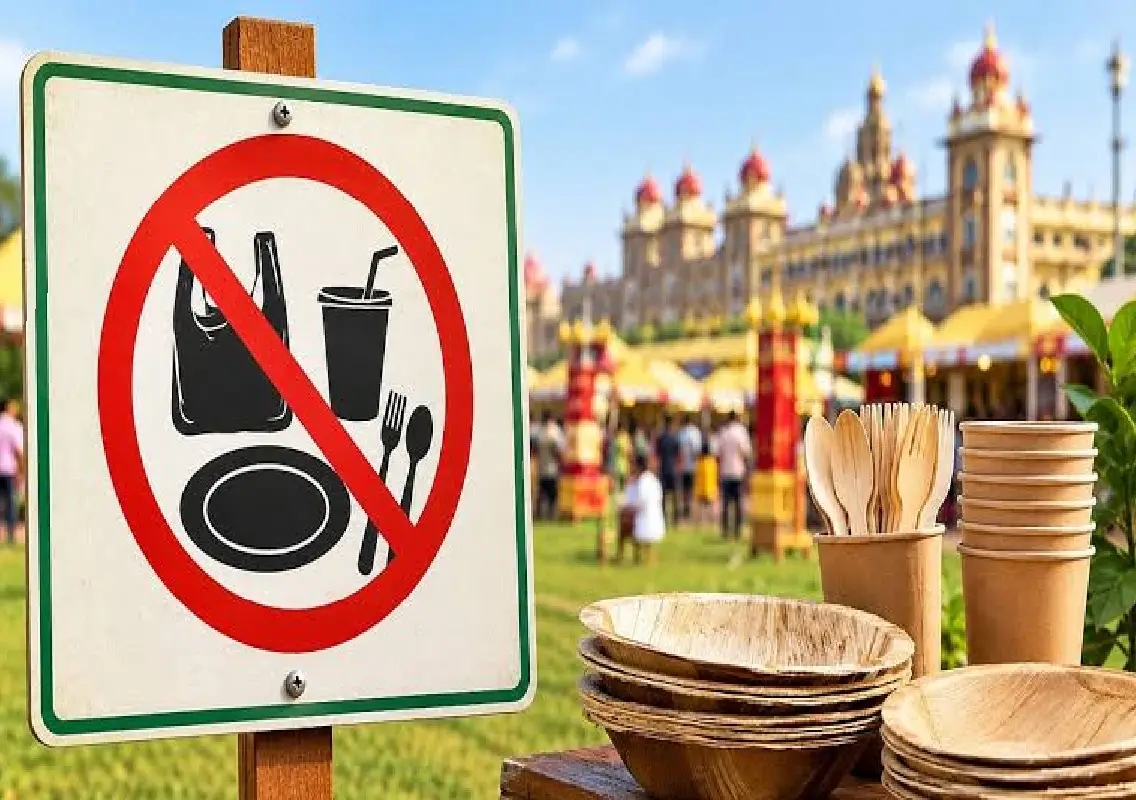


Mysuru: The Mysuru City Corporation (MCC) has directed food stalls at Dasara venues, particularly the Food Mela, to avoid single-use plastics and adopt environmentally friendly alternatives as part of efforts to protect the environment and maintain the city’s cleanliness during the festivities.
The directive follows the civic body’s efforts to ensure a flex-free Dasara this year. MCC Commissioner M K Savitha has written to the deputy special officer of the Food Mela, instructing officials to ensure that stall operators comply with the plastic-free guidelines and maintain cleanliness at their premises.
The measures are aimed at reducing plastic waste, improving waste segregation and preserving the appearance of Mysuru as large numbers of visitors arrive for the annual celebrations.
Food stalls told to avoid single-use plastic
According to the MCC’s instructions, stall operators must not use, sell or distribute single-use plastic items at the Food Mela. Plastic and thermocol plates, cups, spoons and forks are prohibited under the directive.
Instead, vendors have been asked to use sustainable alternatives, including reusable utensils and arecanut-leaf plates.
The civic body has also instructed officials to obtain signed undertakings from stall owners confirming their commitment to the guidelines before allowing them to begin operations.
The move is intended to ensure that the restrictions are communicated clearly and that vendors accept responsibility for maintaining hygiene and minimising waste throughout the event.
With food stalls attracting large crowds during Dasara, the corporation’s measures seek to prevent the accumulation of disposable plates, cups and other plastic waste at busy public venues.
Clean drinking water and waste segregation mandatory
MCC Commissioner M K Savitha has also emphasised the need for safe drinking water facilities and systematic waste management at the Food Mela.
Stall operators have been instructed to provide clean drinking water that visitors can fill into reusable bottles, helping reduce dependence on disposable plastic water bottles.
Shops must maintain separate dustbins for wet and dry waste. Food waste and other discarded materials must be segregated before being handed over to the MCC for collection and disposal.
The guidelines are intended to improve waste handling at the source and prevent mixed waste from accumulating around stalls and public gathering areas.
Savitha has directed organisers to install information boards at the venues and make frequent announcements to raise awareness among stall operators and visitors about the plastic restrictions and waste management requirements.
Dasara committees asked to follow the guidelines
The MCC has extended the instructions beyond the Food Mela, urging all other Dasara committees to implement similar measures at food stalls operating at their respective venues.
Organisers have been asked to avoid using plastic items for serving food and drinking water, including when catering to guests and invited dignitaries.
They must also ensure that waste is not dumped into drains or discarded in public places. Segregated waste should be handed over to the corporation for proper collection.
The wider implementation of the guidelines is intended to ensure that environmental precautions are followed across Dasara venues rather than being limited to a single event.
The corporation’s approach combines restrictions on disposable products with practical measures such as waste segregation, reusable containers and public awareness campaigns.
Visitors urged to carry reusable bottles
The MCC has also appealed to tourists and visitors to cooperate with the initiative by carrying reusable water bottles and avoiding single-use plastics during the festivities.
Public participation is expected to play an important role in reducing waste, particularly at food courts, exhibition areas and other locations where crowds gather throughout the celebrations.
Visitors have been encouraged to use designated dustbins and avoid littering roads, drains and public spaces.
The corporation’s instructions highlight the role of both event organisers and members of the public in maintaining cleanliness during one of Mysuru’s busiest festive periods.
MCC warns of action against violators
The civic body has warned that MCC staff will inspect the venues to check compliance with the guidelines.
Officials will initiate action against violators in accordance with the applicable rules, Savitha has cautioned.
The inspections are expected to cover the use of prohibited disposable items, waste segregation arrangements and the handling of rubbish at food stalls and other event locations.
By extending the plastic-free requirements across Dasara venues, the MCC aims to reduce the environmental impact of the celebrations while maintaining public hygiene.
The success of the initiative will depend on compliance by vendors, cooperation from organisers and responsible waste disposal by visitors. The corporation has called for collective participation to keep Mysuru clean throughout Dasara 2026.