







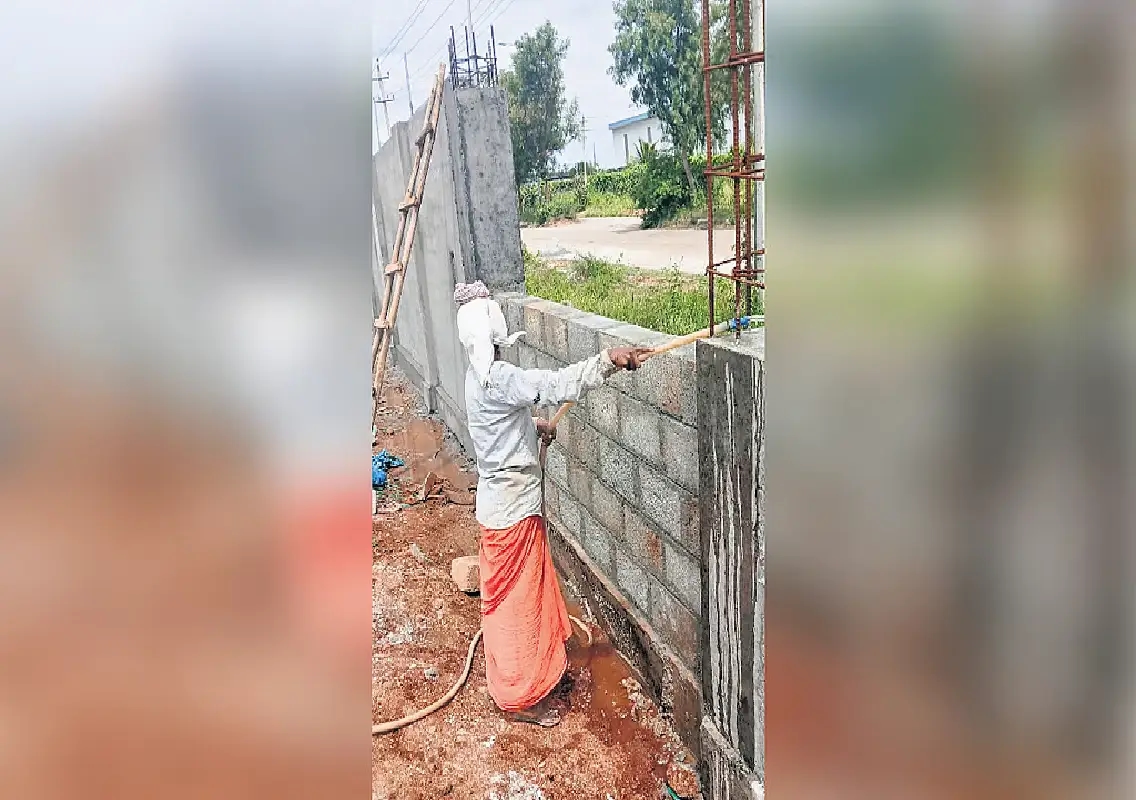


Mysuru: After remaining largely on paper for nearly a decade, the long-pending Mysuru Film City project has finally gathered momentum, signalling a significant push by the Karnataka government to strengthen infrastructure for the Kannada film industry.
The proposed Film City is planned on 160 acres at Immavu village in Mysuru district and aims to create a world-class filmmaking hub equipped with modern production facilities, studio floors, outdoor sets and post-production infrastructure.
Feasibility study under way
A recent Techno-Economic Feasibility Report (TEFR) meeting held in Bengaluru examined the project’s technical and financial viability. Officials reviewed location suitability, engineering design, estimated project costs, possible investment models and other critical parameters necessary for implementation.
According to Film City nodal officer Harish T.K., the compound wall construction for the first phase — estimated at ₹7 crore — is currently being executed by the Public Works Department (PWD). The remaining 50 acres will be taken up in the second phase.
He added that Hemant M Nimbalkar, Commissioner of the Department of Information and Public Relations (DIPR), has conducted multiple consultations with experts. Based on their inputs, a Detailed Project Report (DPR) has been prepared and will soon be submitted to the government for approval.
A project with a long political history
The concept of establishing a Film City in Karnataka dates back to the tenure of former Chief Minister Ramakrishna Hegde. However, the proposal did not move beyond the initial stages at the time.
The idea resurfaced during the tenure of S M Krishna, but again remained at a conceptual level without tangible progress.
In 2017, during his first term as Chief Minister, Siddaramaiah identified Mysuru — his home district — as the location for the Film City. However, the project soon became entangled in political rivalry.
After H D Kumaraswamy assumed office in 2018, the proposed site was shifted to Ramanagara, his Assembly constituency. The relocation sparked debate among stakeholders and political leaders.
Subsequently, during the tenure of B S Yediyurappa, ₹500 crore was allocated in the State Budget for the project, and a proposal was made to establish the Film City at the Devika Rani Roerich Estate in Hesaraghatta near Bengaluru. The frequent shifting of locations triggered protests and political exchanges, with leaders backing different sites.
The uncertainty was finally resolved after Siddaramaiah returned as Chief Minister for a second term and confirmed the allotment of 160 acres at Immavu village in Mysuru district.
Industry voices support Mysuru location
Renowned Kannada film director and producer S V Rajendra Singh Babu, a long-time advocate of the Mysuru location, said a recent meeting was held with members of the Kannada film fraternity. The discussions included representatives such as Jayamala, president of the Karnataka Film Chamber of Commerce (KFCC), and producer Rockline Venkatesh.
Singh Babu said they were informed that tenders would soon be invited for the project. He added that the industry had submitted proposals expressing interest in participating in the tender process.
Referring to Maharashtra’s successful model of operating the Dadasaheb Phalke Chitranagari in Mumbai on over 1,000 acres, he suggested that the Karnataka government should retain operational control of the Mysuru Film City rather than handing it over entirely to private entities.
Proposal to generate early revenue
Singh Babu further proposed that once the compound wall is completed, the government could begin renting out designated spaces on a daily basis to film producers for erecting temporary sets.
“As it is a dedicated area for film production, the government can start allowing set construction on a rental basis even in the initial phase. This would help generate revenue and encourage filmmakers to utilise the facility,” he said.
He emphasised that the final decision rests with the government and officials, who must structure the project in a manner that benefits the Kannada film industry and ensures long-term sustainability.
Conclusion
With land finally allotted and feasibility studies nearing completion, the Mysuru Film City project appears to have moved beyond political uncertainty into the implementation phase. If executed effectively, the initiative could provide a major boost to the Kannada film industry, create employment opportunities and position Mysuru as a prominent hub for film production in South India.