


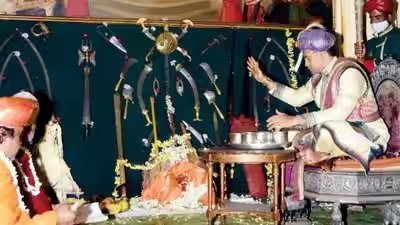


Mysuru: Ayudha Puja was celebrated with traditional grandeur at Amba Vilas Palace in Mysuru as the city prepared for the grand finale of its annual Dasara festivities. Yaduveer Wadiyar performed the ceremonial worship of royal weapons, continuing customs associated with the erstwhile Mysuru royal family.
The celebrations began at 6 am with a Chandika Homa, followed by special pujas for the royal family’s collection of weapons, including swords, spears and shields used by earlier generations of the Wadiyar dynasty.
The rituals reflected the historical significance of Ayudha Puja, during which weapons, tools and other instruments are worshipped as symbols of duty, protection and prosperity. At Mysuru Palace, the ceremony retains a distinct royal character, connecting the present-day celebrations with the traditions of the former rulers of the princely state.
The palace also witnessed the worship of royal animals and luxury vehicles, adding to the festive atmosphere ahead of the much-anticipated Jamboo Savari procession.
Royal weapons worshipped as per tradition
As part of the longstanding ritual, 32 varieties of weapons associated with the Mysuru kings were taken to Kodi Someshwara Temple. The weapons were cleaned and worshipped before the royal sword, known as the Pattada Katti, was brought back to Amba Vilas Palace in a palanquin.
The Pattada Katti holds a special place in the ceremonial traditions of the Wadiyar family. Its procession and worship form an important part of the royal observances during Dasara, reflecting the historical relationship between the dynasty, its regalia and the festival.
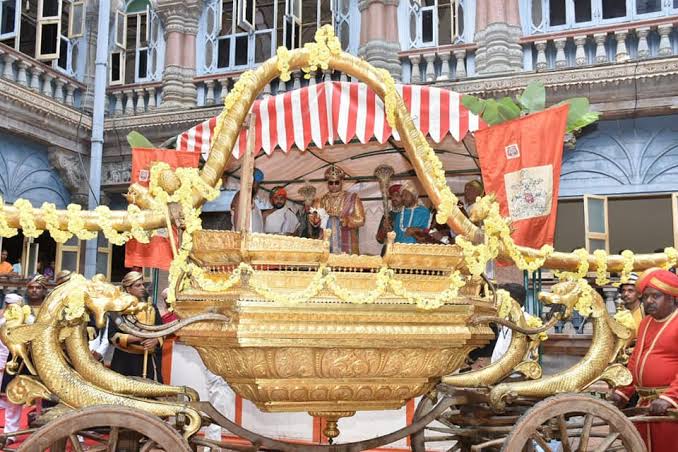
Yaduveer Wadiyar conducted the main Ayudha Puja at the palace’s Kalyana Mantapa, dressed in traditional royal attire. The ceremony lasted approximately 20 minutes.
Cannon vehicles positioned near the palace’s elephant gate were also included in the worship. The observance extended beyond individual weapons to include objects associated with the royal household’s historical and ceremonial responsibilities.
Rajamata Pramoda Devi, Queen Trishikha and the royal family’s two children watched the proceedings from the upper floor of the palace.
The ceremonies highlighted the continuity of royal customs during Mysuru Dasara, one of Karnataka’s most prominent cultural festivals. Although the former kingdom’s political role has ended, several traditions associated with the Wadiyar dynasty continue to feature in the city’s annual celebrations.
Royal elephant, horse, cow and camel receive puja
The Ayudha Puja celebrations continued with special worship of the royal elephant, cow, horse and camel.
Animals have traditionally held an important place in Mysuru Dasara, particularly because of their association with the royal procession and the festival’s ceremonial practices. Their participation connects the palace rituals with the wider cultural traditions of the historic celebration.
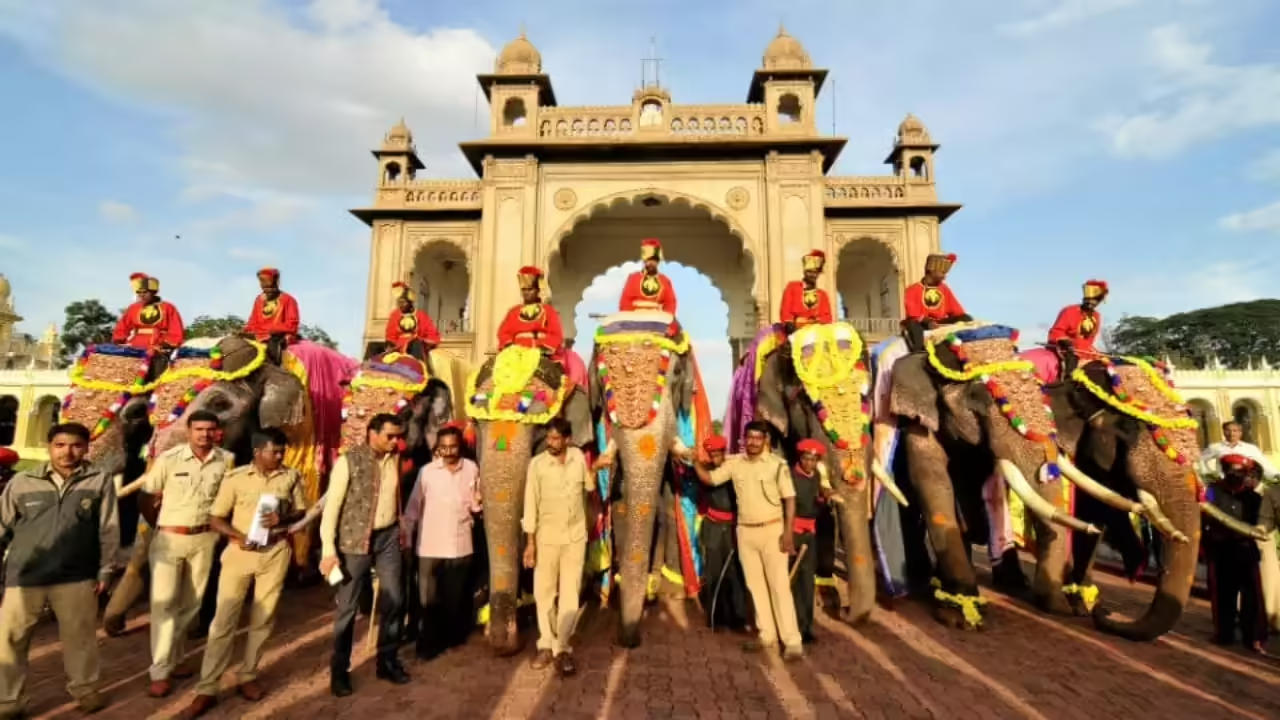
The royal elephant is especially significant during Dasara, when the procession becomes the focal point of festivities across the city. The ceremonial animals are part of a long-established tradition that combines royal customs, religious observances and public celebrations.
The pujas at Amba Vilas Palace also included the royal household’s luxury vehicles. Both vintage cars and vehicles representing more recent generations of the family were decorated with flowers and banana stems before being worshipped at the Savari Thotti.
The inclusion of vehicles reflects the broader meaning of Ayudha Puja, which honours the tools, equipment and possessions people depend on in their daily lives. For the royal household, the ceremony brings together objects representing different periods of its history.
The worship of weapons, animals and vehicles gave the palace celebrations a distinctive character as Mysuru entered the final stage of its Dasara programme.
Mysuru prepares for the grand Jamboo Savari
With the palace rituals completed, attention has shifted to the Jamboo Savari procession, the centrepiece of Mysuru Dasara.
The city is making final preparations to welcome large crowds for the event, which brings together traditional ceremonial elements, cultural performances and the procession associated with the historic festival.
One of the developments expected to attract attention this year is the participation of Captain Prashanth, who is scheduled to carry the state deity on his shoulders during the procession for the first time.
The role is an important ceremonial responsibility, and his participation is expected to be closely watched by visitors and residents. The procession remains one of the most recognisable features of Mysuru’s Dasara celebrations, drawing people from across Karnataka and other parts of the country.
Preparations have also focused on spectator facilities and crowd management. More than 30,000 seats have been arranged within the designated viewing areas to accommodate people attending the procession.
Separate arrangements have been made for VIPs, VVIPs and the general public. Dedicated spaces have also been allocated for Gold Card holders and visitors carrying Jamboo Savari passes.
The seating arrangements are intended to help manage the large crowds expected along the procession route and provide organised viewing facilities for different categories of spectators.
Security tightened along procession route
Security has been intensified throughout the Jamboo Savari route as Mysuru prepares for the influx of visitors.
Bomb disposal teams, dog squads and police personnel are conducting inspections as part of measures to prevent untoward incidents. Authorities are also making additional arrangements in view of the expected visits of the chief ministers of Kerala and Telangana.
The security preparations reflect the scale of the event and the need to coordinate crowd control, visitor movement and the protection of dignitaries.
With thousands of people expected to gather, officials face the task of maintaining public safety while allowing the traditional procession to proceed smoothly. Inspections and deployment of specialised teams form part of the broader arrangements being made ahead of the celebrations.
The presence of VIPs and VVIPs requires further coordination between security personnel and event organisers, particularly in areas where access is restricted or separate viewing arrangements are in place.
Royal traditions remain central to Mysuru Dasara
Ayudha Puja at Amba Vilas Palace remains an important link between Mysuru’s royal heritage and its contemporary cultural identity. The worship of the Pattada Katti, the palace’s weapons, ceremonial animals and vintage vehicles reflects traditions that have been maintained across generations.
The ceremonies also mark the transition from the palace’s private religious observances to the public celebrations associated with Jamboo Savari. While the palace rituals highlight the heritage of the Wadiyar family, the procession brings the festival to the wider city through its ceremonial pageantry and public participation.
As Mysuru completes its preparations, the focus is on ensuring that the grand procession takes place with traditional splendour and adequate arrangements for visitors.
With the royal pujas concluded, seating facilities in place and security measures strengthened, the city is preparing for one of the most anticipated events of its annual Dasara celebrations.