







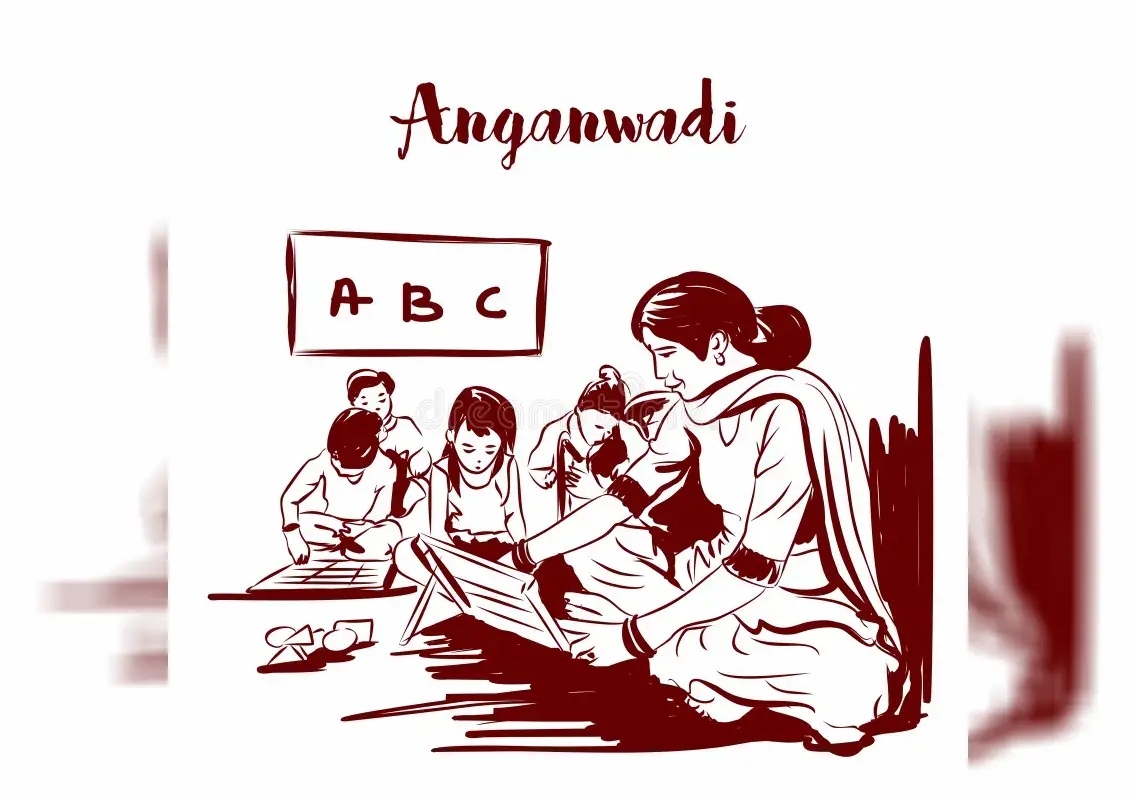


Mysuru, October 5: Nearly 30% of anganwadi centres in Mysuru district are functioning without permanent buildings, raising concerns over the facilities available for children and women who depend on these centres for early childhood education, nutrition and health-related services.
The district has 2,905 anganwadi centres, but only 2,224 have their own permanent structures. The remaining 681 centres are operating from rented premises, gram panchayat buildings, community halls and, in some villages, other available spaces.
Around 1.3 lakh children below the age of six are enrolled across the district’s anganwadi centres, making the shortage of suitable infrastructure a significant concern for the delivery of essential services.
Anganwadis provide crucial services
Anganwadi centres play an important role in early childhood development and welfare. They provide pre-school education to children below six years, along with nutritional support and assistance with immunisation and health monitoring.
The centres also provide nutritional support to pregnant women and contribute to efforts aimed at improving maternal and child health.
Of the more than 1.3 lakh children dependent on anganwadi services in Mysuru district, 10,734 are infants aged between zero and six months. Another 75,536 children are below three years of age, while 47,796 are in the three-to-six-year age group.
With such a large number of young children dependent on the centres, the availability of safe and suitable infrastructure is considered important for effective service delivery.
Rented centres face infrastructure shortage
The absence of permanent buildings has resulted in several anganwadi centres operating from premises that do not have adequate facilities.
Many rented centres reportedly lack toilets, proper kitchens and playgrounds. In some locations, children have to attend classes in congested spaces because the available premises were not originally designed to function as anganwadi centres.
The shortage of dedicated infrastructure can also limit the ability of workers to provide nutritional services and conduct activities intended to support children’s physical and cognitive development.
The government currently pays a monthly rent of Rs 5,000 for anganwadi centres functioning in urban areas and Rs 1,000 for those operating in rural areas.
However, officials and local stakeholders say the long-term solution is to establish permanent centres rather than depend on rented premises.
Land availability biggest challenge
Although funds and provisions are available for construction of anganwadi buildings under various government schemes, including VB-GRAM-G, the availability of suitable land has emerged as the biggest obstacle.
The district administration, zilla panchayat and urban local bodies have been making efforts to identify suitable sites. However, finding government or other suitable land in locations where anganwadi centres are required has proved difficult.
The sharp increase in land and site prices has added to the challenge. In urban areas in particular, identifying affordable land for public infrastructure has become a concern for government authorities.
Deputy Director of Women and Child Welfare Nagaraju said the district administration was making efforts to identify land for anganwadi centres that do not have permanent buildings.
Taluk administrations asked to identify sites
According to Nagaraju, directions have been issued to taluk administrations and local authorities to identify suitable land and hand it over to the Women and Child Welfare Department.
“Once the land is sanctioned, the department will initiate measures for construction,” he said.
The availability of suitable sites is expected to determine how quickly permanent structures can be established for the 681 anganwadi centres currently functioning without their own buildings.
The issue requires coordination between the district administration, gram panchayats, urban local bodies and the Women and Child Welfare Department, particularly in areas where land availability is limited.
Vacancies add to concerns
Apart from infrastructure, the department is also dealing with vacancies among anganwadi workers and assistants.
Nagaraju said measures had been initiated to fill 25 vacant anganwadi activist posts and 225 anganwadi assistant posts in the district.
Adequate staffing is essential for anganwadi centres to provide their range of services, from early childhood education and supplementary nutrition to health monitoring and support for mothers.
Filling the vacancies alongside improving infrastructure could strengthen the functioning of the centres and ensure that children and women receive services without disruption.
Need to strengthen early education
Social activist Alagaudu Shivakumar said the government should take comprehensive measures to strengthen anganwadi centres, considering their role in early childhood education and nutritional care.
He also stressed the need to increase enrolment by introducing a pre-education system similar to LKG and UKG in anganwadi centres.
Anganwadi centres serve as an important link between government welfare programmes and families, particularly in rural and economically vulnerable communities. Providing permanent buildings with basic facilities such as toilets, kitchens, classrooms and playgrounds could improve the environment in which children receive these services.
For Mysuru district, securing land for the remaining centres remains the immediate challenge. Once suitable sites are identified and transferred to the department, construction can begin under the available government schemes.
With more than 1.3 lakh children relying on anganwadi services, addressing the infrastructure gap, filling staff vacancies and improving facilities will be important to ensure that these centres can effectively fulfil their role in early childhood education, nutrition and maternal and child welfare.