







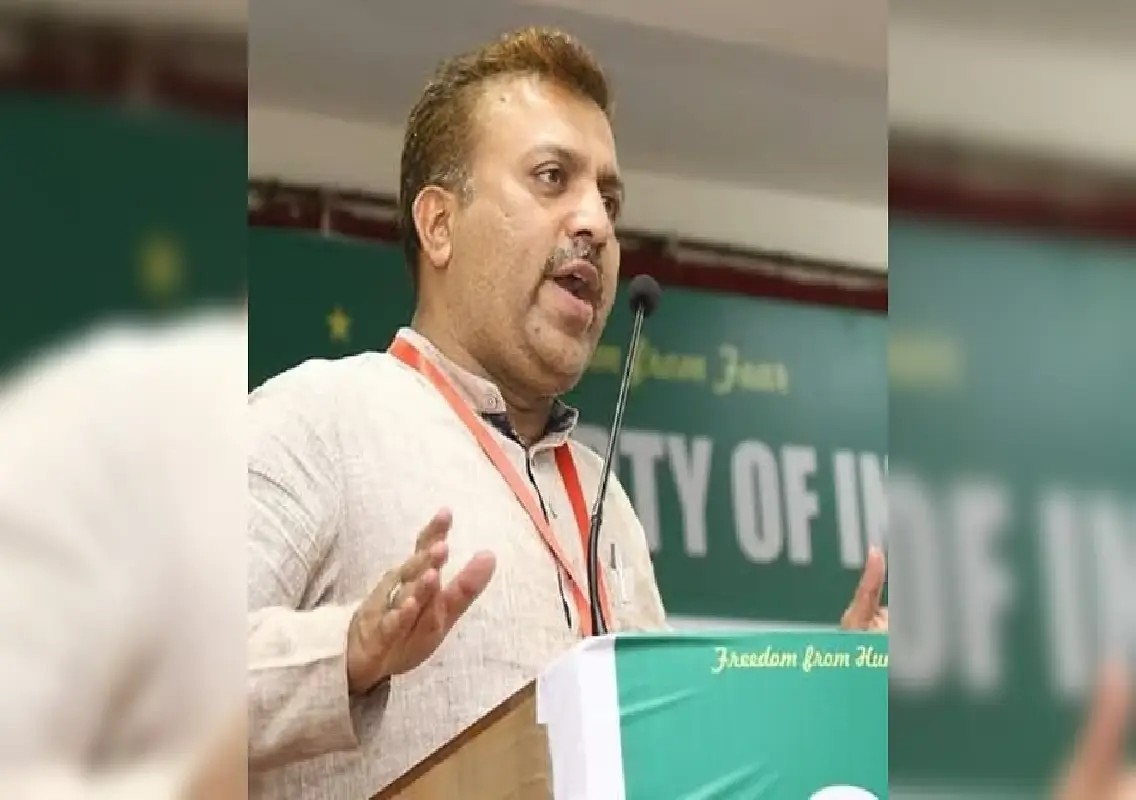


Mysuru: The Social Democratic Party of India (SDPI) has opposed a direction issued by the Mysuru District Police to Muslims in connection with Eid Meelad-un-Nabi, the birth anniversary of Prophet Muhammad, which was celebrated on Wednesday.
SDPI Karnataka state president Abdul Majeed has questioned the legal basis of the police direction and sought clarification on restrictions concerning expressions of devotion associated with the occasion.
Majeed shared a video of Mysuru Superintendent of Police Mallikarjun Baladandi on social media platform X and tagged Karnataka Home Minister Priyank Kharge and Director General and Inspector General of Police (DG&IGP) M A Saleem.
SDPI questions legal basis of direction
In his post, Majeed questioned the legal basis for considering the phrase “I Love You Muhammed” or the display of posters and banners carrying the message a violation.
He asked, “Under what law is it a violation to say ‘I Love You Muhammed’ or to put up posters or banners to this effect”.
The SDPI leader’s remarks came after the Mysuru District Police issued directions in the context of the Eid Meelad-un-Nabi celebrations.
The police advisory and the restrictions referred to by Majeed have now become a subject of political debate, with the SDPI seeking clarification from the state government and senior police officials.
Majeed questions government stand
Majeed also questioned what he described as the government’s and police department’s alleged alignment with the RSS’s position.
He asked, “Why is the government and Police department towing the RSS line?”
The SDPI state president argued that Muslims were not imposing their religious sentiments on others but were expressing their love and respect for Prophet Muhammad.
He described the Prophet as a figure who “liberated humankind” and maintained that expressions of devotion by members of the Muslim community should not be treated as an imposition on others.
The comments have added a political dimension to the discussion surrounding the police advisory issued ahead of the religious observance.
Eid Meelad-un-Nabi celebrated across Karnataka
Eid Meelad-un-Nabi commemorates the birth anniversary of Prophet Muhammad and is observed by Muslims with religious programmes, prayers and community gatherings.
In many places, celebrations can include processions, banners, posters and public programmes. Police and local administrations generally issue guidelines ahead of major public events to maintain law and order and regulate gatherings.
The Mysuru police direction has prompted SDPI to question the restrictions concerning banners and slogans associated with the celebration.
Majeed has sought accountability from the authorities and specifically tagged the state Home Minister and the state’s top police official while raising his questions publicly.
Demand for clarification from authorities
The SDPI’s objection centres on whether the restrictions imposed by the police have a specific legal basis.
By asking the government and police authorities to identify the law under which particular slogans, posters or banners could be treated as violations, Majeed has called for greater clarity regarding the instructions issued to the community.
The issue has also raised questions about the balance between religious expression and regulations imposed by law enforcement agencies during public celebrations.
While police advisories can be issued to regulate public gatherings and maintain peace, any restrictions on public displays or slogans are subject to the applicable laws and administrative orders.
The authorities have yet to respond publicly to the questions raised by Majeed in the material provided.
Political debate intensifies
The SDPI’s criticism comes at a time when police directions concerning religious celebrations are receiving increased attention from political and community organisations.
Majeed’s decision to directly tag the Home Minister and DG&IGP indicates the party’s demand for an explanation at the highest level of the state police and government administration.
The SDPI has maintained that the Muslim community’s expressions of affection towards Prophet Muhammad should not be construed as an attempt to impose religious beliefs on others.
The controversy is now centred on the precise nature of the Mysuru police advisory, the legal provisions governing such public displays and the government’s response to the objections raised by the SDPI.
Further clarification from the Mysuru police or state government could determine the legal and administrative basis for the directions issued during the Eid Meelad-un-Nabi celebrations.