







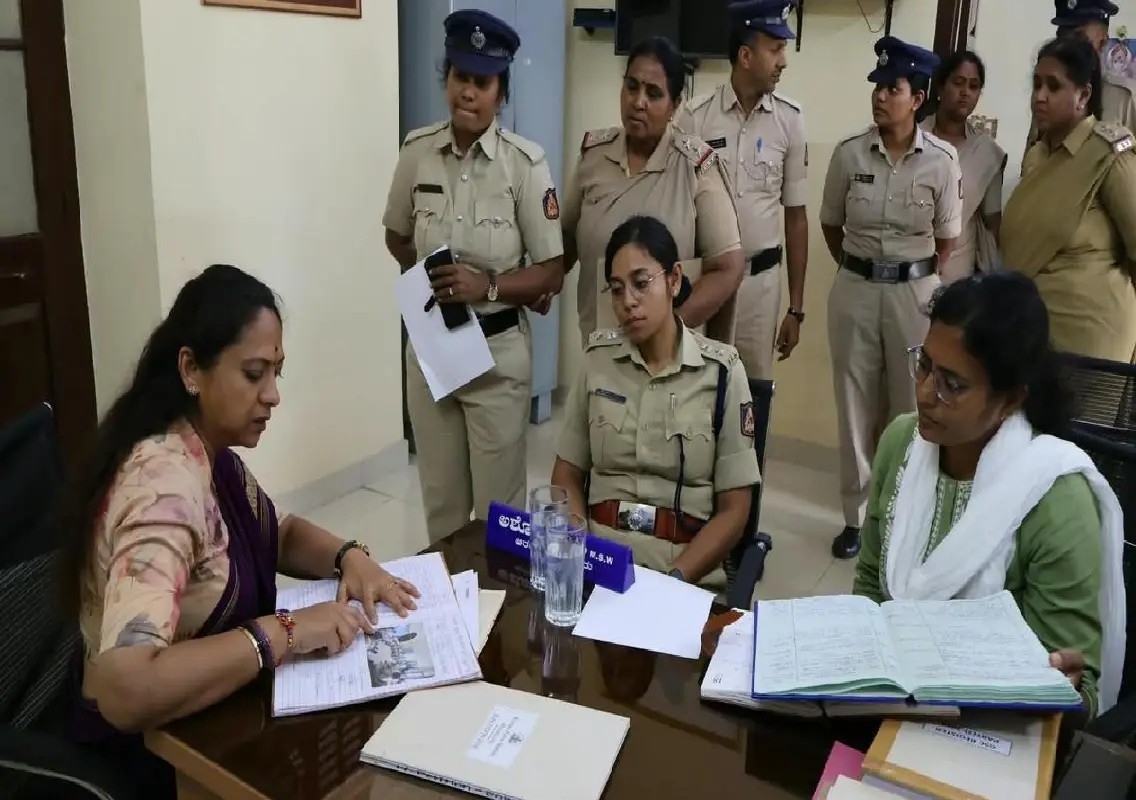


Mysuru: Karnataka State Commission for Women Chairperson Nagalakshmi Chaudhary visited the Women’s Police Station near Nehru Circle in Mysuru city on Thursday and reviewed its functioning and services provided to women.
During the visit, Chaudhary inspected the facilities available at the police station and took stock of the various activities and services being carried out for women approaching the station with complaints and other concerns.
She reviewed the handling of complaints, cases involving missing women and criminal cases, besides examining the implementation of the Open House initiative.
Facilities and services inspected
Cahaudhary assessed the infrastructure and facilities available at the Women’s Police Station and reviewed whether they were adequate for women seeking assistance.
The Women’s Police Station plays an important role in addressing complaints and cases involving women and ensuring that their concerns receive appropriate attention from the police.
During the inspection, Chaudhary also reviewed the manner in which complaints are being handled and the progress of cases registered at the station.
Cases concerning missing women were among the matters reviewed during her visit. She also took stock of criminal cases being dealt with by the station and sought details regarding the functioning of the Open House initiative.
The review was aimed at assessing the effectiveness of the services and ensuring that women approaching the police receive timely assistance.
Focus on workplace safety
Chaudhary also instructed officials to ensure that the Internal Complaints Committee (ICC) conducts its meetings once every three months in accordance with the Prevention of Sexual Harassment (POSH) Act.
The direction was aimed at ensuring that mechanisms for addressing complaints of sexual harassment at the workplace remain active and accessible to women employees.
She stressed the importance of maintaining a safe working environment for women staff members at the police station.
Officials were also instructed to respond promptly to grievances raised by women employees and ensure that their concerns are addressed through the appropriate mechanisms.
Regular meetings of the Internal Complaints Committee are intended to ensure that workplace-related complaints can be taken up without unnecessary delay and that employees are aware of the support mechanisms available to them.
Prompt response to grievances stressed
The Commission for Women chief emphasised the need for officials to respond promptly to grievances.
Women approaching the police station with complaints may require timely assistance and guidance, particularly in cases involving criminal offences, missing persons and other sensitive matters.
The review therefore focused not only on infrastructure but also on the functioning of the station and the services being provided.
The inspection also provided an opportunity to assess whether existing mechanisms are working effectively and whether any improvements are required in handling complaints and supporting women.
The Open House initiative was another aspect reviewed during the visit.
Review aimed at strengthening services
The visit forms part of efforts to review institutions responsible for addressing women’s concerns and strengthen the support available to women.
By inspecting facilities and reviewing the handling of complaints and cases, the State Commission for Women can identify areas requiring improvement and issue directions to officials where necessary.
The instructions regarding the Internal Complaints Committee also underline the importance of ensuring workplace safety for women employed at the police station.
Chaudhary’s directions call for regular ICC meetings, a safe working environment and prompt action on grievances raised by women staff.
The inspection of the Women’s Police Station is expected to help improve the delivery of services and ensure that complaints and cases involving women are handled efficiently.
The Commission will continue to monitor the implementation of such measures to strengthen mechanisms for women’s safety and grievance redressal.