







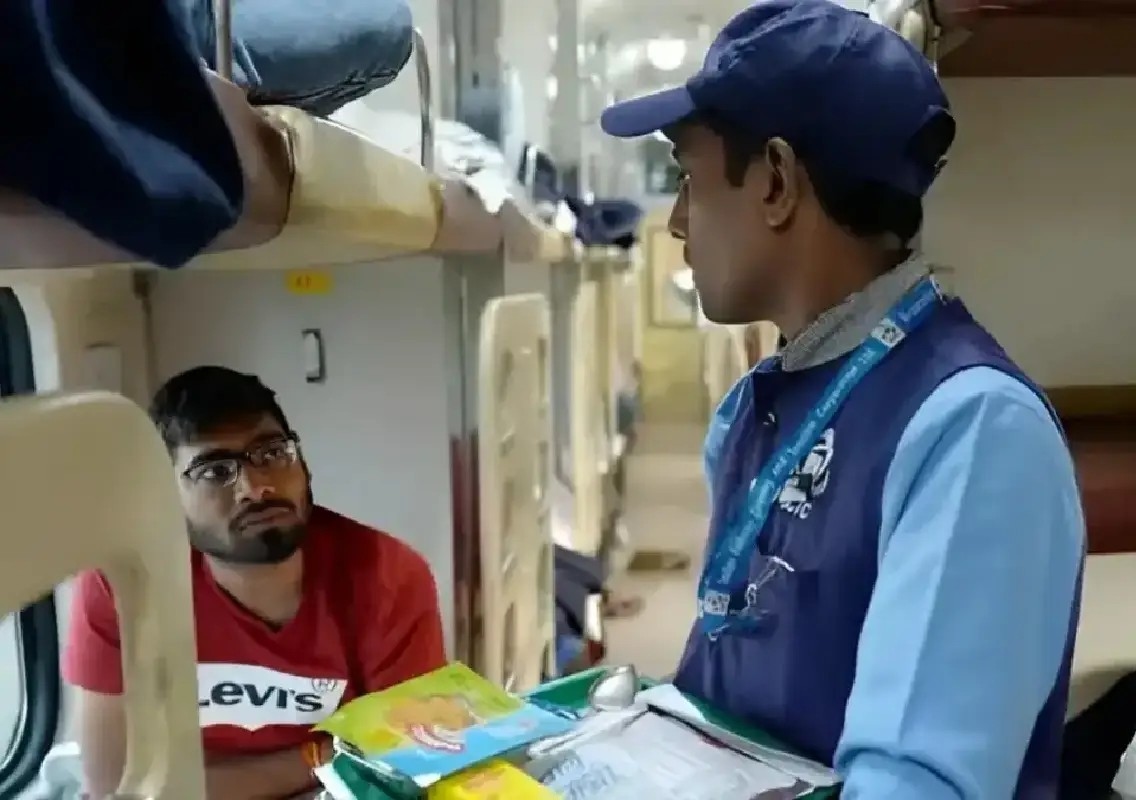


A passenger‘s decision to report an allegedly overpriced meal sold on a train has triggered widespread discussion online after the complaint reportedly resulted in a ₹55,000 penalty being imposed on railway catering staff.
According to a social media post, the passenger, identified as Rahul, purchased a meal for ₹130 during a train journey. Suspecting that he had been overcharged, he immediately asked the vendor for a bill.
Rahul claimed that the vendor attempted to take the meal back instead of providing a receipt. To preserve evidence, he deliberately touched the food before contacting the Railway helpline 139 and lodging a complaint.
Complaint leads to swift action
The complaint reportedly prompted an immediate response from railway authorities. Following an inquiry, a penalty of ₹55,000 was allegedly imposed on the catering manager responsible for the service.
Rahul later claimed that the manager approached him and explained that the authorised price of the meal was only ₹80, alleging that some vendors were charging passengers extra and pocketing the difference without informing management.
Vendor’s plea sparks debate
The incident took an emotional turn when the vendor allegedly apologised and requested forgiveness. According to Rahul’s account, the vendor said he had four daughters to marry and admitted that he had been trying to earn additional money by overcharging passengers.
The story has since sparked intense debate on social media. While many users argue that overcharging passengers is unfair and that strict action is necessary to prevent exploitation, others believe the vendor’s personal circumstances deserve consideration and compassion.
Accountability versus empathy
The incident has highlighted a broader question frequently debated online: should rules be enforced strictly regardless of personal circumstances, or should compassion play a role when livelihoods are at stake?
While opinions remain divided, many users agree on one point—passengers have a right to fair pricing and transparent billing, particularly in public transport services.
The case continues to generate discussion about ethics, accountability, and the challenges faced by workers trying to make ends meet