







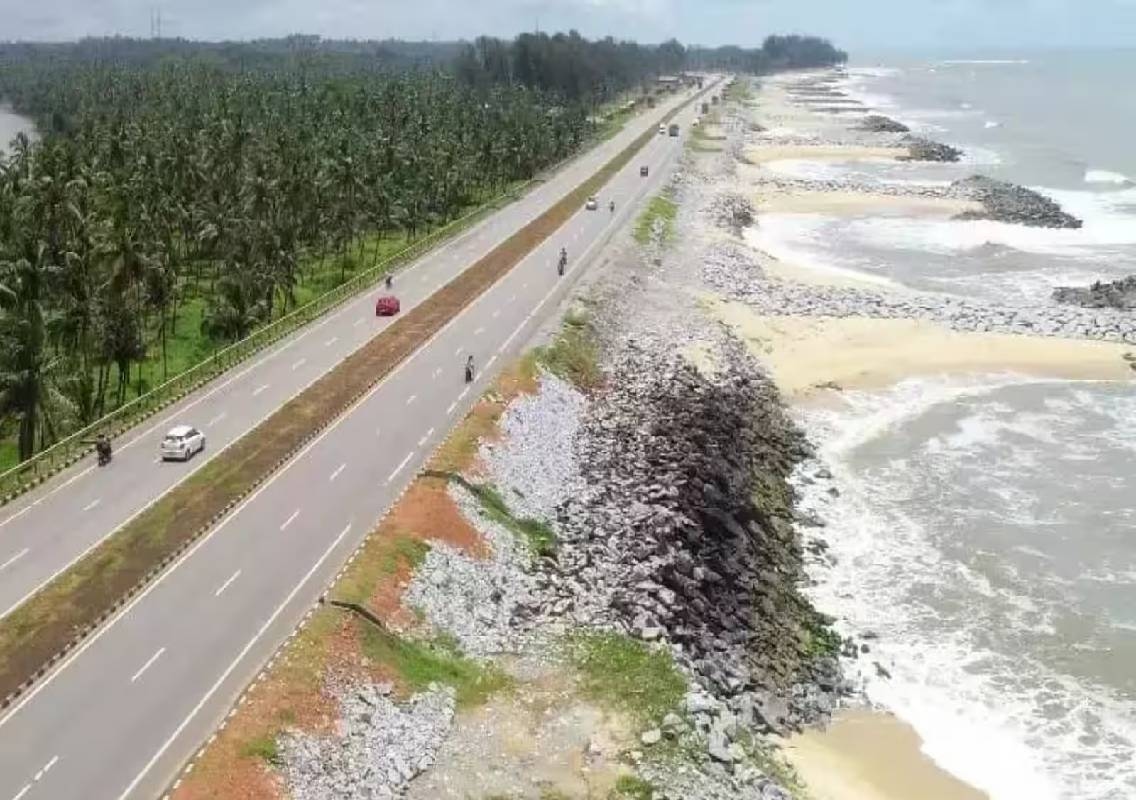


Udupi: The deteriorating safety barriers at the popular Trasi-Maravanthe beach in Udupi district have raised concerns as tourists continue to enter restricted areas for selfies and to get closer to the sea despite warnings about the dangers.
The stretch is a major attraction because of its distinctive coastal landscape, with the Arabian Sea on one side and the Souparnika River on the other, separated by the highway. However, during the monsoon, rough sea conditions can make parts of the beach particularly hazardous. Karnataka Tourism itself advises visitors that the June-to-September monsoon brings rough seas at Maravanthe and that swimming is not advised during the season.
Damaged barriers leave dangerous stretches exposed
According to the Vijay Karnataka report, safety barriers installed at Trasi and Maravanthe have deteriorated, leaving some areas inadequately protected.
The barriers were intended to discourage visitors from entering dangerous portions of the beach. However, damaged or incomplete sections have made it easier for tourists to cross into areas where they could be exposed to strong waves and slippery rocks.
The situation becomes particularly concerning when visitors attempt to take photographs and selfies close to the water. Despite warnings, some tourists reportedly continue to cross the barriers and venture towards the sea.
The issue is not only about the condition of the infrastructure but also about compliance with safety instructions. Authorities have repeatedly warned visitors against entering dangerous areas, particularly during the monsoon.
Tourists continue to take risks for selfies
The scenic nature of Trasi-Maravanthe makes it a popular destination for photography. The unusual landscape, where the sea and river run alongside the highway, has made the area particularly attractive to visitors.
However, the desire to capture photographs and videos can sometimes lead tourists towards exposed rocks and the waterline.
A June 2026 report also highlighted similar concerns at Trasi-Maravanthe, stating that visitors were entering hazardous zones, climbing rocks and taking selfies despite warnings from lifeguards and other personnel. Police, Coastal Security Police, Home Guards, tourist volunteers and lifeguards had been deployed to discourage visitors from entering restricted areas.
The earlier report also pointed to gaps in fencing at different locations, with some tourists reportedly lifting net barriers to enter restricted areas.
Monsoon makes the coast more dangerous
The safety concerns are particularly relevant during the southwest monsoon. Strong winds, heavy rainfall, high waves and slippery surfaces can increase the risk of accidents along the coast.
Karnataka Tourism’s updated information on Maravanthe specifically notes that the June-to-September period brings rough seas and advises against swimming.
At Trasi Beach too, visitors are drawn to the coastline for its natural beauty, but the changing sea conditions during the monsoon require additional caution.
Tourists unfamiliar with local conditions may underestimate the force of waves, particularly when attempting to stand on rocks or approach the water for photographs.
Officials and safety personnel therefore face the challenge of ensuring that visitors follow restrictions even when physical barriers are not sufficient.
Previous concerns over fencing and watch towers
Safety infrastructure at Trasi-Maravanthe has faced concerns beyond the damaged barriers.
A report published in June said fencing work undertaken to restrict access to dangerous areas was incomplete at certain stretches. It also reported that watch towers used for monitoring the beaches were in poor condition.
At Trasi Beach, the iron ladder leading to a watch tower was reportedly badly rusted, with broken steps. Temporary wooden supports had reportedly been used, while the roof of the tower had also suffered damage. A similar condition was reported at the Maravanthe watch tower.
Such infrastructure is important because lifeguards and other personnel need clear visibility over the beach, particularly during periods when the sea becomes rough.
Repairing barriers and improving monitoring facilities could therefore strengthen the existing safety arrangements.
Safety personnel face a difficult task
Earlier this year, safety personnel deployed at Trasi-Maravanthe included police officers, Coastal Security Police personnel, Home Guards, tourist volunteers and lifeguards.
Public announcements, whistles and sirens were also reportedly being used to warn tourists about dangerous conditions. However, officials faced difficulties in preventing some visitors from ignoring the warnings.
The latest concerns over damaged barriers highlight the need for both infrastructure and public cooperation.
Even properly maintained fencing cannot completely eliminate risk if visitors deliberately cross it. At the same time, damaged barriers can make enforcement more difficult and may give visitors easier access to areas that authorities intend to keep restricted.
Trasi-Maravanthe remains a major tourist attraction
Trasi and Maravanthe remain among Udupi district’s well-known coastal destinations. Karnataka Tourism describes Trasi as a scenic beach near Kundapura, known for its golden sand and a small rocky islet offshore.
Maravanthe is particularly known for its unique setting, with NH66 running between the Arabian Sea and the Souparnika River.
The combination of the sea, river and highway has made the location popular among travellers and photographers.
The popularity of the destination, however, makes safety management increasingly important. As visitor numbers rise, authorities need to ensure that warning boards, barriers, lifeguard facilities and monitoring infrastructure remain functional.
Need for stronger safety measures
The deteriorating barriers have renewed calls for authorities to repair or replace damaged sections and strengthen restrictions around hazardous areas.
Warning signs should remain clearly visible, while barriers need to be strong enough to discourage visitors from entering restricted zones. Regular maintenance is equally important because coastal infrastructure is exposed to saltwater, wind, rain and strong waves.
Authorities may also need to strengthen coordination between tourism officials, local administration, police and lifeguards during the monsoon season.
At the same time, tourists have a responsibility to follow instructions. A photograph or selfie is not worth risking one’s life, particularly on slippery rocks or near rough waves.
Tourist safety must remain the priority
The Trasi-Maravanthe coastline is known for its natural beauty and remains an important tourism destination in Udupi district. But its scenic appeal also brings visitors close to the sea, making effective safety measures essential.
The current concerns over damaged barriers and tourists crossing into restricted areas show that both infrastructure maintenance and responsible visitor behaviour are necessary.
As the monsoon continues, authorities will need to ensure that damaged safety infrastructure is repaired and dangerous stretches are effectively controlled. Visitors, meanwhile, should follow warnings, avoid restricted areas and stay away from the sea when conditions are unsafe.
Protecting tourists does not mean preventing them from enjoying Trasi-Maravanthe. Rather, maintaining proper safety infrastructure and encouraging responsible behaviour can help ensure that the destination remains a beautiful attraction without becoming a danger zone.