









Udupi: Deputy Commissioner Swaroopa T.K. has directed government departments and educational institutions to ensure the widespread display and use of QR codes developed by the police department to collect confidential information about drug-related activities in Udupi district.
The QR code facility allows members of the public to anonymously report information about the sale, transportation and consumption of narcotic substances. Presiding over the district-level Narco Coordination Centre (NCORD) meeting at the Deputy Commissioner’s office in Rajatadri, Manipal, on Friday, November 6, she instructed officials to make the facility accessible in public places and ensure that the identity of informants remains protected.
The Deputy Commissioner stressed that public participation was essential to make the district drug-free and prevent young people from falling into substance abuse.
QR codes to be displayed in public places
Swaroopa T.K. directed officials to display QR codes prominently in schools, colleges, student hostels, bus stands, government offices, auditoriums, hospitals, medical shops and other crowded locations.
She expressed dissatisfaction that the instructions issued during the previous meeting had not been fully implemented. Officials were asked to take immediate steps to improve awareness and ensure that people know how to use the facility to share information.
She also instructed the police department to publicise the QR code at railway stations to help identify possible drug transportation activities.
Strict instructions for medical shops
The Deputy Commissioner emphasised the need to prevent the unauthorised sale of medicines that can cause intoxication or dependence.
She directed officials to ensure that medical shops do not sell such medicines without a valid doctor’s prescription. Every pharmacy must prominently display a notice stating that medicines cannot be sold without a doctor’s prescription.
She further instructed that CCTV cameras in pharmacies must remain operational continuously and that recordings must be preserved for at least three months.
The Drug Control Department and police were asked to take appropriate action against violations. Officials were also told to monitor suspicious purchases of cough syrups from medical shops.
Schools and colleges asked to strengthen awareness
Highlighting the impact of drug abuse on health, finances and the future of young people, Swaroopa called for coordinated awareness programmes in educational institutions.
She instructed the School Education Department to organise street plays, music programmes, art activities and other initiatives to educate students about the harmful effects of substance abuse.
Officials were also directed to collect information about students with low attendance in schools and colleges. Counselling should be provided to such students and their parents wherever necessary.
The Deputy Commissioner also suggested conducting blood tests in school and college hostels as part of efforts to address the issue.
MAHE institutions and villages included in campaign
Pointing out that Manipal Academy of Higher Education (MAHE) has more than 25 educational institutions, the Deputy Commissioner called for wider awareness programmes across its campuses.
She also asked gram panchayats to work towards making villages tobacco-free.
Officials from the Agriculture, Horticulture and Forest Departments were instructed to inspect agricultural fields, plantations and forest-border areas to identify possible ganja cultivation. They were asked to gather information and maintain vigilance in their respective jurisdictions.
Tobacco Free Youth Campaign 4.0 launched
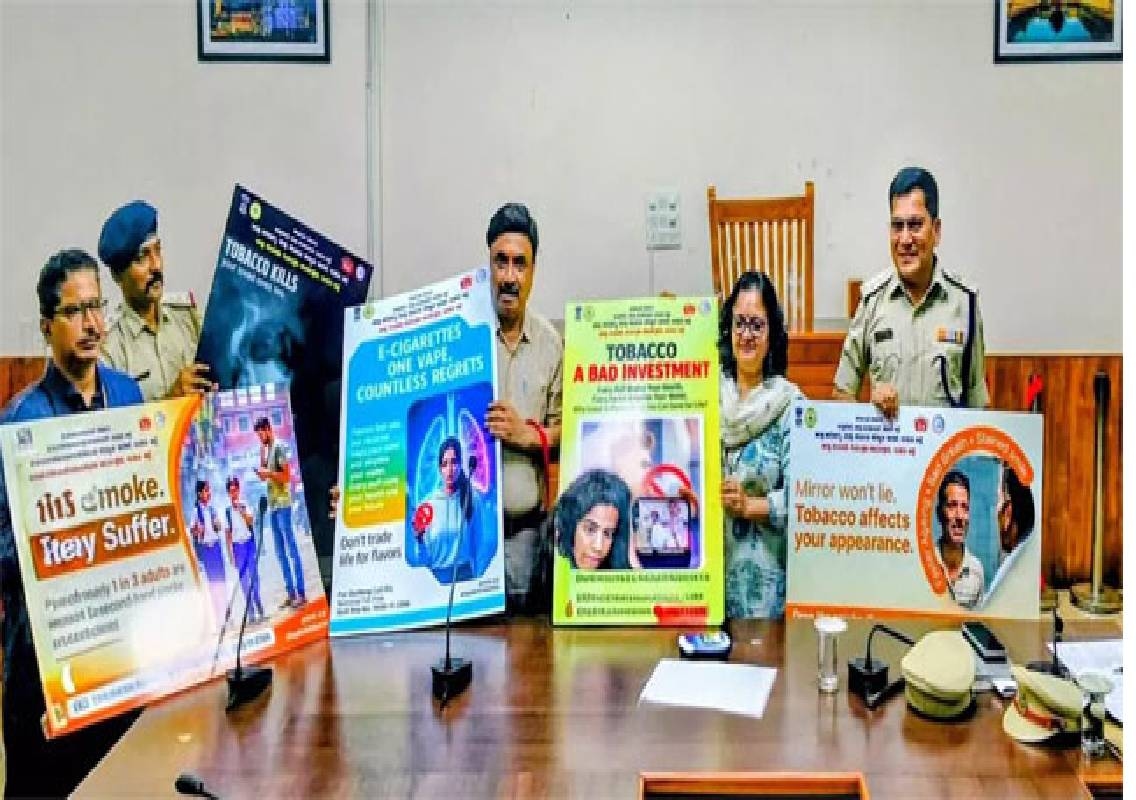
During the meeting, Swaroopa T.K. launched the Tobacco Free Youth Campaign 4.0 by releasing its official poster.
Superintendent of Police Hariram Shankar, Additional Superintendent of Police Sudhakar Nayak, District Health Officer Dr Basavaraj Hubballi and officials from various departments attended the meeting.
The administration’s focus is on strengthening coordination between government departments, educational institutions, healthcare facilities, local bodies and the public to address drug abuse and tobacco use in the district.