


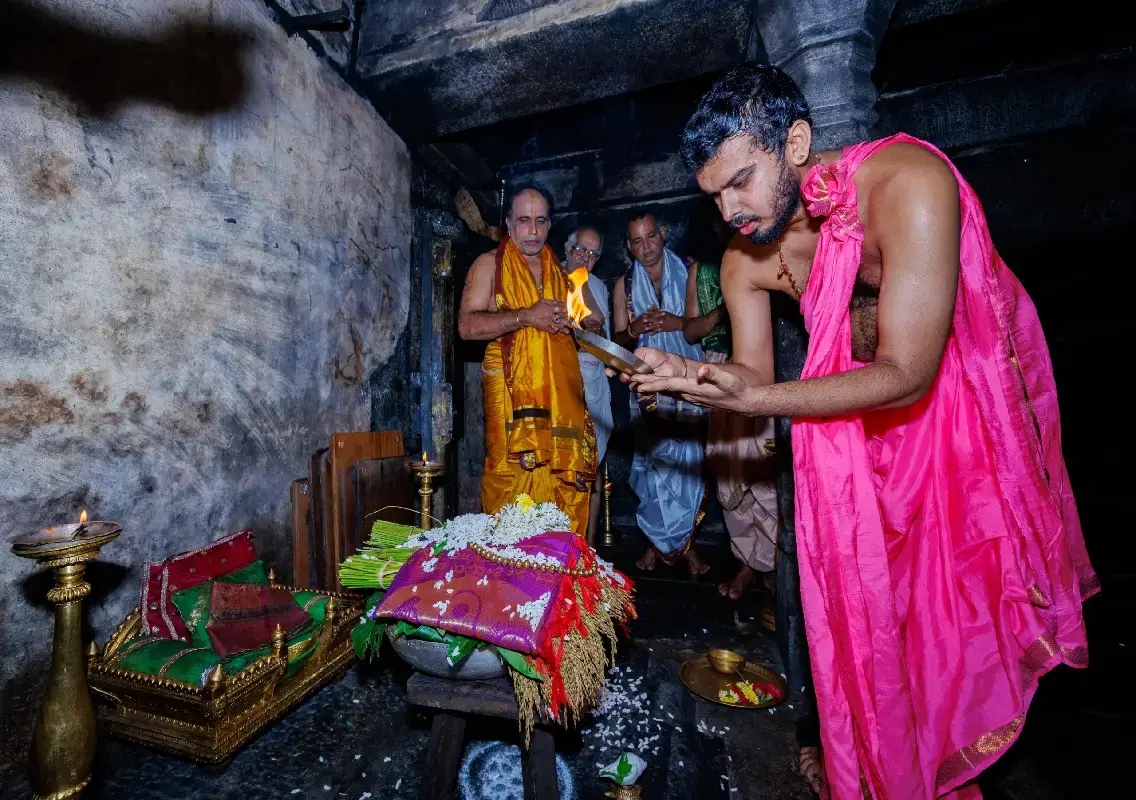


Udupi: The traditional ‘Tene Pooje’, a ritual worship of paddy sheaves, was performed with devotion at Sri Krishna Matha in Udupi on the auspicious occasion of Vijayadashami. The annual observance celebrated the region’s agricultural heritage and religious traditions, with paddy sheaves offered to Lord Sri Krishna as symbols of prosperity, abundance and the well-being of the world.
The ritual brought together traditional religious practices and reverence for agriculture, highlighting the importance of paddy in the cultural and spiritual life of coastal Karnataka.
Paddy sheaves worshipped with traditional rituals
As part of the observance, paddy sheaves were worshipped according to prescribed rituals in front of Sode Matha. Following the worship, the sheaves were placed in a golden palanquin and taken in a traditional procession to Sri Krishna Matha through the chariot street.
The procession was accompanied by auspicious musical instruments, adding to the devotional atmosphere. The traditional customs followed during the event reflected the importance attached to the annual ritual at the historic temple.
Paddy holds a special place in the agricultural traditions of the coastal region, where rice cultivation has long been closely associated with livelihoods, seasonal celebrations and religious observances. Through Tene Pooje, the harvest and the natural resources that sustain life are honoured as part of a longstanding cultural practice.
Annual opening of the eastern door
A significant part of the ceremony was the opening of the eastern door of the Sri Krishna sanctum sanctorum, which, according to tradition, is opened only once a year for this occasion.
Paddy stalks were offered to Lord Sri Krishna as part of the worship. The ritual symbolises gratitude for agricultural abundance and expresses the hope for prosperity, plentiful grain and the welfare of all.
The offering of paddy sheaves is associated with the belief that agricultural produce is a blessing of nature and a source of sustenance for the community. The Vijayadashami observance therefore carries significance beyond the religious ceremony, connecting devotion with gratitude for the harvest and the natural world.
The annual ritual also reflects the continuity of customs preserved at Sri Krishna Matha, where religious practices are observed in accordance with established traditions.
Tene distributed among Ashta Mathas and devotees
Following the puja, the paddy sheaves, known as teney, were distributed at Lakshmi Mantapa, located in front of Sri Krishna Matha.
In keeping with tradition, the sheaves were distributed among the Ashta Mathas — the eight monasteries associated with the Udupi Sri Krishna tradition — as well as other affiliated mathas.
The teney were subsequently carried in a traditional procession to Badagumalige, where they were distributed among devotees.
The distribution formed an important part of the observance, allowing the sacred paddy sheaves to be shared with the religious institutions and people participating in the celebrations. The practice reinforces the community dimension of the festival, linking the ritual offering at the temple with the wider network of mathas and devotees.
Celebrating agricultural heritage and devotion
Tene Pooje commemorates the close relationship between agriculture, nature and religious faith. Paddy sheaves represent the fruits of cultivation and serve as a reminder of the importance of farmers, fertile land and the natural resources that support communities.
Observed on Vijayadashami, the ritual also adds to the religious significance of the festival, which marks the triumph of good over evil and is celebrated across Karnataka in diverse ways.
At Sri Krishna Matha, the worship and distribution of paddy sheaves preserve a distinctive local tradition that brings together ritual observance, agricultural symbolism and community participation.
Dr. Udayakumar Saralathaya, Diwan of Sri Matha; Shrisha Bhat Kadekaru, Parupatyagara; representatives of Sri Matha; staff members; and a large number of devotees were present during the occasion.
The observance once again highlighted Udupi’s rich religious heritage and the enduring importance of traditional practices that honour both spiritual beliefs and the agricultural foundations of life.