







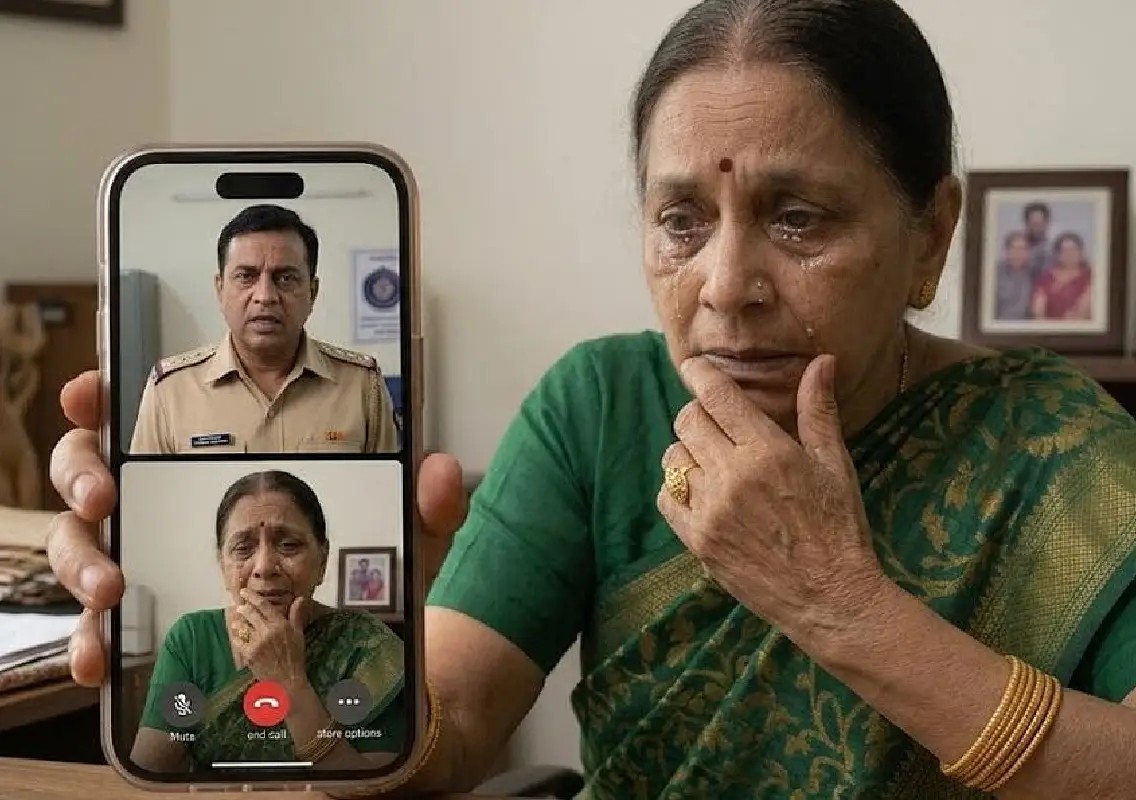


Udupi: A 66-year-old woman from Udupi has allegedly lost ₹65 lakh to cyber fraudsters who posed as Mumbai Police officers and threatened her with arrest in a fabricated money laundering case.
According to the complaint filed by Sheela, the fraud began on July 13, when she received a WhatsApp message from a person claiming to be an officer of the Mumbai Police. Shortly afterwards, she received a video call from the same number, during which the caller, dressed in a police uniform, introduced himself as an inspector attached to the Colaba Police Station in Mumbai.
Fraudsters used fake arrest threat
The caller first confirmed that the woman was alone at home before falsely claiming that ₹20 crore had been deposited into her bank account. He further alleged that a money laundering case had been registered against her, an arrest warrant had been issued, and that the Mangaluru Police would soon take her into custody.
To make the claim appear genuine, the fraudsters asked her to disclose details of all her bank accounts and share photographs of her bank documents.
They then falsely stated that the serial numbers of the currency in her accounts needed to be verified to prove her innocence and instructed her to transfer the money to bank accounts specified by them.
₹65 lakh transferred over four days
Believing the claims to be genuine, the woman remained in constant contact with the fraudsters through WhatsApp calls. Between July 13 and July 17, she transferred a total of ₹65 lakh to multiple bank accounts as instructed.
She later realised she had been cheated and approached the Udupi CEN Police Station to file a complaint.
Police register cyber fraud case
Based on the complaint, police have registered a case under Section 66(D) of the Information Technology Act and relevant provisions of the Bharatiya Nyaya Sanhita (BNS), including Sections 111(4), 319(2), 308(2), and 318(4).
An investigation is underway to trace the accused and recover the defrauded amount.
Police have once again urged the public to remain vigilant against “digital arrest” scams, stressing that law enforcement agencies do not demand money transfers or conduct investigations through WhatsApp or video calls.