







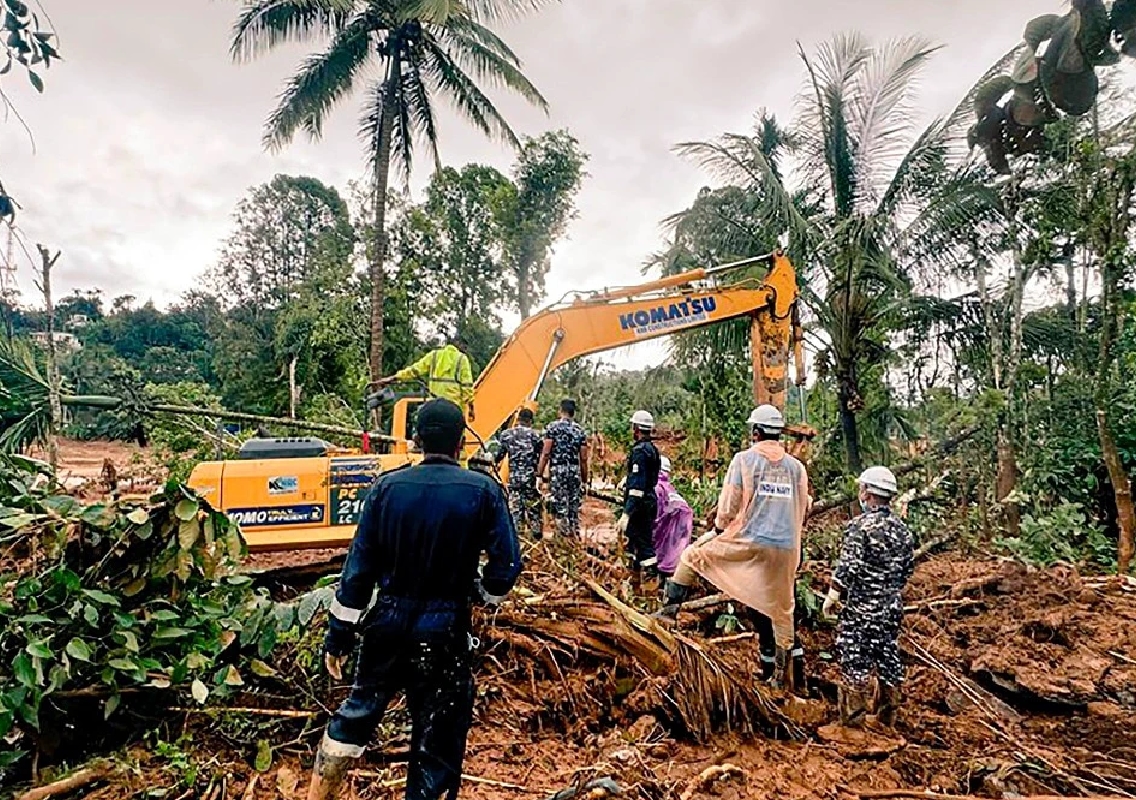


The search and rescue operation in Wayanad, following a devastating landslide that claimed over 360 lives, has entered its final stages. On the seventh day of the operation, the focus is shifting to the Chaliyar river basin and other inaccessible areas, with a special team deployed to search the waterbody for additional bodies or remains.
On the seventh day, six bodies were recovered. A total of 30 bodies and 154 body parts were cremated through interfaith prayers on Monday. Among the 30 bodies, 14 were women, 13 men, and three could not be identified.
- Personnel Deployed: On Monday, 1,174 personnel from various forces were deployed across six zones. Additionally, 913 volunteers and local residents joined the effort in 112 teams, with 137 Indian Army personnel involved.
- Machinery and Equipment: Enhanced machinery was introduced to expedite the search, focusing on the Chaliyar river basin and surrounding areas. Dog squads from three forces and the Army also conducted searches around Churalmala.
- Body Recovery: So far, 150 bodies have been recovered from Wayanad and 76 from Nilambur, with 181 body parts retrieved (24 from Wayanad and 157 from Nilambur).
- Inaccessible Areas: ADGP MR Ajith kumar stated that operations are intensifying in inaccessible regions along the Chaliyar river. To address these areas, two teams of police SOG and army commandos will be air-dropped. Heavy machinery and local volunteers are not being sent to these regions due to the terrain.
- Drone Assistance: Unmanned aerial vehicles are now being used to transport food packets to areas that remain inaccessible by traditional means, with drones capable of carrying supplies for up to 10 people at a time.
- Kerala Government: On Monday, the Kerala government announced a comprehensive rehabilitation package for Wayanad, which includes land acquisition, house construction, and infrastructure development.
- Karnataka Support: Karnataka Chief Minister Siddaramaiah also pledged to construct 100 houses for the victims, showing solidarity and support for the affected community.
- Recent Developments: Environmental sources suggest that recent projects in Wayanad, including non-coal mining activities, were approved without adequate study of the region’s geomorphology and topography.
- Scientific Insights: Scientists attribute the July 30 disaster to a combination of deforestation, mining in fragile areas, and climate change.