







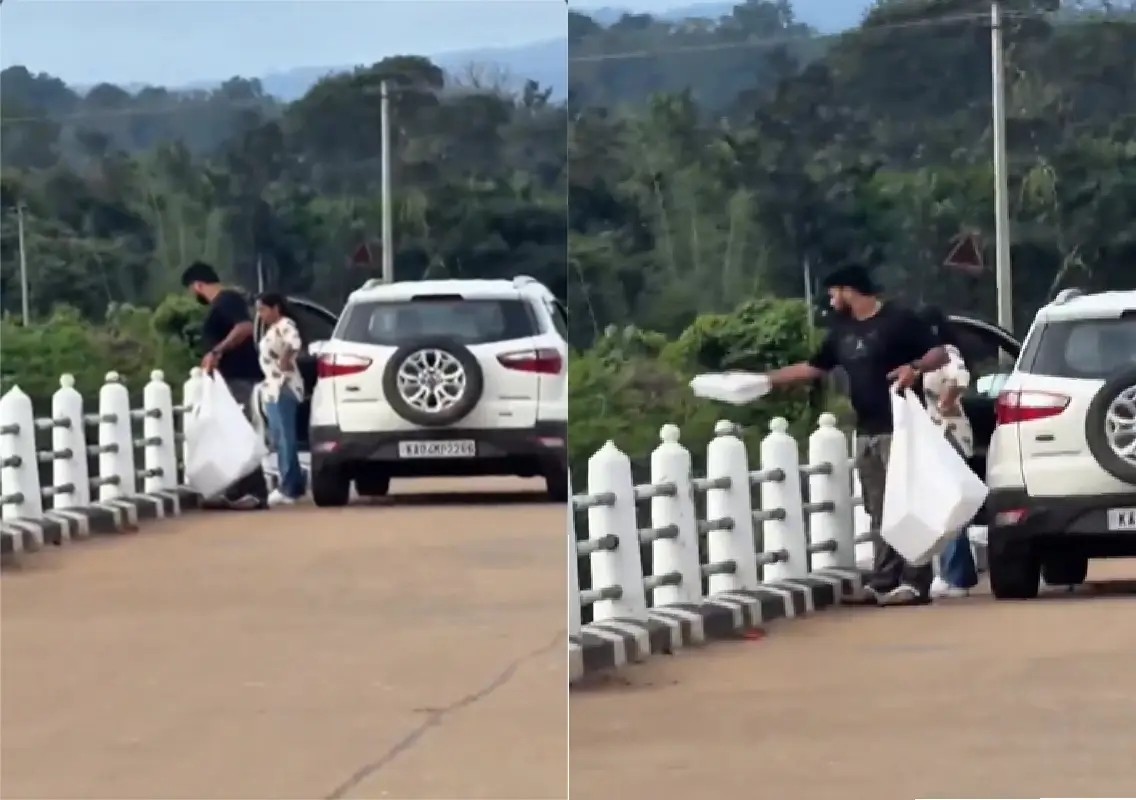


Kondageri: Garbage being allegedly dumped into the Cauvery River from Kondageri Bridge has sparked outrage over civic responsibility and environmental awareness, with the incident drawing criticism from people concerned about the protection of the river.
The reported dumping has raised questions about the behaviour of people using the bridge and the lack of consideration shown towards a natural resource that holds immense environmental, cultural and religious significance.
The Cauvery is revered as Goddess Cauvery by communities across the region. Yet, the sight of garbage being thrown into the river presents a stark contradiction between the reverence expressed towards the river and the way it is treated in everyday life.
Concern over lack of civic sense
The incident has prompted strong criticism of what many see as a basic failure of civic responsibility.
Throwing garbage into a river is not merely an act of littering. Waste entering waterways can affect water quality, aquatic life and the surrounding environment. Plastic and other non-biodegradable materials can remain in the ecosystem for years, while other forms of waste can contribute to pollution.
The incident has also sparked frustration over the perception that education does not always translate into responsible public behaviour.
Academic qualifications may provide knowledge and professional skills, but civic responsibility depends on individual conduct. Keeping public spaces and natural resources clean is a basic responsibility that applies to everyone, regardless of education, profession or social standing.
Cauvery holds deep cultural significance
The Cauvery occupies a special place in the cultural and religious life of southern India.
The river is regarded as sacred by millions of people and supports communities, agriculture and ecosystems across its basin. Its waters are an important resource for drinking water, farming and other economic activities.
For this reason, pollution of the river has consequences that extend well beyond the immediate location where waste is discarded.
The contrast between treating the Cauvery as a sacred river while using it as a dumping ground has therefore become a major point of criticism following the reported incident at Kondageri.
Waste in rivers can cause lasting damage
Garbage thrown from bridges can quickly become part of the river ecosystem.
Plastic bags, bottles, packaging materials and other waste can be carried downstream, where they may accumulate along riverbanks or enter aquatic habitats. Animals can also come into contact with or consume discarded materials, potentially causing harm.
Organic and other waste can additionally affect the quality of water and the surrounding environment.
Preventing garbage from entering the river is therefore considerably more effective than attempting to remove it after it has entered the water.
Responsibility extends beyond authorities
The incident also raises questions about the role of local authorities in preventing river pollution.
Regular monitoring of bridges and other vulnerable locations, adequate waste-disposal facilities, warning signs and enforcement against illegal dumping can help discourage such behaviour.
However, government action alone cannot address the problem.
Citizens have an equally important role. People travelling across bridges or visiting riverbanks should carry their waste until they find an appropriate disposal facility rather than treating waterways as convenient dumping points.
Community groups and local organisations can also help create awareness about the consequences of river pollution and encourage people to protect the Cauvery.
Education must translate into responsibility
The criticism surrounding the incident carries a broader message about civic sense.
Education should ideally encourage people to understand the consequences of their actions and respect shared resources. A degree or professional qualification, however, does not automatically make someone environmentally responsible.
True civic sense is demonstrated through everyday actions — disposing of waste properly, respecting public spaces, following regulations and protecting natural resources.
The reported incident at Kondageri is a reminder that environmental responsibility cannot remain limited to campaigns, slogans or social media posts.
Respect for Goddess Cauvery must be reflected in action
The Cauvery is frequently described as a mother and goddess, reflecting the deep emotional and spiritual connection people have with the river.
That reverence should extend beyond rituals and words.
Keeping the river free from garbage is one of the simplest ways in which people can demonstrate genuine respect for the Cauvery. Throwing waste into the water, by contrast, undermines efforts to preserve the river for future generations.
The reported garbage dumping near Kondageri Bridge should therefore prompt both public reflection and appropriate action from authorities.
Protecting the Cauvery is a shared responsibility. Citizens must show greater civic sense, while authorities should ensure effective waste-management systems and enforcement wherever necessary.
A river revered as Goddess Cauvery deserves more than symbolic respect. It deserves responsible treatment every day.