







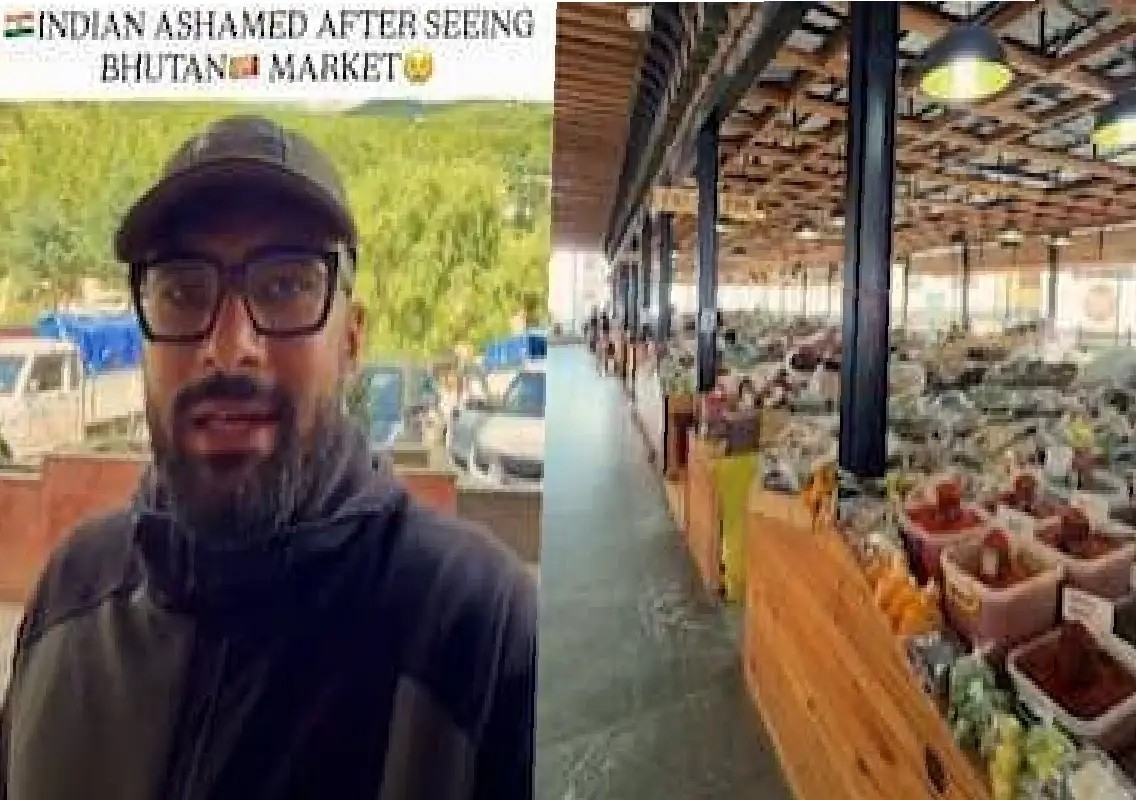


Thimphu: A vegetable market in Bhutan has caught the attention of travel creator Manjil Pokhrel, whose video praising its cleanliness and organisation has sparked a discussion among social media users about public hygiene and market management.
During his recent Bhutan trip, Pokhrel shared a video showing a local vegetable market with neatly arranged produce, clean floors and clearly separated sections. Rather than focusing on the country’s popular scenic attractions, he turned his camera towards the market and highlighted its upkeep.
Clean floors and neatly arranged produce stand out
Pokhrel described the market as exceptionally clean and hygienic. He also pointed out the lighting, the orderly arrangement of vegetables and workers cleaning the premises.
According to his video, the ground floor features a mix of locally produced and imported vegetables, while the upper floor is dedicated to locally produced produce. Fruits and vegetables are also kept separately from the meat section.
The setup reminded him of a high-end supermarket. He said the experience made him feel that Indians could learn from the way the market was maintained.
Social media users point to Indian examples
While some viewers agreed with Pokhrel’s observations, others said similarly clean and organised markets exist in India, particularly in the Northeast.
Several users suggested that he visit Sikkim and other northeastern states, claiming that markets in the region offer comparable levels of cleanliness and organisation.
The discussion also moved towards waste management, environmental practices and the cost of maintaining such facilities. One user questioned whether the expense of upkeep could eventually be reflected in vegetable prices.
A conversation beyond one market
Pokhrel’s video has therefore developed into a broader conversation about civic responsibility, cleanliness and the maintenance of public spaces.
While the video reflects one traveller’s experience of a particular Bhutanese market, the reactions have highlighted examples and perceptions from both sides of the border.
The discussion ultimately points to a shared concern: clean, organised and well-maintained markets can make everyday shopping more pleasant while encouraging better public hygiene practices.