







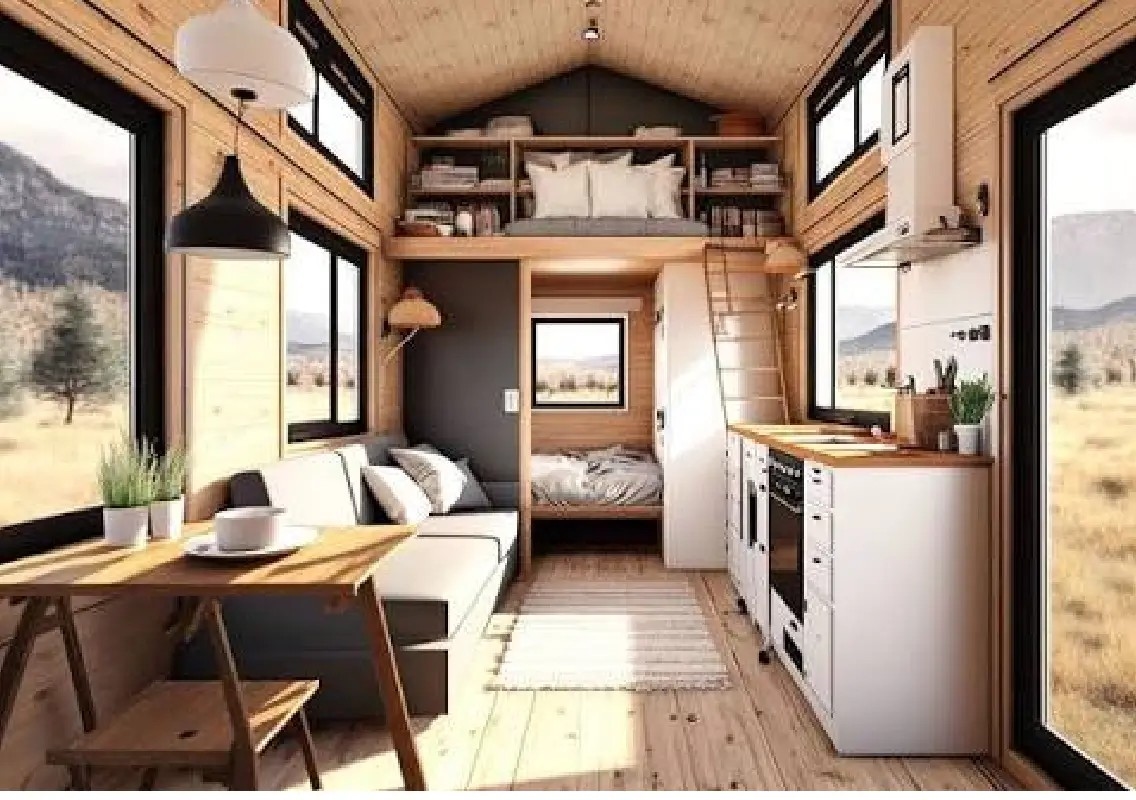


Smaller homes are attracting growing interest among families looking for simpler and potentially more affordable ways of living. But when several family members share a compact space, thoughtful planning becomes essential to protect comfort, privacy and wellbeing.
Small spaces need smart planning
Living in a tiny house with children can present practical challenges. Limited bedrooms, storage and common areas can make everyday routines more complicated, particularly as children grow and require more personal space.
However, carefully designed compact homes can make efficient use of every available area. Some family-friendly designs use lofts, flexible furniture, shared living spaces and clever storage to accommodate parents and children without making the home feel unnecessarily crowded.
Health goes beyond square footage
A healthy home is not simply about its size. Good ventilation, sufficient natural light, comfortable temperatures, cleanliness and access to safe outdoor areas can all influence family wellbeing.
For families living in compact homes, maintaining organised spaces can also help reduce clutter and make daily movement easier. Creating separate corners for sleeping, studying, working and relaxing can provide a greater sense of routine and personal space.
Family needs should come first
The idea of downsizing may appeal to families seeking a less complicated lifestyle, but there is no single home size that suits everyone. Families should consider the number and ages of household members, work and study requirements, storage needs and opportunities for outdoor activity before choosing a compact home.
Tiny houses featured by New Atlas show that creative design can make surprisingly small spaces suitable for family life. Yet successful compact living ultimately depends on more than clever architecture.
For families, the healthiest home is one that provides safety, comfort, connection and enough space for everyone to live with dignity.